

The National Museum That Doesn’t Understand Latino Culture Without Woke Ideology
Premium domains for sale
Freedom Is Back In Style
“¡Puro Ritmo! The Musical Journey of Salsa” represents the Smithsonian’s Latino Museum’s third attempt to present itself to the American public. The first two exhibits failed — one so badly that it was withdrawn before opening — largely because of their overtly political, left-leaning framing. Museum leadership apparently hopes that the third effort will finally succeed.
Freedom Is Back
In Style
Premium domains for sale
To its credit, ¡Puro Ritmo! initially seems designed to avoid the controversy that doomed its predecessors. After all, who could reasonably object to an exhibit focused on salsa music? As the museum’s director, Jorge Zamanillo, explained to Time Magazine in 2023, a music-centered exhibit was chosen precisely because it would have “broader appeal.”
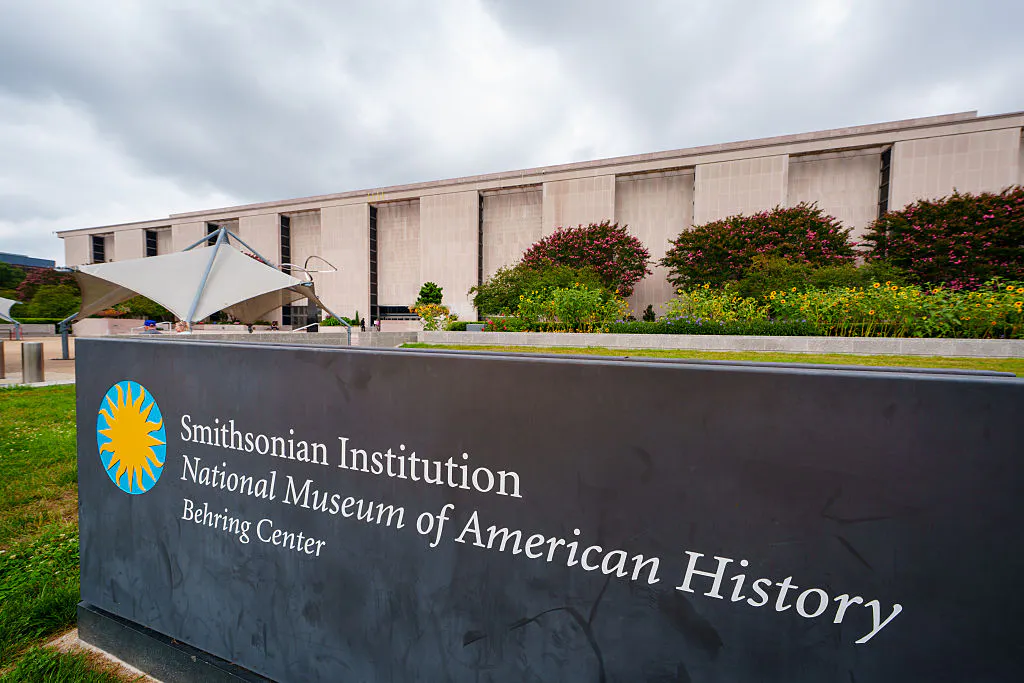
Yet the exhibition ultimately falls into the same ideological patterns as before. Opened to the public on April 18 at the Molina Family Gallery of the Smithsonian’s National Museum of American History, the exhibit’s content reveals a clear bias. The curators, deeply committed to a culturally Marxist framework, conspicuously exclude any meaningful discussion of one of salsa’s most important influences: Spanish music and culture.
Throughout the exhibit, the displays and explanatory panels emphasize the African roots of Cuban dance music that later evolved into salsa. Considerable attention is given to African sacred music, defined as “the religious songs, dances, and instruments of Yoruba, Kongo, and Calabar (Efik) peoples, among others, that influenced the development of Afro-Cuban dance music.”
These contributions are undeniably significant and worthy of recognition. However, this narrative tells only half the story. The influence of Spanish music and culture is also essential to the development of salsa, yet, aside from three cursory references to “African, Spanish and Indigenous heritage,” it is purposely ignored.
Museum patrons won’t learn that Spanish troubadour traditions contributed the foundational harmonies and melodies that shaped Cuban “son,” the genre that, when fused with African rhythms, became salsa in New York. Spanish musicians also introduced guitars, lutes, and other string instruments to the Caribbean, which became central to Cuban musical traditions.
The Cuban intellectual Alejo Carpentier — by no means a conservative — was one of many who highlighted how the arrival of Spanish musicians in the 16th century initiated the Cuban sound.
In his foundational La Musica en Cuba, Carpentier writes, “Cuban music is the result of the convergence of two fundamental factors: the Spanish and the African; but while the former contributes the melodic and formal elements, the latter introduces a rhythmic richness that profoundly transforms those elements.”
Additionally, while the exhibit is rich with references to Santería (the Yoruba-based religion, akin to Haitian Vodou, practiced in Cuba) as permeating salsa music, it fails to acknowledge Catholicism. This omission is striking and difficult to justify.
The reason becomes clearer when the exhibit is viewed through a broader ideological lens. Much like the museum’s earlier efforts, ¡Puro Ritmo! seems intent on redefining the Latino experience exclusively in terms of “people of color,” and erasing the legacy of the West, a framing that distorts Latin identity. Latin American culture is not rooted in a single ancestry; it is the product of centuries of cultural and racial blending.
Indeed, the one single thing that would link Hispanic identity would be Spain — its religions, language, etc. There is no salsa without Spanish musical and cultural contributions.
This pattern of exclusion of all things Western is consistent with the background of the exhibit’s chief curator, Ranald Woodaman, a longtime advocate of leftist identity politics who frequently advances narratives centered on white supremacy and oppression frameworks.
Woodaman previously led the Smithsonian’s first Latino Museum exhibit, “¡Presente!: A Latino History of the United States,” which opened at the Molina Gallery in 2022 and promoted racial identity politics, gender ideology, and Marxist interpretations rather than balanced historical analysis.
I panned ¡Presente! soon after it opened in an article for The Hill. I have repeatedly cautioned lawmakers that the museum’s early exhibits reflected an overtly Marxist portrayal of history, religion, and economics, shaped by an oppressor–oppressed narrative that dominates much of contemporary academia.
Zamanillo later scrapped a second exhibit that two socialist curators had been working on, which was known as the “Latino Youth Movements” exhibit. Among other things, it was going to showcase how bad capitalism was for Hispanics.
I argued then, and maintain now, that such ideology has no place in taxpayer-funded institutions charged with preserving and transmitting American culture. So forceful was that critique in 2022 that Congress, for a time, cut funding for the Latino Museum.
The Trump administration shares our concerns and proposed cutting the museum’s funding and halting its full development. Unfortunately, several Republican Hispanic lawmakers intervened to restore full funding, arguing that the institution could be corrected of ideological bias.
¡Puro Ritmo! demonstrates that this hope was misplaced. The museum has again proven unable — or unwilling — to separate culture from political ideology. Perhaps now it will become clear that the only way to truly fix the Latino Museum is to dismantle it entirely.
***
Mike Gonzalez is the Angeles T. Arredondo E Pluribus Unum Senior Fellow at the Heritage Foundation.
More from this network:
Domains for Sale · GOTPeople.org · TheDSAPlatform · The Truth About Socialism
What's Your Reaction?
 Like
0
Like
0
 Dislike
0
Dislike
0
 Love
0
Love
0
 Funny
0
Funny
0
 Wow
0
Wow
0
 Sad
0
Sad
0
 Angry
0
Angry
0

I am just an average American. My teen years were in the late 70s and I participated in all that that decade offered. Started working young, too young. Then I joined the Army before I graduated High School. I spent 25 years in, mostly in Infantry units. Since then I've worked in information technology positions all at small family owned companies. At this rate I'll never be a tech millionaire. When I was young I rode horses as much as I could. I do believe I should have been a cowboy. I'm getting in the saddle again by taking riding lessons and see where it goes.
Premium domains for sale

























Comments (0)