

The Priceless Gift Marco Rubio Just Gave To The Next Generation Of Americans
Premium domains for sale
Freedom Is Back In Style
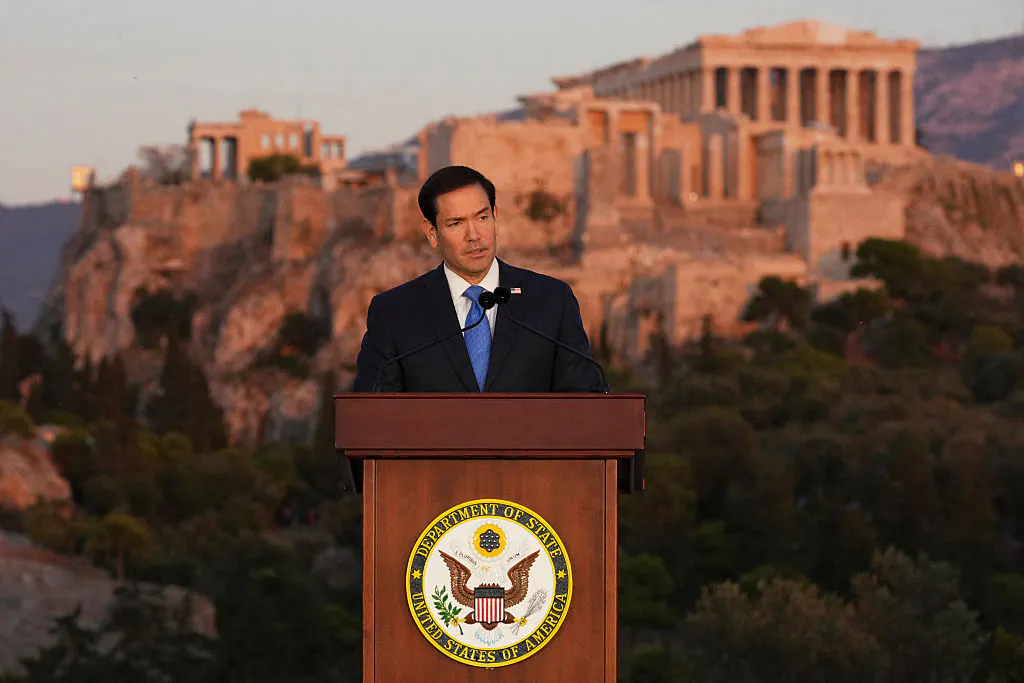
When Secretary of State Marco Rubio spoke in Athens on October 7, his oratory caused many of us to reflect on a question worth asking: what came before us, and what do we owe it? Rubio called on Americans and Europeans to renew the Western spirit, an inheritance he traced from Athens and Rome through Christendom to the founding of the American Republic.
Freedom Is Back
In Style
Premium domains for sale
I have been asking that question with a group of students at Colorado Christian University, who have been studying Russell Kirk’s “The Roots of American Order.” They keep discovering that America did not spring fully formed from the events of 1776. Our liberty and our political culture are the fruit of an ordered inheritance that runs through five cities: Jerusalem, Athens, Rome, London, and Philadelphia.
The word “roots” deserves attention. We tend to hear it and think of our own family tree: grandparents, hometowns, the immigrant story of a great-grandfather. But one definition of roots is belonging to a particular place or group by virtue of cultural lineage. By that definition, Americans share a lineage far larger than any single family. If we share it, we ought to know what it is. And if it is worth knowing, it is worth preserving and defending.
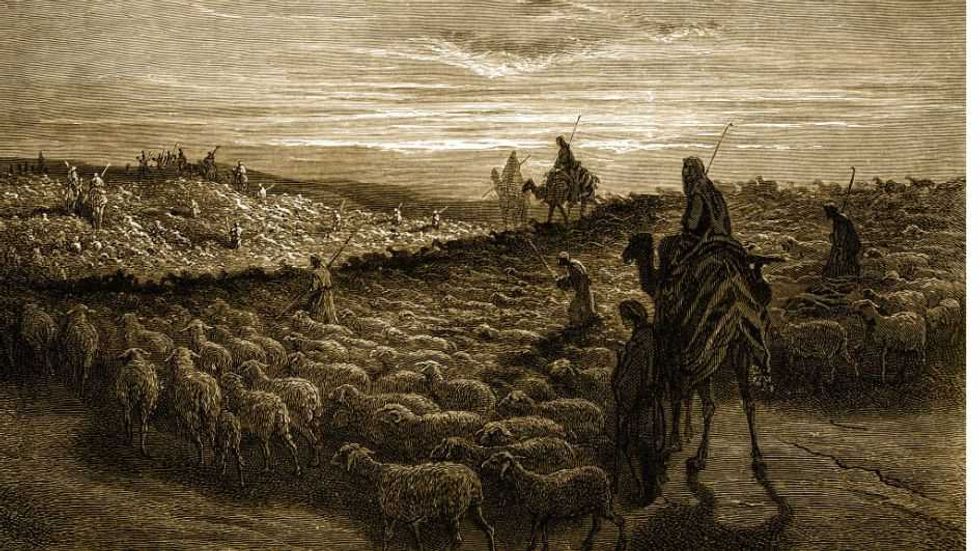
The American story begins in Jerusalem, with the conviction that human beings live under a moral order they did not invent. From the Hebrew prophets comes the belief in one God who knows, cares for, and reveals himself to his creation, and who tells us how to live well. The Decalogue gave the West the idea that law is not merely the will of the powerful, and that every person is accountable to something higher than the state. From that conviction flows the dignity of the individual: if each person is made in the image of God, no ruler may treat him as disposable.
Athens contributed the life of the mind. Socrates, Plato, and Aristotle taught that human beings are social by nature, and that a person cannot flourish alone or in a disordered community. Just as a well-ordered soul is essential to a good life, a well-ordered society depends on citizens who pursue virtue, seek truth, and reason together about the good. Athens reminds us that self-government begins with self-government: a free people must first learn to govern themselves. It was fitting that Rubio chose to make his case there, within sight of the Acropolis.
Rome gave us a republic, a respect for law and duty, and a sober lesson about decline. The Romans revered their ancestors and the customs they handed down. They believed the virtues of earlier generations — discipline, gravity, and loyalty to the common good — held the republic together. Their warning is as relevant now as it was then: a society that fails to maintain the virtues of those who came before it will not long endure. Rome’s greatness and its fall both point to the same truth: that institutions survive only as long as the character of the people sustaining them.
London taught the English-speaking world that all are subject to the law, including the king. From Magna Carta to the common law tradition, the English developed the idea that law is not invented from scratch by whoever holds power. It grows out of natural law and the accumulated wisdom of custom, precedent, and experience. Our human laws, however imperfect, are our best attempt to express an enduring moral law, and they are rightly measured against it. This is the heritage of due process, trial by jury, and the principle that established rules, not the shifting preferences of rulers, secure liberty.
Finally, Philadelphia brings the inheritance home. In the Declaration of Independence, the founders affirmed the principles Jerusalem, Athens, Rome, and London had nurtured: that human beings are endowed by their Creator with unalienable rights, and that government exists to secure them. In the Constitution, they built the organizational structure to realize those principles, with separated powers, federalism, and checks against the abuse of authority. They drew here on Montesquieu’s insight that power can be restrained only by counterbalancing power, and that no person or office should hold unchecked authority. Philadelphia was not a break from the past. It was the culmination of it.
This inheritance is also fragile. Ordered liberty does not maintain itself. Each generation receives it as a gift and must decide whether to pass it on or let it wither. A society that neglects its roots does not escape the consequences. It ends up tending them in desperation, after disorder has already done its damage.
That is why cultivating these principles in young people matters so much. Students who cannot name the sources of their freedoms are poorly prepared to defend them. A generation that has never heard why law must answer to a higher standard, why virtue is a prerequisite for liberty, or why the Founders designed government as they did will be easily persuaded that these things are optional.
The task falls to all of us: parents at the dinner table, teachers in the classroom, pastors in the pulpit, and neighbors in book clubs and civic groups. We can read these foundational texts with our children and our students. We can teach history as an inheritance to be understood and stewarded, not as a catalog of grievances or a list of dates. We can model the habits of virtue and gratitude that every free people requires. And we can insist that the great questions, about God, human nature, law, and self-government, are worth taking seriously.
A renewal of the Western spirit, as Rubio urged in Athens, cannot be accomplished by a speech alone. It happens when each generation learns where it came from. We did not build this inheritance, yet we are its trustees. We must make sure the next generation knows where it came from, what it has been given, and what it is called to preserve.
***
Greg Schaller serves as the director of the Centennial Institute, the conservative think tank of Colorado Christian University. He has taught politics at CCU, Villanova University, and St. Joseph’s University. He holds a B.A. in political science and history from Eastern University and an M.A. in political science from Villanova University.
More from this network:
Domains for Sale · GOTPeople.org · TheDSAPlatform · The Truth About Socialism
What's Your Reaction?
 Like
0
 Dislike
0
 Love
0
 Funny
0
 Wow
0
 Sad
0
 Angry
0

I am just an average American. My teen years were in the late 70s and I participated in all that that decade offered. Started working young, too young. Then I joined the Army before I graduated High School. I spent 25 years in, mostly in Infantry units. Since then I've worked in information technology positions all at small family owned companies. At this rate I'll never be a tech millionaire. When I was young I rode horses as much as I could. I do believe I should have been a cowboy. I'm getting in the saddle again by taking riding lessons and see where it goes.
Premium domains for sale





















Comments (0)