

The Question Money Can’t Answer About The FAA’s Plan To Fix America’s Skies
Premium domains for sale
Freedom Is Back In Style
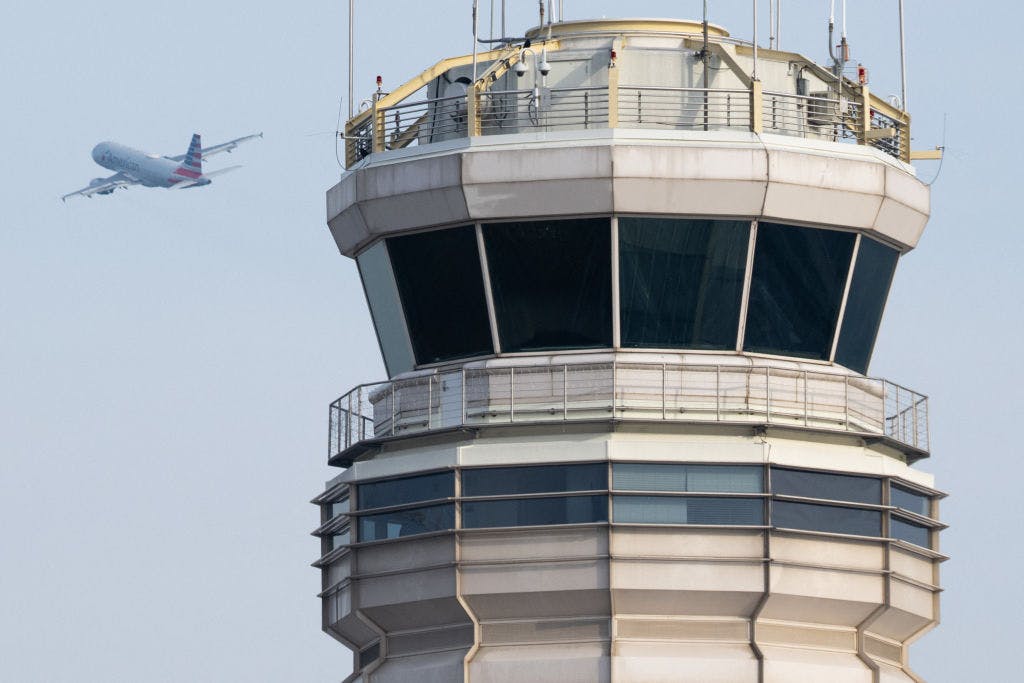
The FAA meltdown brought U.S. air travel to its knees, stranding 1.5 million Americans and giving Washington a costly reminder that its air traffic control system is running on borrowed time. President Donald Trump wants Congress to fund an overhaul. If lawmakers write the check, the FAA may have one heck of a help-wanted ad to write. Aviation experts say the money only gets you halfway there. The FAA still needs enough people who can rebuild the system while the planes are in the air.
Freedom Is Back
In Style
Premium domains for sale
The Trump administration wants Congress to give the FAA $30 billion to overhaul America’s air traffic control system on top of the $12.5 billion lawmakers approved last year, but two experts told The Daily Wire that the harder problem could be getting the new equipment, software, and people to work together without knocking the system over while it’s being rebuilt.
“The biggest challenge is not necessarily one thing. It’s more a process,” said Dr. Robert Joslin, a former FAA flight test pilot and FAA chief scientific and technical advisor who now teaches at Embry-Riddle Aeronautical University. “It’s the integration of all of the new technologies and procedures that we’re incorporating into the air traffic management system.”
The FAA halted departures nationwide at 3:54 p.m. Eastern on Friday, November 13, after a communications failure first reported in the Chicago area spread to multiple systems. The stop lasted more than four hours. The disruption hit more than 10,000 flights, and cancellations ran through the weekend, with 7,000 cancellations on Saturday alone.
Transportation Secretary Sean Duffy has said a router newly installed during the FAA’s switch from copper wiring to fiber optics was sending about a thousand connection attempts every four to five seconds, flooding the system.
Joslin said the system still runs on separate data sources that don’t fully talk to each other, covering everything from weather and flight plans to arrival and departure availability and even controller staffing. Fiber lets that data move faster and feed into one integrated system that can predict problems in advance. That would mean fewer delays, cancellations, and reroutes, he said, and less fuel burned on indirect routes.
Some facilities still use paper flight strips, with controllers writing an aircraft’s number and plan on a slip of paper, updating it in pen, and handing it off when the flight moves to the next facility. “Very rudimentary,” Joslin said. He stressed that the method is safe, just more time-consuming.
Joslin says the real bottleneck is getting the new gear cleared for use. “The certification process is challenging,” he said. Every new piece of safety-critical equipment, and the training for the people who use it, must go through bench testing, testing in simulation, and a trial in a small real-world area before it rolls out across the National Airspace System. The most safety-critical software faces the most rigorous testing of all.
He said regulators have begun speeding that up by relying on industry consensus standards, which manufacturers, government, and users develop jointly, rather than on rigid regulations that often fall behind the technology. Industry can revise those standards far faster than regulators can change a federal rule.
Timothy Johnson, an assistant professor and air traffic control program coordinator at Hampton University, said the copper-to-fiber switch is the heart of the current work and that the “’90s technology” is in fact “the biggest issue.”
He said that the FAA has split the work to switch over to fiber among multiple contractors, and that getting everyone on the same page with implementation is one of the biggest challenges.
Johnson said the funding has to cover the workforce too. “It’s not just the infrastructure, it’s the people behind it as well,” he said, pointing to the need for fully trained controllers alongside dependable radios, data connections, tracking equipment, and backup systems.
He wants the FAA to treat upkeep like an oil change and put it on the calendar before anything breaks, which will take a bigger check.
“12.5 billion is a lot of money,” Johnson stressed. “But unfortunately, because of the air traffic system, the National Airspace System, we need double that, if not more.” He said sustained funding on the order of $30 billion would be a sound investment.
The U.S. system is “the best in the world,” he said. “However, it is still a concern because we’re still working on older equipment, older technology.”
He said the payoff will show up on the departures board. “Travelers won’t ever see the new radios, radar, or backup systems, but they’ll experience it” through fewer avoidable delays and cancellations.
The Modern Skies Act, introduced in September with the backing of Duffy and FAA Administrator Bryan Bedford, would provide $30 billion. It builds on the $12.5 billion down payment in last year’s One Big Beautiful Bill Act, and a coalition of nearly 60 aviation groups, including the air traffic controllers’ union, supports it, according to the Transportation Department.
But not everyone is sold. The Reason Foundation argues that only about 40% of the bill’s money goes to air traffic control modernization, raising questions about spending and funding.
Joslin sees the bill as the push to finish work that has dragged on since the early 2000s, when the FAA launched its NextGen modernization program. Since then, he said, priorities have shifted with nearly every FAA reauthorization, often driven by “something bad that happened,” like a runway incursion, while other needed upgrades kept slipping.
“This Modern Skies Act is gonna be the big push, it looks like now,” Joslin said, “to take care of a lot of those things that haven’t been taken care of in the last, you know, two decades.”
What's Your Reaction?
 Like
0
 Dislike
0
 Love
0
 Funny
0
 Wow
0
 Sad
0
 Angry
0

I am just an average American. My teen years were in the late 70s and I participated in all that that decade offered. Started working young, too young. Then I joined the Army before I graduated High School. I spent 25 years in, mostly in Infantry units. Since then I've worked in information technology positions all at small family owned companies. At this rate I'll never be a tech millionaire. When I was young I rode horses as much as I could. I do believe I should have been a cowboy. I'm getting in the saddle again by taking riding lessons and see where it goes.
Premium domains for sale

















Comments (0)