

The rockets are still blowing up. So why is Elon laughing on his SpaceX earnings call?

Premium domains for sale
Freedom Is Back In Style
Some rockets go up. Some come back down. And some, well, blow up.
Freedom Is Back
In Style
Premium domains for sale
At a glance, it's business as usual for SpaceX, and it comes at a cost: a net loss of $541 million in the second quarter of this year. Market jitters about the company's enormous AI spend, in a crowded field with deep-pocketed competitors, pushed its stock down around 10%, enough to fuel jeers from Elon Musk's sizable audience of haters and skeptics.
'They desperately want to blow themselves into tiny pieces.'
On SpaceX's Q2 earnings call, however, Musk himself couldn't hold back a laugh or two.
After all, despite his participation in the ultra-high-spend AI industry, SpaceX is, first and foremost, about space.
"Rocket science is literally our daily business," he said on the call. "And rocket science is an idiomatic expression for extreme technological difficulty, and there's a reason for it. Because let me tell you what rockets desperately want to do every flight. They desperately want to blow themselves into tiny pieces. And then the engineering struggle is to convince the rocket not to blow itself into tiny pieces and actually deliver payload to orbit."
In the chat with investors, Musk went on to accentuate the positive: massive revenues that surpassed expectations. All told, the earnings report noted, revenues were up 92%.
In fact, following its initial public offering in June, SpaceX managed to blast by revenue expectations by nearly one billion dollars. CNBC reported that Q2 2026 revenue expectations were set around $6.93 billion, but SpaceX outpaced estimates and brought in $7.81 billion.
SpaceX is still not yet profitable, but that doesn't tell the whole story. That $541 million loss is a near half-billion improvement from the $1 billion in the red notched the same quarter last year.
Much of the company's losses came from research and development in the space sector, where as Grok/xAI and Starlink sectors proved to be far more positive.
None of this prevented Musk from verbalizing everything from bold predictions to astronomical promises.
In discussions about SpaceX's Starship and its impact "on the future of civilization," Musk detailed a goal of delivering one million tons of payload to orbit per year, including satellite, hardware, and cargo, eventually increasing that figure to 10 million tons per year.
To put that into perspective, SpaceX's current annualized run-rate of payload into space is roughly 2,500 metric tons.
RELATED: Mars Needs Cowboys
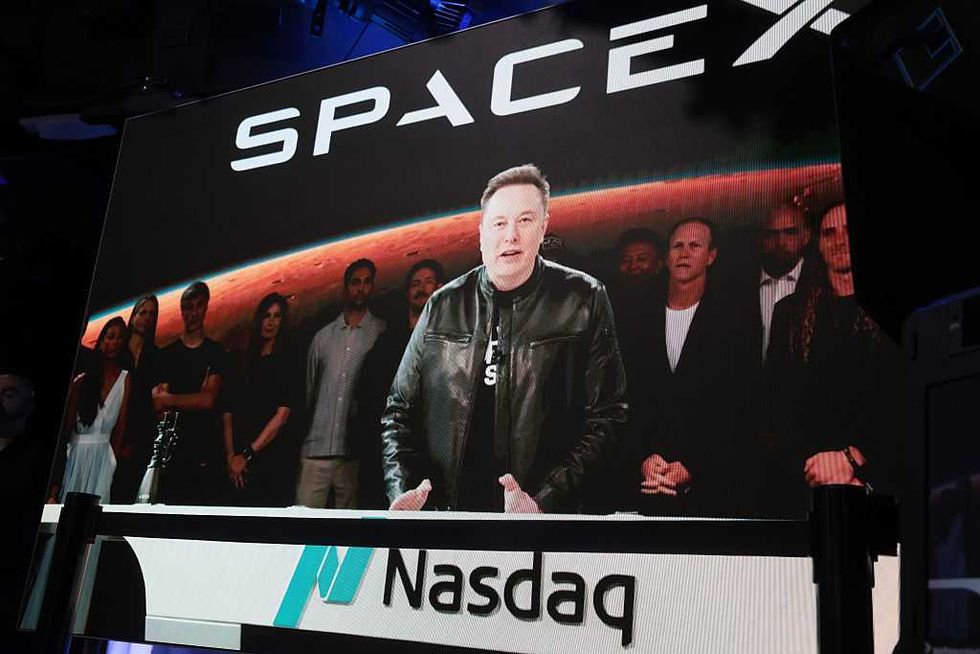 Spencer Platt/Getty Images
Musk urged and encouraged his competitors to copy what his company is doing, an easy stunt to pull given none of them have come close to SpaceX's achievements. Referring to an internal graph comparing launch volume of similar companies, Musk said that his "next competitor was one pixel high" on the screen.
"I think our competitors are very smart people, but despite being very smart, the rockets still blow up," Musk laughed.
RELATED: Tech-crazed Chinese are selling — and stealing — human faces. Are we next?
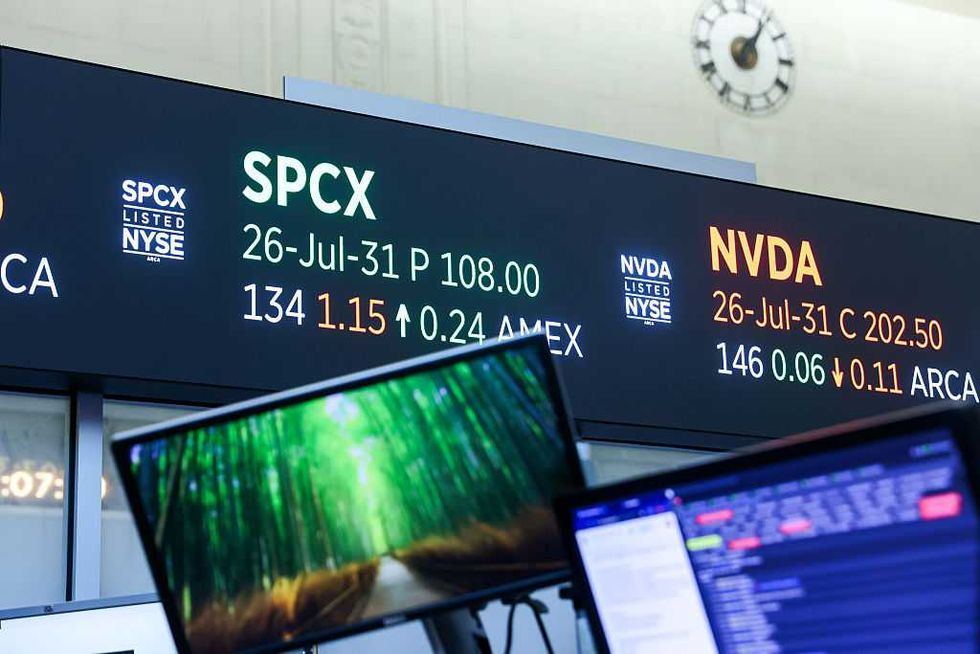 Michael Nagle/Bloomberg/Getty Images
SpaceX CEO Gwynne Shotwell, also on the call, focused on the growth coming from an increase in subscribers to xAI's internet company Starlink, which added more than 1.7 million customers in Q2. This represented the company's biggest increase to date, which now totals 12 million subscribers.
With more than 10,000 satellites in orbit, Musk detailed the sheer computing power being used by the company would be more than two gigawatts by the end of the year and between five and 10 gigawatts by the end of 2027.
By comparison, a single data center used by Meta takes about 2.2 gigawatts of power.
It should come as a surprise to no one that Musk continues to nurse his goals on the grandest scale. He even admitted, "I know this sounds totally nuts," before later declaring, "We are going to land a lot of tonnage on the moon. We're going to build the factories on the moon. The robots will be helpful with that."
Like Blaze News? Bypass the censors, sign up for our newsletters, and get stories like this direct to your inbox. Sign up here!
More from this network:
Domains for Sale · GOTPeople.org · TheDSAPlatform · The Truth About Socialism
What's Your Reaction?
 Like
0
Like
0
 Dislike
0
Dislike
0
 Love
0
Love
0
 Funny
0
Funny
0
 Wow
0
Wow
0
 Sad
0
Sad
0
 Angry
0
Angry
0

I am just an average American. My teen years were in the late 70s and I participated in all that that decade offered. Started working young, too young. Then I joined the Army before I graduated High School. I spent 25 years in, mostly in Infantry units. Since then I've worked in information technology positions all at small family owned companies. At this rate I'll never be a tech millionaire. When I was young I rode horses as much as I could. I do believe I should have been a cowboy. I'm getting in the saddle again by taking riding lessons and see where it goes.
Premium domains for sale














Comments (0)