

The scientists are coming for your afternoon nap
Premium domains for sale
Freedom Is Back In Style
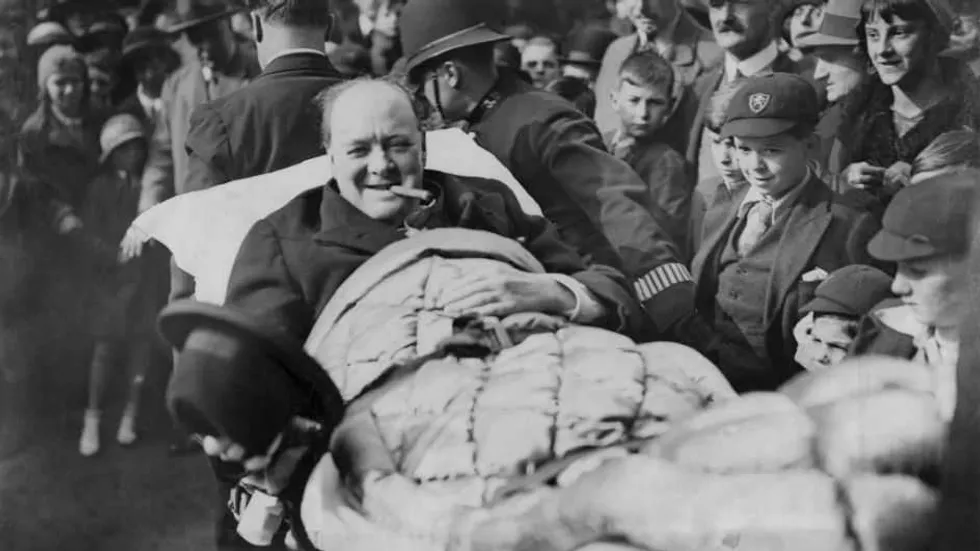
Winston Churchill helped lead Britain through the Second World War, wrote millions of words, and won the Nobel Prize in literature. He also took a nap every afternoon.
Freedom Is Back
In Style
Premium domains for sale
And he didn't simply doze off in an armchair. He got undressed and climbed into bed, equipped with custom-fitted beeswax earplugs to shut out the bustle of wartime London. His naps were sacrosanct, even as the demands of running a country at war frequently kept him working well past midnight.
There's even a technique called the 'nappuccino': Drink a cup of coffee immediately before a short nap, so the caffeine starts working around the time you wake up.
"Nature has not intended mankind to work from eight in the morning until midnight without that refreshment of blessed oblivion," he wrote in his wartime memoir "The Grand Alliance."
The British Bulldog would probably have had little patience for the latest headlines warning that daytime napping may be linked to dementia.
Dementia danger?
The warnings follow a new study from Johns Hopkins researchers involving 995 Americans ages 65 and older. Researchers examined their napping habits and tracked them for up to a decade. Those who napped most days or every day had a 48% higher relative hazard of developing dementia than those who rarely or never napped.
That's a sufficiently alarming figure to make anyone think twice about an afternoon snooze. But a closer look at the findings offers some reassurance to those of us who enjoy one.
People who fell asleep unintentionally had a 39% higher relative hazard of dementia. Those who deliberately chose to nap, however, showed no statistically significant association with dementia after the researchers adjusted for other factors.
The study also found an association for naps lasting 30 minutes or less, so the findings aren't an unqualified endorsement of the power nap. Nor can the researchers say whether napping contributes to dementia or whether the changes associated with developing dementia make people sleepier during the day.
For now, at least, the recliner can stay.
Churchill's second day
Churchill regarded his afternoon nap as indispensable to getting through the day. And he had little patience for half measures.
As he explained to Walter Graebner, a Time-Life executive who worked with him on his war memoirs, the proper way to nap was to take off your clothes, get into bed, and sleep. No dozing in a chair with your shoes on.
He also rejected the notion that an afternoon rest meant accomplishing less. He believed his routine effectively gave him a day and a half for every ordinary day.
Churchill's sleeping habits were unconventional even by the standards of men who worked late. He often conducted business from bed in the morning, took his afternoon nap, and returned to work deep into the night. The beeswax earplugs were no legend, either: The International Churchill Society reported that a pair, along with the plaster casts used to make them, were auctioned in 2012.
Of course, Churchill's habits don't prove that napping is healthy. His prodigious consumption of alcohol and cigars hardly makes him a model for preventive medicine. But nobody could accuse the man of being lazy.
RELATED: Apparently, we need experts to teach us how to walk now
 Icon Sportswire/Getty Images
Sleep like a soldier
Soldiers have a reputation for being able to sleep almost anywhere, whenever the opportunity presents itself. It's a useful ability in a profession where a missed night's sleep can have rather more serious consequences than a sluggish afternoon at the office.
The U.S. Army even has a name for the practice: tactical napping.
According to guidance from the Walter Reed Army Institute of Research, tactical naps are brief periods of sleep intended to restore and sustain military readiness. Soldiers are encouraged to nap before anticipated sleep deprivation and during extended operations when circumstances permit.
The trick is to nap before you're exhausted, not just after. Walter Reed recommends finding somewhere dark, quiet, and comfortable and allowing yourself time to shake off the grogginess afterward. There's even a technique called the "nappuccino": Drink a cup of coffee immediately before a short nap, so the caffeine starts working around the time you wake up.
NASA has also studied the benefits of a well-timed snooze. In an experiment involving long-haul airline pilots, those given the opportunity to rest slept for about 26 minutes on average and subsequently performed better and remained more alert than pilots who stayed awake.
Lead researcher Mark Rosekind later put the improvements at 34% in performance and 54% in physiological alertness.
Twenty-six minutes of sleep and a measurable improvement in the ability to do your job. How's that for a productivity hack? No cold plunges, carefully timed sun exposure, or adaptogenic mushrooms required.
Permission to nap
Frequent, unexplained daytime sleepiness can be a sign of inadequate nighttime rest, a sleep disorder, medication effects, or an underlying medical condition. Nor can a nap make up for consistently failing to get enough sleep at night.
But there's a considerable difference between repeatedly falling asleep when you don't intend to and deliberately setting aside a little time to rest.
For most healthy adults who find naps useful, 20 to 30 minutes in the early afternoon is a reasonable place to start. Nap too late and you may interfere with nighttime sleep. Sleep too long and you risk waking up groggy.
And if you need a more dignified justification than simply being tired, tell your colleagues you're following the example of Winston Churchill and the United States Army.
More from this network:
Domains for Sale · GOTPeople.org · TheDSAPlatform · The Truth About Socialism
What's Your Reaction?
 Like
0
 Dislike
0
 Love
0
 Funny
0
 Wow
0
 Sad
0
 Angry
0
I am just an average American. My teen years were in the late 70s and I participated in all that that decade offered. Started working young, too young. Then I joined the Army before I graduated High School. I spent 25 years in, mostly in Infantry units. Since then I've worked in information technology positions all at small family owned companies. At this rate I'll never be a tech millionaire. When I was young I rode horses as much as I could. I do believe I should have been a cowboy. I'm getting in the saddle again by taking riding lessons and see where it goes.
Premium domains for sale









Comments (0)