

The Ugly Truth Hiding Behind Picture Perfect Family Influencers
Premium domains for sale
Freedom Is Back In Style
When I was 36 weeks pregnant with my third child and too exhausted to argue, my husband packed his GoPro for our family vacation and documented the whole thing. He recorded the ride down, the condo antics, and the cuteness of our kids splashing in the surf. He recorded mini golf and a boardwalk ice cream stop; he interviewed the kids and family members who came along. He then edited it all, added music, and made us look like one of those influencer families. I love having the memories, but it was a lot of work for everyone.
Freedom Is Back
In Style
Premium domains for sale
Those videos still exist somewhere on YouTube and have approximately 100 views total if we’re lucky. Half of those are from family members. If you would ask my children tomorrow if they wanted to become influencers, they would say, “Yes! Please!” But just because they want something, that doesn’t make it good for them.
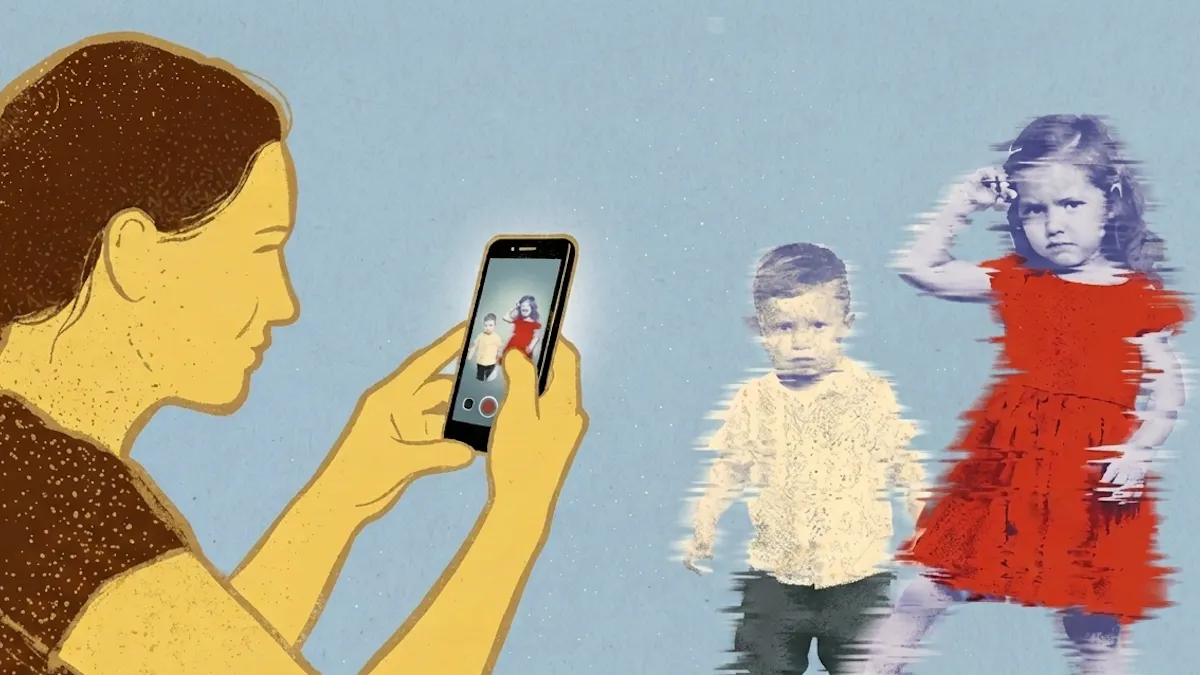
In “Like, Follow, Subscribe,” the buzzy new book about the potential harm of influencers showcasing their kids online 24/7, author Fortesa Latifi highlights families across the internet who record their kids and share their lives for clicks. Some, like the LaBrants, are well-known. Others are only familiar to hardcore YouTube fans.
The children Latifi interviewed almost all have mixed feelings about growing up under the watchful eye of the internet. They say they didn’t love it but in many cases felt guilted into it because of the income and opportunities that could only come from sharing their entire lives online.
I’ll start with the extremes because Latifi does: Ruby Franke, of the channel 8 Passengers, was arrested on child abuse charges. But even the influencers doing everything right still might be doing something a little wrong.
One influencer identified only by the pseudonym Sam said she once bribed her kids, offering them $500 to dance on camera while promoting a product, which would earn the family $40,000. The kids said no. Sam said she then had to “manipulate and guilt trip the kids.”
“This is our business. This is what we do,” she told them. “This is our family job. If we owned a farm, you would all be out milking cows. No questions asked … so get in line and let’s do this.”
Sam admitted that she watched her “moral filter” go out the window as the money began pouring in. She also noted that the longer she stays involved, the easier it is to justify. “The deeper you get into it, the more you numb out from it,” she told Latifi. “There’s no room for misgivings. There’s no room for a conscience.”
At least Sam is honest about the lasting damage she’s likely inflicting on the entire family, even if she’s not brave enough to own it by using her real name. Other influencers featured in the book had even less shame and more justifications.
There’s the unfortunate fact that negative content gets more clicks, and then more money. A video titled “Our First Pet Died” featuring a thumbnail of an adorable one of the LaBrant children sobbing has racked up 34 million views, as the author notes. This turned out to be clickbait — because it’s not the family dog that died, but rather the goldfish.
It gets way worse than that. Family Fun Pack filmed reactions to their children’s grandmother’s funeral and earned just under 2 million views.
Another influencer named Jordan Cheyenne faced backlash after accidentally uploading a video of herself coaching her son to cry after finding out his dog was fatally ill. “No, Mom, I’m seriously crying,” he can be heard saying, and Cheyenne instructs him to look sadder and, above all, focus on the camera. “Come closer for the video … let them see your mouth,” she can be heard saying.
Some kids are happy to go along with what their YouTuber parents are doing, but what choice do they have, and what alternative do they know? Many have been on camera for the world since they were in utero. These influencers often justify their kids’ inclusion by pointing out that they don’t complain. But some of them actually do complain.
The book is filled with shocking anecdotes that make a strong case for throwing all influencer parent iPhones into the ocean, but the author somehow also manages to fixate on conservatives. She positively quotes progressive journalist Taylor Lorenz’s book, “Extremely Online: The Untold Story of Fame, Influence, and Power on the Internet.” For all the negative things Latifi could say about the LaBrants, one of her chief complaints is that they are “almost impossibly” blond with blue eyes and that they “love Jesus” and choose to include that in their videos.
Latifi takes the most offense to tradwife mommy bloggers, as many liberals tend to do. “While perhaps it’s not a feminist act to create paid labor out of unpaid labor, it is an act of agency within the confines of the patriarchy. It’s why so many mom influencers and family vloggers are Mormon,” she writes. (What is she even talking about?)
“The trad wife performs an imitation of the past because the present is so uncertain,” Latifi goes on. “She drapes herself in prairie dresses and flowing aprons, smiles into the camera that captures her every move even as she insists she’s not working at all.”
She concludes that these influencers are wrongly promising “there is meaning and beauty to be found in motherhood.” There is, of course, meaning and beauty in motherhood, but — she’s right — not by oversharing for clicks on YouTube.
By the final chapters, that anti-conservative streak stops being subtext and becomes the whole argument, veering so far from the subject of family vlogging that it ends up saying more about the author’s politics than about kids on camera.
“As I’m writing this, Donald Trump is president for the second time, and the experience of American motherhood has never been more threatened,” she writes. “Pregnant women are dying from being denied access to abortions. They’re bleeding out in hospital parking lots and crossing state lines to access care.”
None of that has much to do with whether a nine-year-old should be coached to cry on camera about a dying dog or whether a toddler should grow up dancing for diaper brands. Those questions don’t need a chapter on the current occupant of the White House. They need what every parent already has: a phone in one hand, and the willingness to put it down.
***
This article is part of Upstream, The Daily Wire’s new home for culture and lifestyle. Real human insight and human stories — from our featured writers to you.
More from this network:
Domains for Sale · GOTPeople.org · TheDSAPlatform · The Truth About Socialism
What's Your Reaction?
 Like
0
Like
0
 Dislike
0
Dislike
0
 Love
0
Love
0
 Funny
0
Funny
0
 Wow
0
Wow
0
 Sad
0
Sad
0
 Angry
0
Angry
0

I am just an average American. My teen years were in the late 70s and I participated in all that that decade offered. Started working young, too young. Then I joined the Army before I graduated High School. I spent 25 years in, mostly in Infantry units. Since then I've worked in information technology positions all at small family owned companies. At this rate I'll never be a tech millionaire. When I was young I rode horses as much as I could. I do believe I should have been a cowboy. I'm getting in the saddle again by taking riding lessons and see where it goes.
Premium domains for sale

















Comments (0)