

The unbearable burden may still be worth bearing
Premium domains for sale
Freedom Is Back In Style
Across Canada, Europe, and a growing number of U.S. states, assisted death is increasingly presented as relief from suffering. The Netherlands even uses “unbearable suffering with no prospect of improvement” as part of its legal standard for euthanasia.
Freedom Is Back
In Style
Premium domains for sale
Before lawmakers and physicians define suffering as unbearable, they should listen to someone who has borne it.
No one can bear a lifetime of suffering at once. But the shepherd gives grace for the next 24 hours.
In a recent interview with my longtime friend Joni Eareckson Tada, she addressed California’s End of Life Option Act.
“It’s almost like people who feel they live with unbearable suffering can just move to California and end it all,” she said.
“Unbearable” does a great deal of heavy lifting in that sentence.
A diving accident at 17 left Joni a quadriplegic. Now turning 77, she has endured two rounds of breast cancer and decades of chronic pain.
By almost any ordinary measure, Joni has endured what lawmakers increasingly describe as unbearable suffering. Yet she is still here. Still serving. Still living a life of substance and consequence.
She has written more than 60 books, reaches more than a million radio listeners, and leads a worldwide disability ministry. Few living Christian voices speak more clearly to those who suffer.
At the end of our interview, I asked whether she would ever retire.
“No.”
Joni cited Paul, torn between departing to be with Christ and remaining because others still needed him. Heaven was “far better,” but the work was unfinished.
She does not minimize pain. She rejects death as its most compassionate answer.
I have spent 40 years beside my wife, Gracie, who has endured 98 operations, bilateral amputations, and relentless pain.
Joni sees unbearable suffering from the wheelchair. I see it from beside the wheelchair.
She sees the suffering person think, “My life has become a burden.”
I see the caregiver think, “This burden is mine alone.”
My own recent cancer treatment brought a familiar question to the front row: Who will care for the person I love when I no longer can?
As assisted death spreads, vulnerable people can hear another question beneath the language of choice: Would everyone else be relieved if I were gone?
That is where compassion can become something darker.
RELATED: Euthanasia and the lie of the ‘good death’
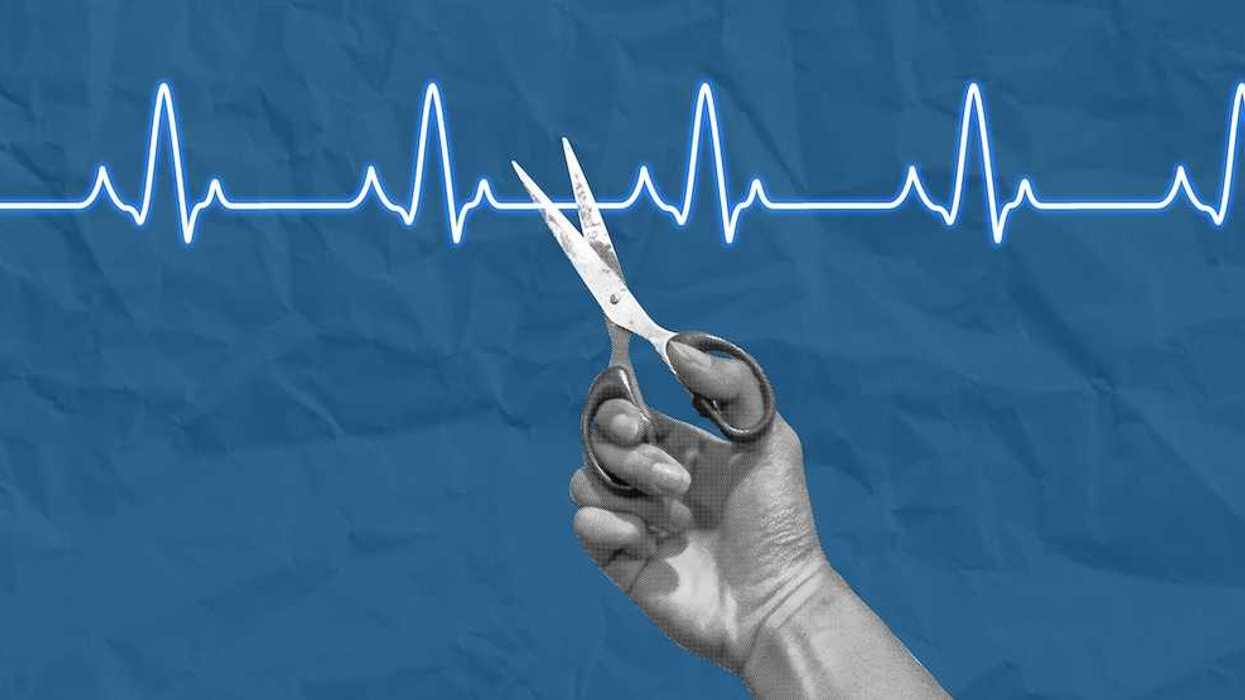 Mininyx Doodle/iStock/Getty Images
Death can begin to look like the answer to suffering we fear, consequences we refuse to bear, or lives that ask more of us than we believe we can give.
The prevailing creed is autonomy: I alone decide what suffering I will endure and what another person’s life may require of me. The same logic appears in abortion: No life may demand more of me than I am willing to give.
But once death becomes an accepted answer to suffering, the judgment does not remain entirely private. Families, physicians, insurers, and institutions inevitably begin weighing burdens, costs, prognosis, and quality of life.
They may call that compassion. Christian compassion asks something harder.
Compassion enters suffering. It does not eliminate the sufferer.
If suffering is merely random, eliminating the sufferer can masquerade as mercy. But if a sovereign God rules over this world, suffering is never meaningless or beyond His reach.
Christianity rejects that counterfeit compassion. We entrust ourselves to Christ and enter the burdens of others.
Human worth is not conferred by health, independence, or usefulness. God made us in His image. Paul calls members of Christ’s body who appear weaker “indispensable” (1 Corinthians 12:22).
But what sustains us when the pain does not end?
Joni’s answer is not willpower. Gracie’s answer is not optimism. They are sustained by Christ.
What does that look like?
No one can bear a lifetime of suffering all at once. But the shepherd gives grace for the next 24 hours. Psalm 23 does not promise a short valley. It promises we will not be abandoned within it.
Following Gracie’s 92nd operation, she returned to her hospital room tangled in tubes and IV lines. A young nursing assistant came in to check on her.
Still emerging from anesthesia, Gracie sensed something was wrong.
“How are you?” she whispered.
Tears filled the woman’s eyes as she confided that her marriage was in trouble.
Gracie threaded her hand through the lines and took the woman’s hand. Then she weakly quoted her friend Joni: “God permits what He hates to accomplish what He loves.”
Neither woman could see what God was doing. Neither believed He was doing nothing.
RELATED: The small mercy of a pressed pillowcase
 zsv3207/iStock/Getty Images
The woman’s shoulders straightened, and she breathed a little easier.
Gracie was one beggar showing another where she had found bread.
We do not become someone else’s savior. Even from within our own anguish, we can help people catch their breath and point them to the Savior who understands their suffering and whose purposes extend beyond what we can explain.
“Bear one another’s burdens,” Paul writes, “and so fulfill the law of Christ” (Galatians 6:2).
That command applies to everyone who belongs to Christ. It cannot be outsourced.
If we say Christ is sufficient, visible obedience should follow.
Do we take Him at His word? If we do, how would anyone know?
They would see us entering the burdens of others.
Sometimes to sit. Sometimes to carry. At all times, to point to the Savior.
More from this network:
Domains for Sale · GOTPeople.org · TheDSAPlatform · The Truth About Socialism
What's Your Reaction?
 Like
0
Like
0
 Dislike
0
Dislike
0
 Love
0
Love
0
 Funny
0
Funny
0
 Wow
0
Wow
0
 Sad
0
Sad
0
 Angry
0
Angry
0

I am just an average American. My teen years were in the late 70s and I participated in all that that decade offered. Started working young, too young. Then I joined the Army before I graduated High School. I spent 25 years in, mostly in Infantry units. Since then I've worked in information technology positions all at small family owned companies. At this rate I'll never be a tech millionaire. When I was young I rode horses as much as I could. I do believe I should have been a cowboy. I'm getting in the saddle again by taking riding lessons and see where it goes.
Premium domains for sale




















Comments (0)