

The Youth Sports Tradition Defying America’s Broken System
Premium domains for sale
Freedom Is Back In Style
American youth sports programs have gained a reputation for being toxic to kids and families, but one league in the South is bucking the trend.
Freedom Is Back
In Style
Premium domains for sale
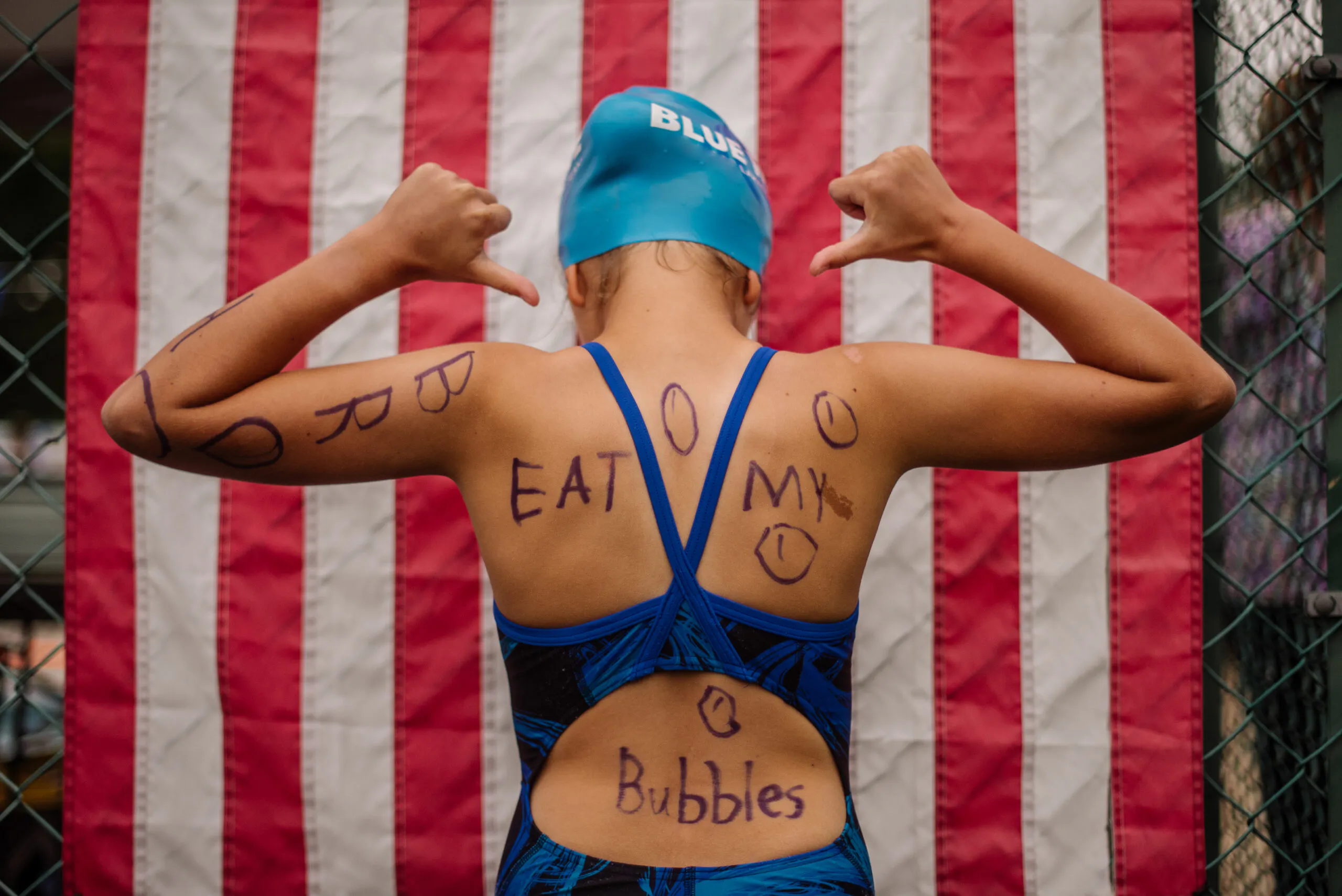
The Swim Association Invitational League in Greenville County, South Carolina, is a recreational swim league where kids at every competitive level learn about discipline, hard work, and handling pressure through the joy of athletic competition. The league is a community bedrock that has brought swimmers and families together for over 60 years and become a quintessential part of summer for thousands.
Three years ago, my family and I left the suburbs of Philadelphia and relocated to Greenville County. Shortly before we moved, I discovered my daughter, who was 7, had an interest in swimming. This was a big deal because for months I’d unsuccessfully tried to find a sport she loved, and after signing her up for soccer, basketball, and softball, I’d only found that she hated running. But when she participated in a two-week swim program at our local high school and took to the water like a fish, I knew I’d finally found her sport.
I’m adamant about my kids participating in youth sports because I was an athlete and know sports can be an incredible environment for kids to learn about discipline, perseverance, and teamwork while developing healthy physical habits. Through the highs and lows of playing sports, I learned about handling pressure and overcoming adversity, which were valuable lessons I carried into adulthood. Science backs up the benefits of youth sports participation, which increases physical health while buffering the impacts of stress and anxiety.
But American youth sports have undergone a major mindset shift since I was an athlete. Youth sports have become a $40 billion industry, and the low-pressure recreational leagues of the past focused on development and fun have largely been replaced by early sport specialization and high-stakes travel teams. This so-called “professionalization of youth sports” is causing overuse injuries, athlete burnout, and financial strain for families, threatening to nullify many of the benefits kids gain by playing sports. It’s also pushing kids to opt out of participating altogether. The American Academy of Pediatrics estimates that 70% of kids have quit sports altogether by age 13. Too many young athletes are stressed and overworked during a time they should be having fun while playing a sport they love.
The summer SAIL league in Greenville has managed to buck these negative trends and is proof you can still create a competitive, positive youth sport culture in 2026. The SAIL swim league includes over 30 neighborhood-based teams that collectively represent more than 4,500 swimmers, ages 6-18, from over 1,700 families. Many teams are coached by college students, who are often former SAIL swimmers, and practice is held twice a day for almost two months at the neighborhood’s pool. I first learned of the league from veteran swim team moms who told me joining a SAIL team would be a huge investment of time and energy but confidently assured me, “It will all be worth it.” Our family took the plunge and joined a team at the start of our first summer living in Greenville.
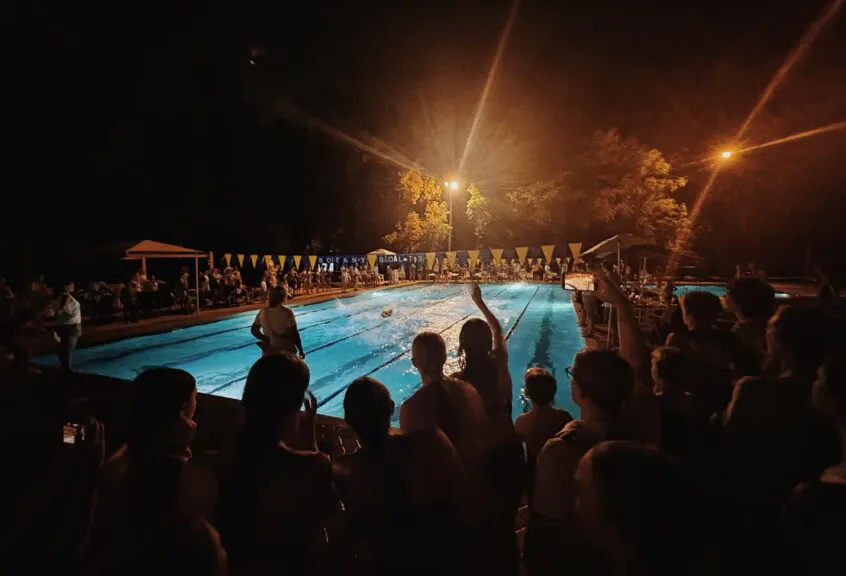
Final race of the night. Photo by Meg Brock.
As a new swim team mom, I quickly discovered summer swim meets are four to six hours of beautiful and overwhelming chaos. Hundreds of kids are running around barefoot, almost indistinguishable in their matching bathing suits and swim caps, playing and laughing together while waiting to swim their races. Parents, who are required to volunteer at every meet, hover at the edge of the pool clutching stopwatches as they try to capture the precise second a swimmer touches the wall. A loud “take your mark” repeats over and over again as swimmers in a never-ending line jump off the starting blocks before a cheering crowd. It’s loud, energetic, and overstimulating, but somehow it all works.
Outside of the pool deck is a sprawling encampment of canopies, kids, and camping chairs that rivals any tailgate party you’d find on game day outside of a professional stadium (minus the alcohol). At my first swim meet, I made the rookie mistake of only bringing along two camping chairs. I’ve since adopted the mindset of bringing everything my family would need for an overnight camping trip, including food, water, foldable chairs, battery-powered fans, and a canopy for shelter.
The meets have 80 events, and each swimmer can sign up for three races and has the chance to make two relay teams, which altogether adds up to just two to six minutes per swimmer — not a lot of time for the amount of effort put in.
Summer swim allows kids at every level, whether they can barely make it across the pool or are elite all-year swimmers, to compete on the same team. New swimmers race against their own personal best while top swimmers race against each other to win and score points for their team. Everyone has something to aim for and the chance to leave the meet feeling like they accomplished something, even if they finished dead last. Every kid, not only the very athletic or single-sport specialized, has the opportunity to compete, grow, and learn valuable lessons. Swim team also gives structure and purpose to the unanchored days of summer and inoculates kids from developing a case of perpetual summer boredom.
In addition to practices and meets, the team brings kids and families together through social events such as movie outings, family meals, and a nostalgic Fourth of July celebration. It provided our entire family with a sense of community when we had just moved to a new place and really needed it. It’s the only youth sport league I’ve been a part of that brings families together instead of pushing everyone in different directions.
Sometimes at the end of a home meet, the entire team of swimmers, from teens to first graders, jumps into the pool at the same time to celebrate a win. It’s a kind of wholesome fun and feeling of community you usually only see in movies. I’m so thankful my kids have been able to experience it in real life. After three years of being a summer swim team mom, I understand why thousands of families have devoted two months of their summer to this beloved tradition for over 60 years.
Greenville isn’t the only place where this magic happens. There are amazing recreational summer swim leagues all across the country. If you are looking for ways to build up kids and community, I wholeheartedly recommend diving into summer swim. You’ll likely find a youth sports culture you didn’t think still existed and that the practices, the long meets, and all that sweating in the sun will be worth it. It might just become your favorite part of summer. It’s become mine.
***
This article is part of Upstream, The Daily Wire’s new home for culture and lifestyle. Real human insight and human stories — from our featured writers to you.
More from this network:
Domains for Sale · GOTPeople.org · TheDSAPlatform · The Truth About Socialism
What's Your Reaction?
 Like
0
Like
0
 Dislike
0
Dislike
0
 Love
0
Love
0
 Funny
0
Funny
0
 Wow
0
Wow
0
 Sad
0
Sad
0
 Angry
0
Angry
0

I am just an average American. My teen years were in the late 70s and I participated in all that that decade offered. Started working young, too young. Then I joined the Army before I graduated High School. I spent 25 years in, mostly in Infantry units. Since then I've worked in information technology positions all at small family owned companies. At this rate I'll never be a tech millionaire. When I was young I rode horses as much as I could. I do believe I should have been a cowboy. I'm getting in the saddle again by taking riding lessons and see where it goes.
Premium domains for sale

























Comments (0)