

Think woke is dead? Meet the literature professor fired for teaching literature.
Premium domains for sale
Freedom Is Back In Style
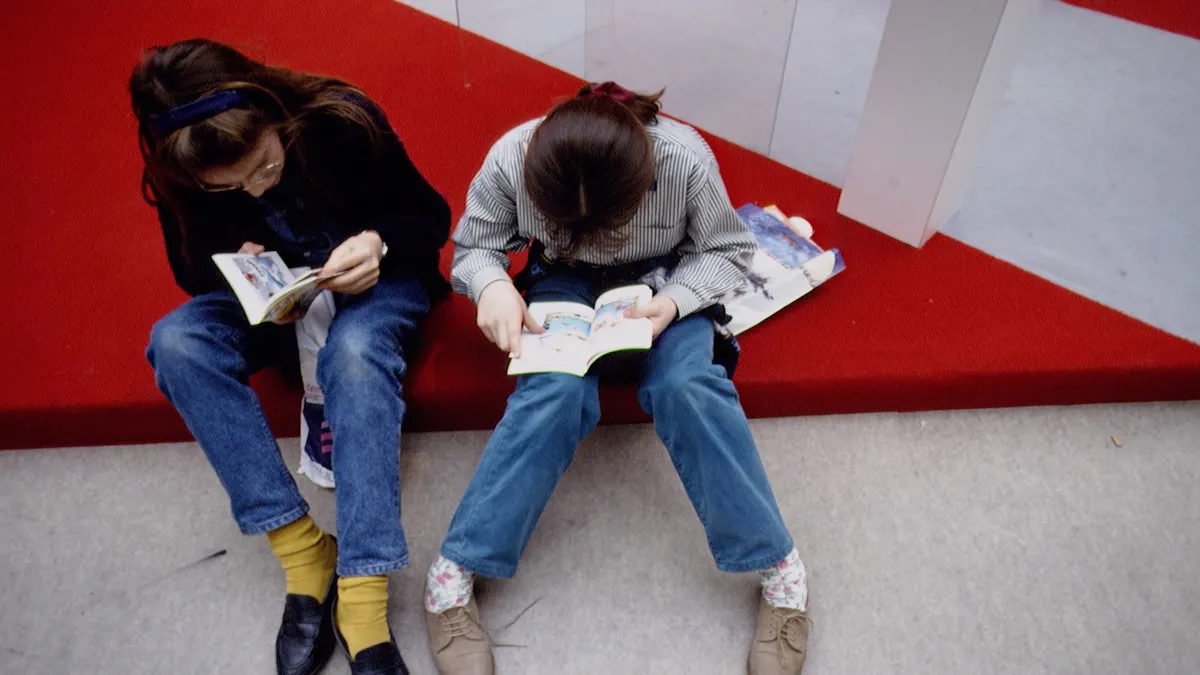
With crippling anxiety and microscopic attention spans, today’s college students are in a bad way.
Freedom Is Back
In Style
Premium domains for sale
To compound matters, an increasing number possess reading skills that appear to have peaked in fifth grade. Yet the moment a literature professor challenges them with a work of fiction, she finds herself ruthlessly punished.
FIRE’s lawsuit seeks to restore sanity to a system that has clearly lost its bearings.
What you are about to read is depressing, but not necessarily surprising. After all, this is a culture already intent on turning literature into scrap metal. For years, ridiculously woke crusaders have worked tirelessly to cancel Shakespeare for wrongthink and forcibly inject modern queer elements into his work.
Now, the institutional axe swings in whatever direction keeps the peace, chopping down any story that threatens to upset an undergraduate.
Books smart
Vinita Prabhakar taught English at South Florida State College for nearly 20 years. Her reward for that service? Being booted out the door because one student had a brief moment of cognitive discomfort and a college president panicked.
The piece of literature in question wasn't a step-by-step guide to urban guerrilla warfare, but a short story featuring a deeply flawed protagonist. Prabhakar assigned Ottessa Moshfegh's "Bettering Myself" for the exact reason professors have assigned challenging literature since the invention of the printing press: to force students to analyze provocative ideas rather than stare blankly at a wall.
Enter Fred Hawkins, the college president. Hawkins decided the story was problematic, informed Prabhakar he never wanted to see the text again, and promptly oversaw her suspension.
This level of executive intervention bypassed the entire chain of academic oversight.
FIRE alarm
"Universities can set the curriculum, but that’s very different from a president personally overruling the academic professionals who actually supervise a professor," Greg Greubel told me. Greubel is a senior attorney at FIRE, the Foundation for Individual Rights and Expression, who is representing Prabhakar.
While Professor Prabhakar’s academic supervisors explicitly endorsed her pedagogical judgment, President Hawkins personally intervened to crush it because he disliked the story and deemed the matter political.
Greubel warns that if this precedent “is allowed to stand, professors will learn to choose the safest reading rather than the one that best challenges their students."
The interaction between the professor and the student was a textbook case of quality instruction. A student expressed discomfort with the assigned material. Prabhakar didn’t mock the student, nor did she send the student to a re-education camp. She engaged the class in an open and civil debate, processed the critique, and kept the student integrated in the course.
"It is exceptionally unusual, especially because Professor Prabhakar successfully navigated the situation," Greubel notes. "The student raised a concern; Professor Prabhakar addressed it through discussion, and the student continued to participate without incident.”
RELATED: America is losing its farmers to bankruptcy and suicide
 Scott Olson/Getty Images
Protection from paper
In other words, the classroom functioned exactly as higher education was designed to work, right up until the university president intervened and transformed level-headed mentorship into an administrative execution.
Hawkins blew up a functioning pedagogical resolution to protect adults from words on paper. Florida statutory law explicitly forbids public colleges to baby students who encounter ideas they find objectionable. The state legislature wrote those protections into law precisely to stop neurotic middle managers from gutting course catalogs every time an undergraduate gets a stomachache from a difficult paragraph.
Greubel points directly to this legal framework as a key element of Prabhakar’s defense. "It helps because it shows that, at least at one point, Florida politicians understood the dangers of censoring materials in higher education simply because someone views them as offensive," Greubel explains.
"The law says public colleges should not shield students from ideas they find uncomfortable, unwelcome, or offensive. Yet that is essentially what happened here.”
No authority
Beyond handing Professor Prabhakar a clear lawsuit, the law reinforces an elementary First Amendment truth. University officials don’t have the constitutional authority to dismantle a curriculum to accommodate their personal sensitivities.
In 1943, the Supreme Court held in West Virginia State Board of Education v. Barnette that no official, regardless of title or ego, can determine what constitutes acceptable political, national, or religious orthodoxy. Eighty-three years later, campus administrators behave like absolute monarchs, treating state educational statutes as optional suggestions.
When campus bureaucrats act this way, the primary objective becomes eliminating risk entirely. Between the hyper-progressive crusade to gut classic literature and the reactionary urge to ban anything that causes an emotional tremor, decent literature doesn't stand a chance. Thought-provoking fiction contains risk. Critical analysis contains risk. Therefore, the safest syllabus is a blank stack of paper, and the safest classroom is an entirely neutralized one.
Justice for Professor Prabhakar
FIRE’s lawsuit seeks to restore sanity to a system that has clearly lost its bearings.
"First and foremost, we want Professor Prabhakar back in the classroom, along with appropriate declaratory and injunctive relief to ensure she will not be fired in the future for teaching appropriate materials," Greubel states. "More broadly, we want to establish that public colleges cannot remove professors simply because an administrator, student, or member of the public dislikes assigned material.”
Although colleges retain the right to set academic benchmarks, they have zero authority to purge a professor for teaching legitimate material that directly serves the curriculum.
If an administrator can end an academic’s career over a single short story, the concept of academic freedom is all but dead. And colleges will keep doubling as glorified day-care centers, where adults pay thousands of dollars per semester to be protected from vowels and consonants.
By all accounts, Professor Prabhakar is a consummate professional who takes pride in her work. She has been treated appallingly and deserves justice.
More from this network:
Domains for Sale · GOTPeople.org · TheDSAPlatform · The Truth About Socialism
What's Your Reaction?
 Like
0
Like
0
 Dislike
0
Dislike
0
 Love
0
Love
0
 Funny
0
Funny
0
 Wow
0
Wow
0
 Sad
0
Sad
0
 Angry
0
Angry
0

I am just an average American. My teen years were in the late 70s and I participated in all that that decade offered. Started working young, too young. Then I joined the Army before I graduated High School. I spent 25 years in, mostly in Infantry units. Since then I've worked in information technology positions all at small family owned companies. At this rate I'll never be a tech millionaire. When I was young I rode horses as much as I could. I do believe I should have been a cowboy. I'm getting in the saddle again by taking riding lessons and see where it goes.
Premium domains for sale






Comments (0)