

Three Ballot Traps Hiding Behind ‘Harmless’ Promises
Premium domains for sale
Freedom Is Back In Style
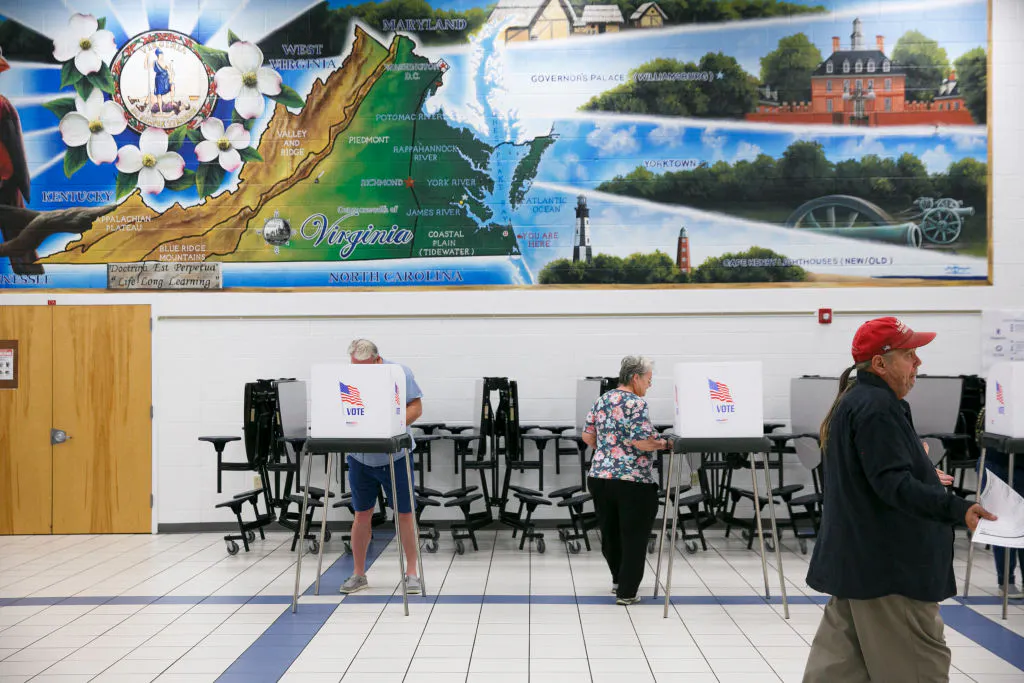
On November 3, Virginia votes on three proposed constitutional amendments. The ads call them harmless: “codify Roe,” “protect marriage,” “restore voting rights.” The ballot summaries say the same. And every bit of it is a sales pitch for text that does something very different.
Freedom Is Back
In Style
Premium domains for sale
Forget the courtroom argle-bargle. Here’s what these amendments actually do if they pass.
Question 1: The predator protection amendment
An 11-year-old girl gets pregnant. Under Virginia law, she is the victim of a crime. So who takes her to the abortion clinic? Too often, the man who got her pregnant — because the procedure destroys the evidence.
Question 1 doesn’t just tolerate that. It arms it.
The amendment extends abortion rights to “every individual” without an age limit. It wipes out Virginia’s parental consent law, because notifying a parent “burdens” the child’s “autonomous decision making.” It exempts third-trimester abortion from any restriction the moment the abortion provider invokes the patient’s “mental health” — a term the amendment never defines, reviewed by no second doctor, no judge, no parent. And it flatly forbids the state from taking “adverse action” against anyone who “assists” in the abortion.
Child protection? The amendment lists the state interests strong enough to justify any regulation. Child protection didn’t make the list.
This isn’t theory. As Kansas Attorney General, I prosecuted these cases. Abusers drove underage victims to clinics to end the evidence of their crimes — and drove them home again, clean. A former Planned Parenthood executive told me directly that her clinic staff was instructed not to ask questions that could reveal abuse, and not to report it when they saw it. Question 1 takes that regime and walls it off with constitutional protection: no parent, no report, no penalty for whoever helps, forever.
That’s not codifying Roe v. Wade. Even Roe‘s defenders never dreamed of this. It’s a zone of secrecy with a constitutional roof over it — and every trafficking investigator in Virginia knows who benefits.
Question 2: The gender ideology amendment
Same-sex marriage is already legal in Virginia — and it’s protected federally by the Respect for Marriage Act no matter what the U.S. Supreme Court does. Repealing Virginia’s dead 2006 marriage ban would take one sentence.
So why did the drafters write the word “gender” — twice — into the Bill of Rights?
Because this was never about marriage. The Supreme Court uses “sex.” Congress uses “sex.” Even Obergefell v. Hodges talks about “same-sex couples.” “Gender” is the word of the ideology movement — defined by its own advocates as a fluid, self-declared “innermost concept of self” that can be male, female, both, or neither, and can change.
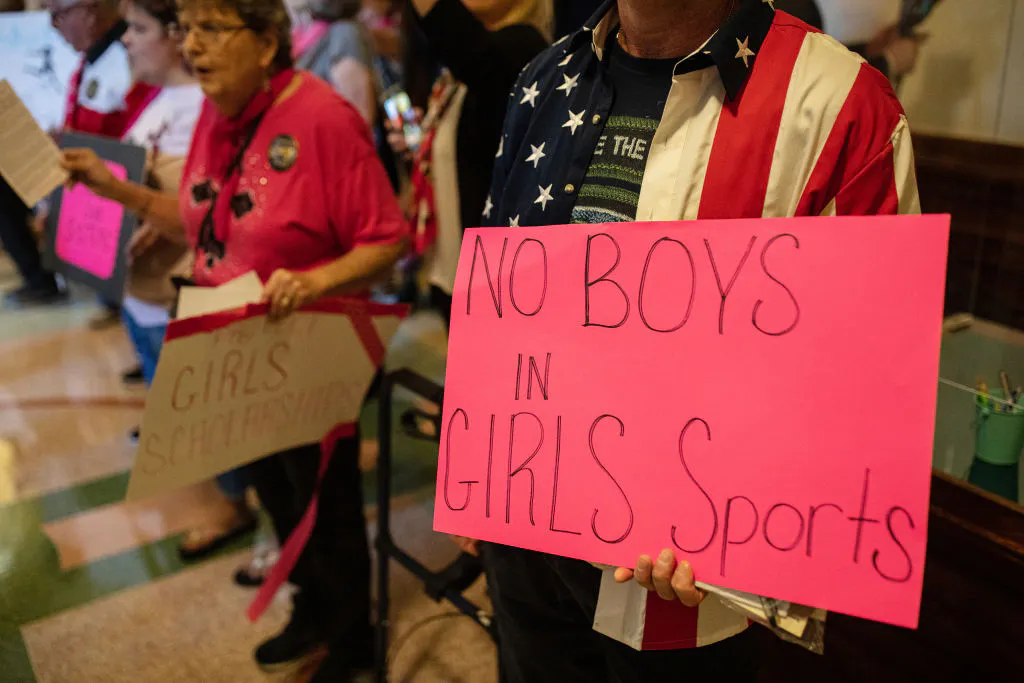
Now that word would sit in Virginia’s constitution, above every statute in the Commonwealth. What does it threaten? Women’s sports. Private spaces — locker rooms, shelters, prisons. The ability of a legislature to define anything by sex at all. Every rule becomes a discrimination claim, litigated under a term no court has ever defined — in custody, adoption, employment, and schools.
Conservatives have spent a decade warning that gender ideology would be imposed by courts and agencies because it could never win at the ballot box. Question 2 is the workaround: write the undefinable word directly into the Constitution and let the lawsuits do the rest. Virginia would be the first state in the country to do it.
Question 3: The fraud-is-a-feature amendment
Here’s the entire list of exceptions to the “fundamental right to vote” this amendment creates: you can’t vote while incarcerated, and you can’t vote if a court finds you can’t understand what you’re doing.
That’s it. That’s the list.
Voter ID? Not an exception. Absentee ballot verification? Not an exception. Registration deadlines, ballot security, residency checks — none of them.
Missouri passed similar language, and its courts struck down photo ID. That’s the model. If Question 3 passes, every election safeguard in Virginia isn’t repealed — it’s converted into a constitutional lawsuit the current text doesn’t authorize. Election Day becomes Lawyer’s Day.
And the felon voting restoration at the heart of it? It doesn’t wait for restitution to victims. It doesn’t wait for parole to be completed. Release day is voting day, jury service day, run-for-office day — consequences to the victim be damned.
All they needed was simple language saying the Commonwealth would not discriminate against a person’s right to vote if they completed their sentence, and dropped the lawsuit machine entirely. They wanted the lawsuit machine.
The pattern is the point
Three amendments. Three times, tested language was available — words the Supreme Court itself used, words other states used, words that would have done exactly what the ads promise. Three times, the drafters chose the radical text instead.
That’s not a drafting accident. That’s the agenda, hidden behind harmless-sounding summaries and sold to moderates who would recoil at the real thing.
And Virginia is the test market. If the bait-and-switch wins here, the same packages ship to your state next year with the same soothing labels.
A bad statute can be repealed in January. A bad constitutional amendment is a generational inheritance — enforceable by every activist lawyer who can read it, removable by almost no one.
Read the text, not the summary. Then vote “No” on all three — and if you don’t live in Virginia, watch what happens here. It’s coming for your state.
***
Phill Kline is the official spokesman for Defend Virginia’s Sons and Daughters. He served as the 41st attorney general of Kansas, as a Kansas district attorney, and state legislator. He is presently a law professor and lives in Amherst, Virginia with his wife Deborah.
More from this network:
Domains for Sale · GOTPeople.org · TheDSAPlatform · The Truth About Socialism
What's Your Reaction?
 Like
0
 Dislike
0
 Love
0
 Funny
0
 Wow
0
 Sad
0
 Angry
0

I am just an average American. My teen years were in the late 70s and I participated in all that that decade offered. Started working young, too young. Then I joined the Army before I graduated High School. I spent 25 years in, mostly in Infantry units. Since then I've worked in information technology positions all at small family owned companies. At this rate I'll never be a tech millionaire. When I was young I rode horses as much as I could. I do believe I should have been a cowboy. I'm getting in the saddle again by taking riding lessons and see where it goes.
Premium domains for sale






Comments (0)