

Trump Admin Secures $1B In UN Cuts As Reform Push Intensifies
Premium domains for sale
Freedom Is Back In Style
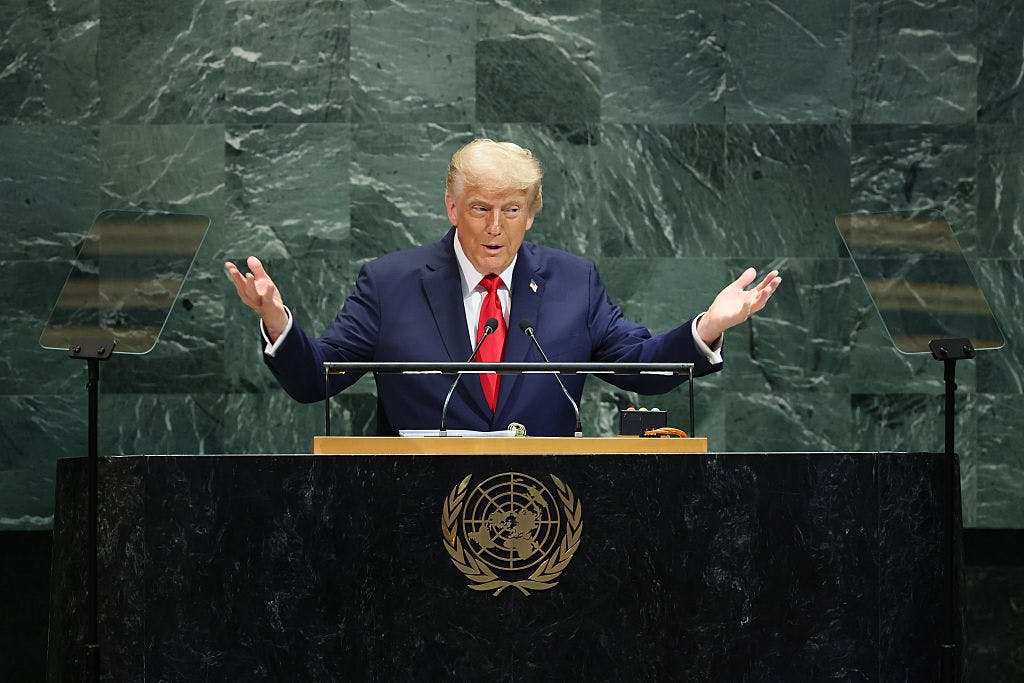
The Trump administration is highlighting more than $1 billion in United Nations budget cuts over the past six months as part of its ongoing push to reform the international organization.
Freedom Is Back
In Style
Premium domains for sale
On June 30, all 193 U.N. member states approved a peacekeeping budget of approximately $5.1 billion for the coming fiscal year. That figure represents a cut of about $550 million, or 9.7 percent, from the previous year, Fox News reported.
Combined with a 15 percent reduction to the U.N.’s regular budget approved in December, U.S. officials say the agreements total more than $1 billion in savings on assessed budgets.
Assessed budgets are funded through mandatory contributions from member states, calculated largely based on the size of their economies.
U.S. Ambassador for U.N. Management and Reform Jeff Bartos described the results as significant. “On June 30th, with U.S. leadership, all 193 countries came together again for the second time in six months,” Bartos told Fox News Digital. “We’ve achieved over a billion dollars of savings in six months, which is unprecedented. Any one cut would be unprecedented. The totality of the reforms is monumental.”
The administration has made U.N. reform a crucial part of its approach, saying the organization has grown overly bureaucratic and inefficient. The latest agreements come as the U.N. prepares for a leadership transition in 2027, with Secretary-General António Guterres scheduled to leave office at the end of his second term.
U.N. spokesman Stéphane Dujarric confirmed the reductions, describing both the peacekeeping budget cut and the 15% regular budget reduction as “unprecedented.”
Bartos credited sustained pressure from the United States and months of negotiations by the U.S. Mission. He said the changes are shifting how the U.N. approaches peacekeeping. “The new budget, this reformed budget, the enhanced efficiency changes the culture of how the U.N. looks at peacekeeping,” Bartos said. “Every dollar has to achieve impact on the ground.”
As an example, he pointed to the U.N. Mission in South Sudan, where the U.S. worked to streamline the mandate before cutting its budget.
Another reform approved on June 30 changes how the U.N. handles unused budget credits. Previously, the organization was required to return unspent funds to member states even if those contributions had never been paid in cash. The new approach, approved on a four-year trial basis, returns unspent funds only when backed by actual cash received. Bartos said this change could save more than $1 billion over the next three years in addition to the cuts already implemented.
Guterres, who had advocated for the reform for nearly a decade, welcomed the change after the vote. He described the old system as a “Kafkaesque cycle” in which the U.N. was expected “to give back cash that did not exist.” Dujarric said the update would help the organization manage resources “in a more predictable and responsible way.”
Bartos indicated that the recent budget agreements are only the start. He said the administration plans to pursue further changes to staff compensation, employee benefits, and the U.N. pension system. “There’s massive numbers of additional reforms that our team is working on right now,” he said.
Bartos also mentioned that reform efforts are likely to continue as member states prepare to select the next secretary-general in 2027.
More from this network:
Domains for Sale · GOTPeople.org · TheDSAPlatform · The Truth About Socialism
What's Your Reaction?
 Like
0
Like
0
 Dislike
0
Dislike
0
 Love
0
Love
0
 Funny
0
Funny
0
 Wow
0
Wow
0
 Sad
0
Sad
0
 Angry
0
Angry
0

I am just an average American. My teen years were in the late 70s and I participated in all that that decade offered. Started working young, too young. Then I joined the Army before I graduated High School. I spent 25 years in, mostly in Infantry units. Since then I've worked in information technology positions all at small family owned companies. At this rate I'll never be a tech millionaire. When I was young I rode horses as much as I could. I do believe I should have been a cowboy. I'm getting in the saddle again by taking riding lessons and see where it goes.
Premium domains for sale














Comments (0)