

Trump bans Chinese robots — but your robot vacuum may be spying on you already
Premium domains for sale
Freedom Is Back In Style
As AI sweeps through your favorite devices, services, and apps, there’s one category that hasn’t gotten nearly as much attention (yet): robots.
Freedom Is Back
In Style
Premium domains for sale
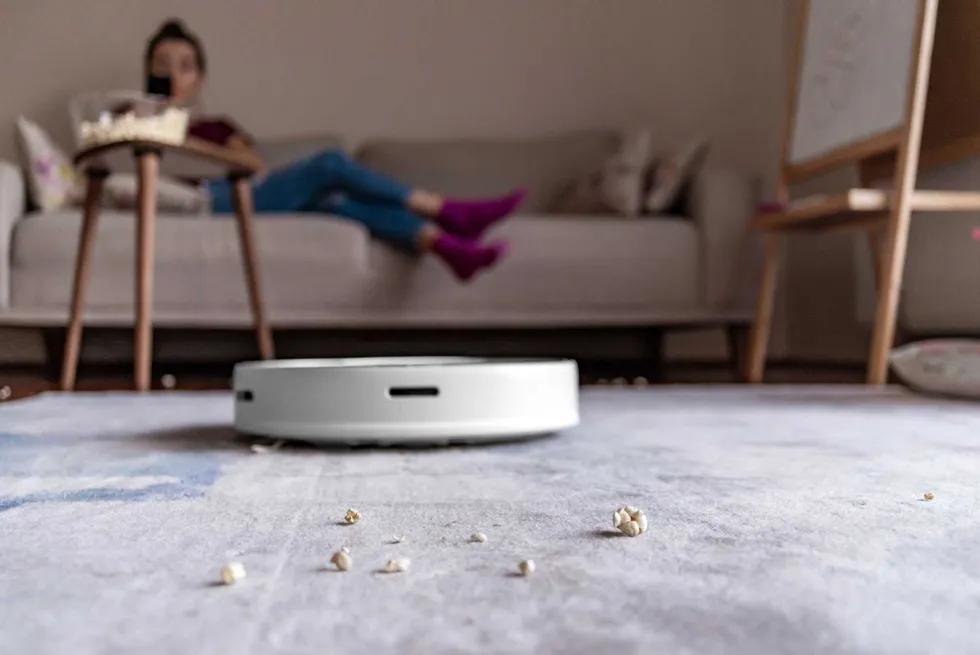
Artificial intelligence is being crammed into all kinds of robot forms that are destined for consumers, from robot vacuums to doglike pets and even humanoid servants meant to live in your home and help you do chores.
The worst part? Many of these bots come from Chinese companies, prompting enough concern over national security and personal privacy that the Trump administration just handed down a new Chinese robot ban that is effective immediately.
What the ban entails
In late July, the Trump administration announced that it would ban U.S. imports on new intelligent robot products that hail from China. This is significant, since the ban covers most of the smart robot market. According to the Associated Press, China owns about 85% of this product segment, dwarfing American companies like Boston Dynamics with its lethal dog robot, as well as Tesla, which has yet to ship its Optimus humanoid robot that debuted in 2022.
A Roomba vacuum took revealing photos of a woman in her bathroom.
It’s important to note that the ban only covers new products bound for the United States. Any existing Chinese-developed robots that currently reside within our borders are allowed to stay. President Trump’s FCC used a similar tactic when it banned foreign-made Wi-Fi routers earlier this year, so it’s not unprecedented for these existing products to remain active for months or years after restrictions are put in place.
The Chinese robot ban includes a wide range of products, such as humanoid robots made by Unitree and Agibot; robot vacuums made by Roomba, Roborock, Ecovacs, and Dreame Technology; quadruped (four-legged) robots made by Xiaomi; and power inverters by Huawei (a company that is no stranger to U.S. bans during Trump’s first term) and Sungrow Power Supply.
In the FCC’s announcement, the agency cited national security as the primary reason for the ban, stating that “relying on foreign-produced advanced robotic devices presents unacceptable supply chain and cybersecurity vulnerabilities” for the nation.
China has a shady history with US tech
This should come as a shock to absolutely nobody, and when you consider how many tech innovations China has stolen from the U.S. over the years, it’s surprising that something like this didn’t happen sooner.
RELATED: Trump fumes as China pilfers top US tech — and goes unpunished
 Niphon/Getty Images
Here is a brief rundown of China’s illicit activities around U.S. tech and intelligence.
- Chinese AI companies were recently caught distilling data from American AI giants, including Anthropic, OpenAI, and more.
- A Chinese spy received a life sentence for swiping AI trade secrets from Google.
- Several Chinese websites are stealing users’ faces, hidden under the guise of putting people’s likenesses into movies, shows, and video games for fun.
- Chinese-made TikTok once posed a huge threat to the United States, ultimately leading to the sale of U.S. operations to a domestic joint venture to avoid an outright ban.
- Chinese hackers were caught stealing tens of thousands of State Department emails that were managed by Microsoft.
- And for the coup de grace, China led an election interference campaign and walked away with 220 million U.S. voter files, the largest compromise of election data in history, according to President Trump.
What makes Chinese robots so dangerous?
Unlike foreign-made Wi-Fi routers that only had the power to monitor your web traffic (which is bad enough), Chinese-made robots are even more invasive. Many of these devices come equipped with high-tech sensors like LIDAR that map every corner of your house and save the data to the cloud. Newer premium robot vacuums also have high-definition camera systems capable of snapping photos and recording video. Manufacturers claim that these are intended to help the vacuum “see” where it’s going and to steer around potential obstacles, like toys, shoes, and pets. Regardless of the reason, these cameras let the vacuum view your home and everyone in it, with real consequences.
In 2022, MIT Technology Review revealed that a Roomba vacuum took revealing photos of a woman in her bathroom. These images were sent to an AI startup company tasked with using captured data to train AI models, and somehow, several of them appeared in a private group on social media. When pressed about the incident, Roomba’s parent company claimed that the images came from modified devices given to company employees who agreed to share their data. Furthermore, consumer devices were never at risk of data exposures.
Whether employees willingly signed up to be filmed in intimate spaces or not, one glaring concern still stands for the rest of us. Robot vacuums are effectively surveillance systems that users invite into their homes for the simple convenience of never having to touch a manual vacuum cleaner again. Is this simple trade-off with Chinese spyware really worth it? You can judge for yourself.
If you do have a robot in your home
Although existing Chinese-made robots are still allowed to operate in the United States, you may think twice before letting one roam your home. If you want to get rid of your robot vacuums or other applicable products, you can always sell them on a third-party marketplace or dispose of them through an electronics recycling company.
And if you wish to keep your robot, just know that there are valid reasons they were banned from the United States.
More from this network:
Domains for Sale · GOTPeople.org · TheDSAPlatform · The Truth About Socialism
What's Your Reaction?
 Like
0
Like
0
 Dislike
0
Dislike
0
 Love
0
Love
0
 Funny
0
Funny
0
 Wow
0
Wow
0
 Sad
0
Sad
0
 Angry
0
Angry
0

I am just an average American. My teen years were in the late 70s and I participated in all that that decade offered. Started working young, too young. Then I joined the Army before I graduated High School. I spent 25 years in, mostly in Infantry units. Since then I've worked in information technology positions all at small family owned companies. At this rate I'll never be a tech millionaire. When I was young I rode horses as much as I could. I do believe I should have been a cowboy. I'm getting in the saddle again by taking riding lessons and see where it goes.
Premium domains for sale























Comments (0)