

Trump is right about the Smithsonian. Canada shows what happens when woke history wins.
Premium domains for sale
Freedom Is Back In Style
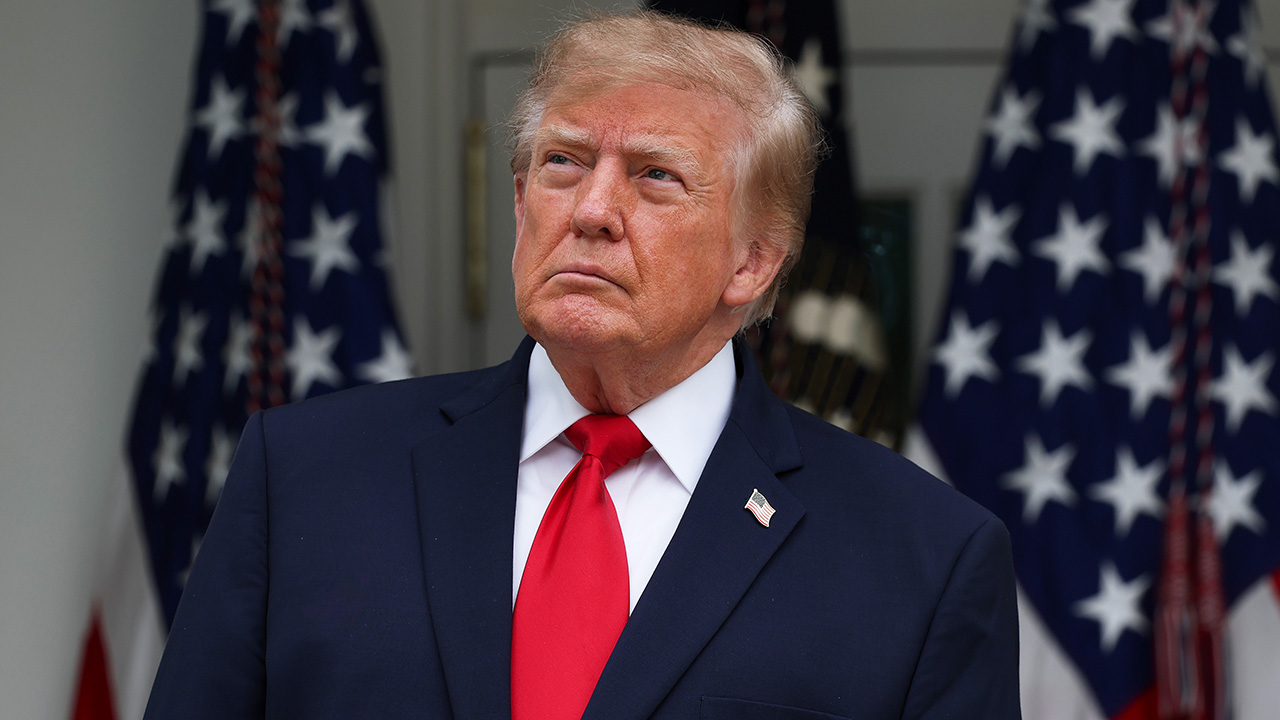
President Donald Trump is right to challenge the leftist politicization of the Smithsonian, because what starts in a museum can ultimately end up as accepted fact or commonly held wisdom.
Freedom Is Back
In Style
Premium domains for sale
That is precisely what has happened in Canada, where national museums began packaging leftist ideas about history as diversity, equity and inclusion — whoops, that's DEI, isn't it?
There is now an active and increasingly organized campaign in Canada to criminalize 'residential school denialism.'
What is truly bizarre is that those objecting to Trump's intervention are accusing him of rewriting history! The Smithsonian has been doing just that for years. In Canada, as we shall see, it is even worse.
Trust fall
On July 24, Trump issued an executive order titled "Restoring Trust in the Smithsonian Institution," following a months-long White House review of the Smithsonian and its National Museum of American History.
The review, released July 4 as "Saving America's Story," accused the museum of abandoning its traditional role as a repository of America's shared inheritance in favor of using history as a tool for "social justice" and political transformation.
Trump's order directs federal officials to use their authority to encourage changes at the museum and even calls for temporary signs outside it warning visitors about the findings of the White House review and directing them toward other sources of historical information.
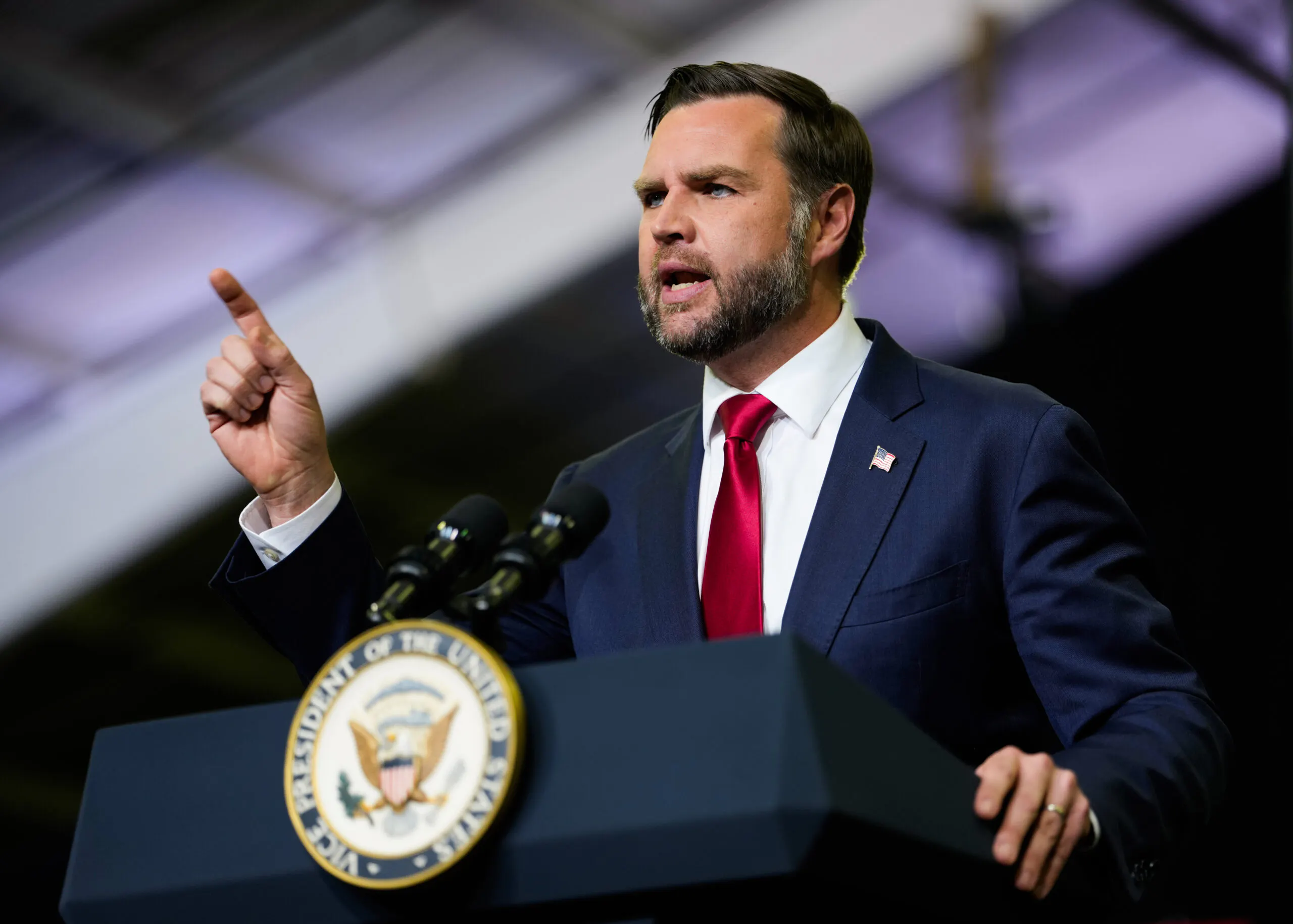
The order follows Trump's March 2025 directive instructing Vice President JD Vance, in his role as a Smithsonian regent, to work to "remove improper ideology" from the institution and prohibiting federal spending on exhibits that "degrade shared American values" or divide Americans by race.
The response has been predictable: Trump is interfering with history.
But what if history has already been interfered with? Canada offers a useful warning.
Dustbin of history
Canada's flagship museums in Ottawa have long since followed the path the Smithsonian is now taking. During this writer's lifetime, institutions created to celebrate and explain Canada's history have changed so drastically in substance and political tone that it can feel as though the old museums were wiped from the urban landscape and replaced by counterfeit structures.
At least in Canada, the museums admit what they're doing.
The Canadian Museum of History's own equity, diversity, inclusion, and accessibility strategy says the institution will "allocate resources strategically to bridge gaps" in its collections and exhibitions in order to "ensure better representation of equity-deserving groups."
This isn't merely an effort to recover neglected history. It explicitly establishes representation and equity as principles determining what the museum collects and presents.
And it isn't limited to Ottawa.
'A profoundly evil space'
Calgary's Glenbow Museum now greets visitors with the Blackfoot phrase Siksikaissksahkoyi Kiitaowahsinnooni — "Blackfoot land, your territory" — as part of a land acknowledgment that explains the museum's location in terms of indigenous territorial claims and treaty responsibilities.
One of the most beautiful museums in Canada was undoubtedly the Royal BC Museum in Victoria. But there was just too much material telling the story of the European settlers who came to Canada's West Coast and built a prosperous province out of wilderness.
As National Post columnist Tristin Hopper has noted, much of the old museum disappeared during its ideological transformation.
"The coal mine, sawmill, homestead and First Peoples gallery are all gone," Hopper wrote of the diminished museum. "And for everything left, there are placards everywhere to lecture visitors that they are moving through a profoundly evil space."
The museum itself has described its transformation in the language of "inclusivity," community engagement and the "co-creation" of exhibits.
What is the larger consequence of rewriting a country's history this way?
Arguably, it helps create a cultural elite and mainstream media prepared to accept almost any story that fits the established narrative of oppressor and oppressed. After all, isn't that what the museums have been teaching them?
Grave distortion
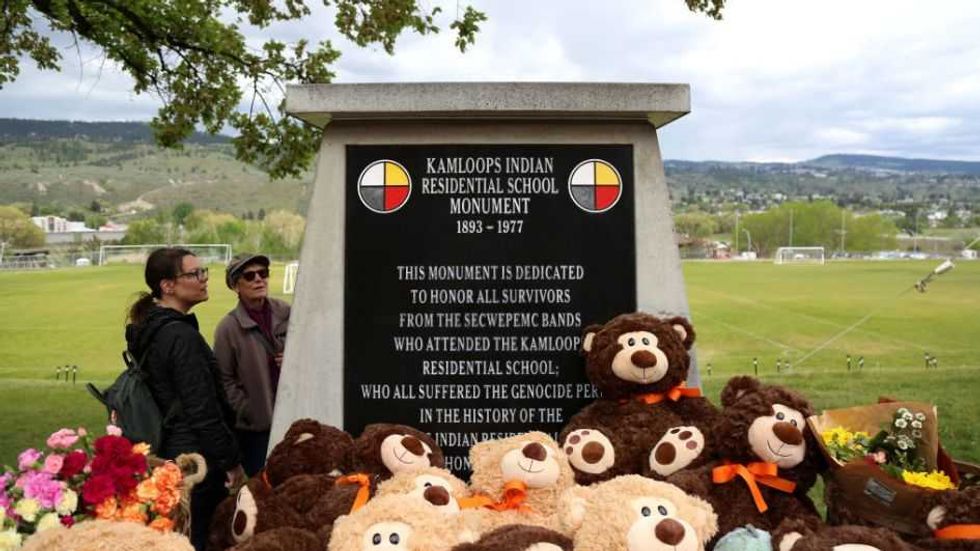
Consider what happened at Kamloops.
In May 2021, Tk'emlúps te Secwépemc Chief Rosanne Casimir announced what the First Nation described as the discovery of the remains of 215 children at the former Kamloops Indian Residential School in British Columbia.
The announcement exploded around the world. Canada's flags were lowered. Politicians apologized. Catholic churches were vandalized and burned. Other First Nations began announcing possible graves at former residential school sites across Canada.
Lost in all the outrage was one crucial fact: No bodies had actually been exhumed. Anomalies that could be human remains had been discovered by ground-penetrating radar.
When GPR specialist Sarah Beaulieu publicly presented her findings two months later, the original number of 215 had already been reduced to 200 "targets of interest." She described them as "probable burials," while emphasizing that only forensic excavation could conclusively determine what was underground.
Five years later, no excavation has taken place at Kamloops and no human remains have been recovered there.
Unanswered questions
There are also legitimate questions about what the radar detected. Historical evidence shows that a septic field containing underground trenches was installed in the surveyed area in the 1920s, and critics of the Kamloops narrative have argued that some of those disturbances could account for the radar findings.
That theory has not been proven either. And that is precisely the point: without excavation, nobody can say with certainty what lies beneath those patches of ground.
The federal government initially provided Tk'emlúps te Secwépemc $7.9 million for field work, records searches, and securing the residential school grounds. That funding was subsequently increased, according to government records obtained by reporters, to more than $12 million.
Yet the central question that shook Canada in 2021 remains unanswered.
Nor have excavations elsewhere always vindicated the initial radar findings. At the former Pine Creek Residential School in Manitoba, for example, investigators excavated 14 anomalies detected beneath a church. No human remains were found.
None of this means children did not die in Canada's residential schools. They unquestionably did, often from disease in an era of appalling mortality, and there are known cemeteries associated with the schools.
It does mean that a soil anomaly is not a body, a possible burial is not a confirmed grave, and a claim repeated thousands of times by politicians and journalists does not become more scientifically certain through repetition.
RELATED: Canadian state media backs secret plot to trap and humiliate Indian mass-grave skeptics
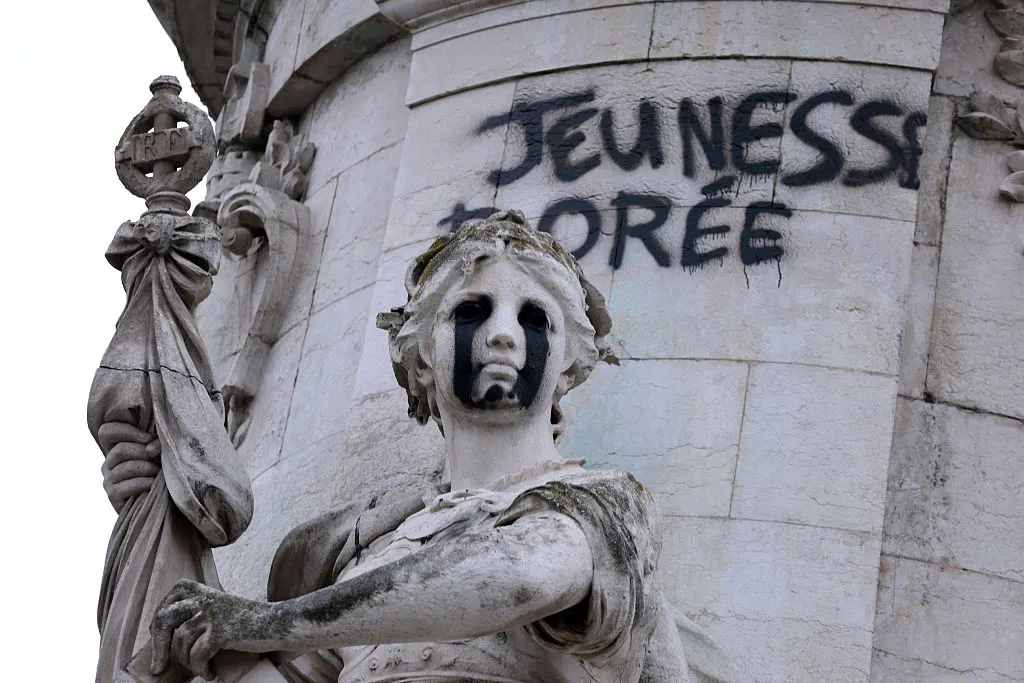
 Getty Images
Skepticism or 'denialism'?
Yet there is now an active and increasingly organized campaign in Canada to criminalize "residential school denialism."
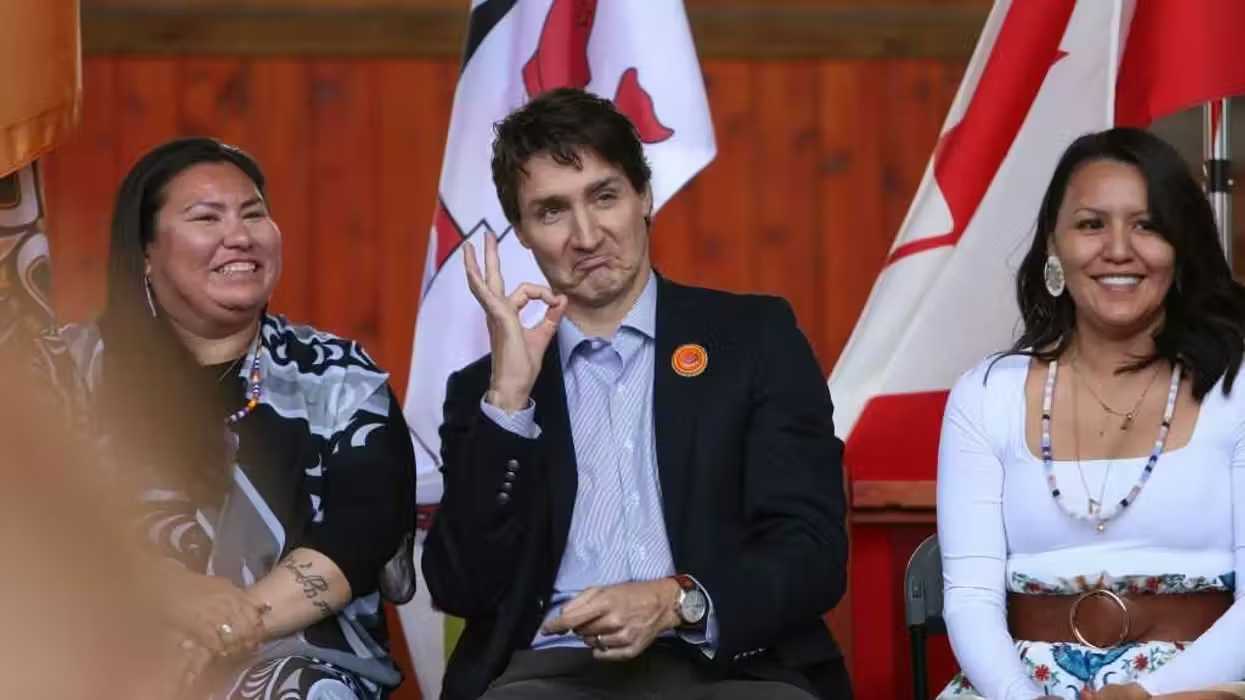
In July, the Assembly of First Nations passed an emergency resolution calling on the federal government to either amend its recently passed hate-crimes legislation or introduce a new law criminalizing the public "condoning, denial, justification, or minimization" of residential school abuses as a form of hate speech against First Nations. At a news conference during the assembly, Manitoba Keewatinowi Okimakanak Grand Chief Garrison Settee said Canada's failure to criminalize residential school denialism amounted to a failure to protect First Nations from hate crimes.
The Senate had already rejected an attempt to add such a provision to the government's Combating Hate Act, Bill C-9. The Justice Minister's office said residential school denialism was a "serious and distinct issue" that warranted separate parliamentary study rather than inclusion in that legislation.
But the effort is hardly dead. NDP MP Leah Gazan's private member's bill, introduced last fall, would criminalize certain forms of residential school denialism and is still awaiting second reading in the House of Commons.
Settee also rejected demands that First Nations excavate suspected graves to establish that bodies are actually there, arguing that exhumation can violate indigenous cultural practices.
"I don't think we should have to prove to anybody what happened to these people, because they are there. And they send us messages telling us they're there," Settee said.
Recalling a visit to the Kamloops site with Casimir, Settee continued: "You can tell they're there, right? Feel the power and the energy."
Settee said outsiders may not understand the cultural significance of such experiences and argued that First Nations should be allowed to leave suspected graves undisturbed: "We just don't go into any cemetery and start digging up graves just to prove that someone died. It is disrespectful to our culture."
Money pit
Since 2021, meanwhile, the federal government has spent $285.5 million funding 166 indigenous-led projects through the Residential Schools Missing Children Community Support Fund.
This is where the question of museums and historical institutions stops being academic.
When institutions teach citizens that history should be understood primarily through political categories of oppression and identity, they don't merely reinterpret the past. They can change the standards by which claims about the past are evaluated in the present.
Evidence becomes secondary to narrative; skepticism becomes hostility. And eventually questioning an officially favored interpretation can itself become evidence of moral guilt.
So when Trump demands balance and historical accuracy from the Smithsonian, remember the Canadian example.
Once ideological activists gain control of a country's history, they don't necessarily stop at demanding that you hear their interpretation — eventually, they may demand that you believe it.
More from this network:
Domains for Sale · GOTPeople.org · TheDSAPlatform · The Truth About Socialism
What's Your Reaction?
 Like
0
Like
0
 Dislike
0
Dislike
0
 Love
0
Love
0
 Funny
0
Funny
0
 Wow
0
Wow
0
 Sad
0
Sad
0
 Angry
0
Angry
0

I am just an average American. My teen years were in the late 70s and I participated in all that that decade offered. Started working young, too young. Then I joined the Army before I graduated High School. I spent 25 years in, mostly in Infantry units. Since then I've worked in information technology positions all at small family owned companies. At this rate I'll never be a tech millionaire. When I was young I rode horses as much as I could. I do believe I should have been a cowboy. I'm getting in the saddle again by taking riding lessons and see where it goes.
Premium domains for sale





Comments (0)