

Trump’s $15 Billion Lawsuit Against New York Times Moves Forward
Premium domains for sale
Freedom Is Back In Style
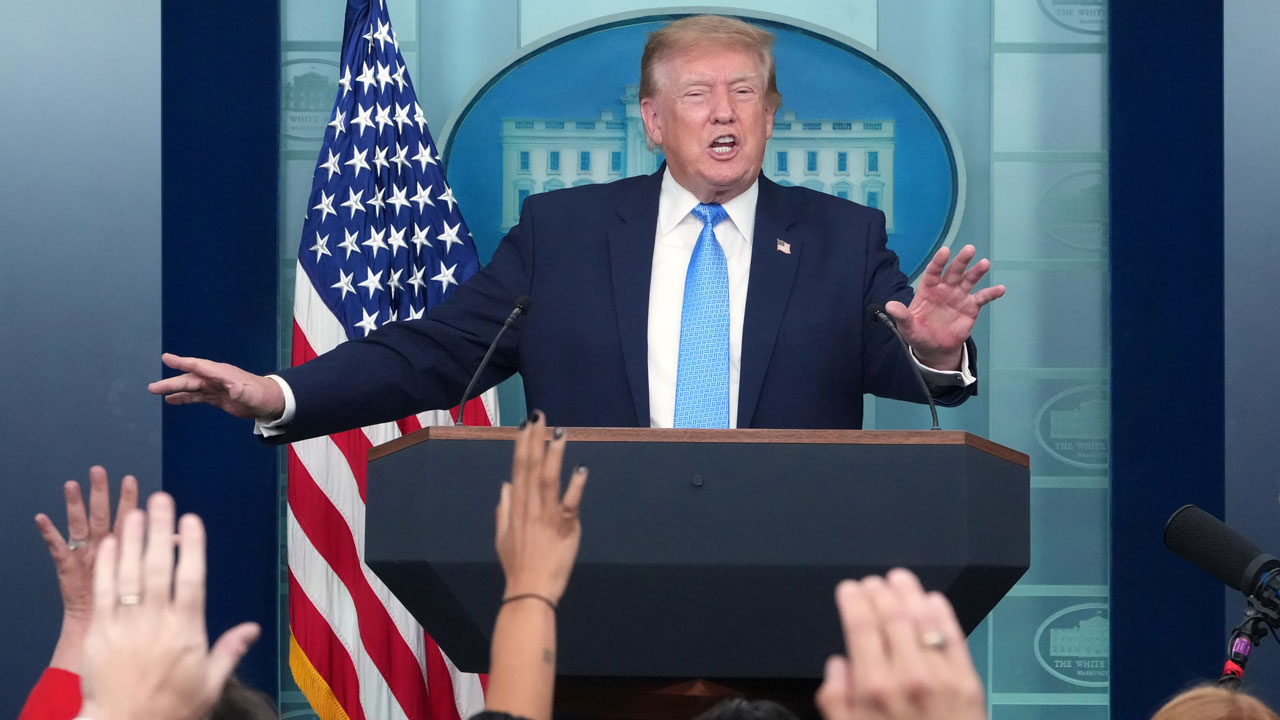
President Donald Trump can proceed with part of his $15 billion libel suit against The New York Times, a federal judge ruled Thursday.
Freedom Is Back
In Style
Premium domains for sale
In their book about Trump, “Lucky Loser,” Times reporters Russ Buettner and Susanne Craig had suggested that he likely committed tax crimes. Trump’s lawsuit also named Penguin Random House, the book’s publisher, as a defendant.
U.S. District Judge Steven Merryday of the Middle District of Florida found that the book’s claims of likely criminal conduct lacked the validation of “an explicit opinion from a qualified source.” Authors publishing such claims without formally confirming them “know that they don’t know, but they are undeterred,” he stated.
“Knowing of the necessity for that opinion but failing to procure that opinion is a fine example of the purposeful avoidance of the truth, a knowing failure that remains actionable, even after Times v. Sullivan,” Merryday, a George H.W. Bush appointee, wrote in a 12-page opinion.
The ruling did not settle the case; it only held that Trump had plausibly stated grounds to proceed with parts of the lawsuit.
A spokesman for Trump’s legal team told Politico that “President Trump continues holding the Fake News accountable for deceiving the American people.”
“The New York Times has a long pattern of defaming President Trump in service of its leftist political agenda, and today’s momentous ruling is a victory for honesty in America,” the spokesman said.
The judge dismissed some libel claims based on a Times article about “The Apprentice.”
Penguin Random House said in a statement, “We are confident that the evidence in this case will lead to a full dismissal and continue to stand by the book and its authors.”
Times spokesman Charlie Stadtlander said: “The Times is encouraged to see Judge Merryday’s dismissal of almost all claims against us. We continue to believe the remaining claim in the filing has no legal merit.”
In his opinion, Judge Merryday cited the 1964 Supreme Court case of New York Times Co. v. Sullivan, which established a high bar for defamation lawsuits against public figures. That standard requires proof of “actual malice,” meaning knowledge that a statement was false or reckless disregard for whether it was false.
“Anyone who publishes the claim that someone else has committed a crime of the complex nature described in some of the challenged statements and who has not received an explicit opinion from a qualified source after a thorough examination of pertinent facts necessarily proceeds with particularized reason to doubt the truth of their statements and with knowledge of a high degree of probable falsity of the statements; in other words, they know that they don’t know, but they are undeterred,” the judge wrote.
More from this network:
Domains for Sale · GOTPeople.org · TheDSAPlatform · The Truth About Socialism
What's Your Reaction?
 Like
0
 Dislike
0
 Love
0
 Funny
0
 Wow
0
 Sad
0
 Angry
0

I am just an average American. My teen years were in the late 70s and I participated in all that that decade offered. Started working young, too young. Then I joined the Army before I graduated High School. I spent 25 years in, mostly in Infantry units. Since then I've worked in information technology positions all at small family owned companies. At this rate I'll never be a tech millionaire. When I was young I rode horses as much as I could. I do believe I should have been a cowboy. I'm getting in the saddle again by taking riding lessons and see where it goes.
Premium domains for sale















Comments (0)