

UFO disclosure is a test of whether citizens still own reality
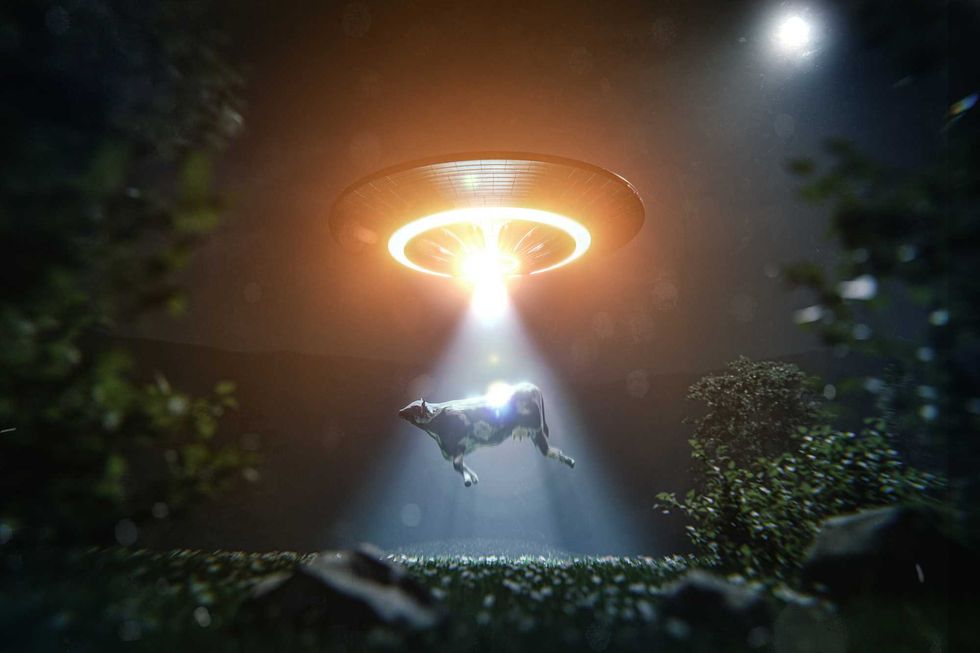
Premium domains for sale
Freedom Is Back In Style
This week, as critics lined up to call Steven Spielberg’s June 12 film “Disclosure Day” the best thing he has made in 20 years, Glenn Beck made a point on his program that matters more than the movie.
Freedom Is Back
In Style
Premium domains for sale
The real story, Beck argued, is not whether Spielberg is running a quiet psychological operation for the Pentagon. The real story is that we have entered what Beck calls “the death of free will” — an age in which the device in your pocket studies what frightens you, flatters you, and keeps you watching, then feeds each of us a private version of reality until no two Americans can agree on what is true.
A faction that insists on deciding how much reality you can handle and an algorithm that quietly decides which reality you will see are two versions of the same problem.
He is right. I would push the point one step further.
That is precisely why the fight over UFO disclosure matters more than it appears.
I am an attorney by training and a California public school science teacher of 19 years. I have published 20 books, all on governmental and corporate corruption, and none of them touched anything I would have called fringe. Two and a half years ago, I co-wrote “Catastrophic Disclosure: The Deep State, Aliens, and the Truth” with documentary filmmaker Michael Mazzola.
I came to the subject as a skeptic. What convinced me something serious was being hidden was not a sighting or a leaked photograph. It was a congressional hearing.
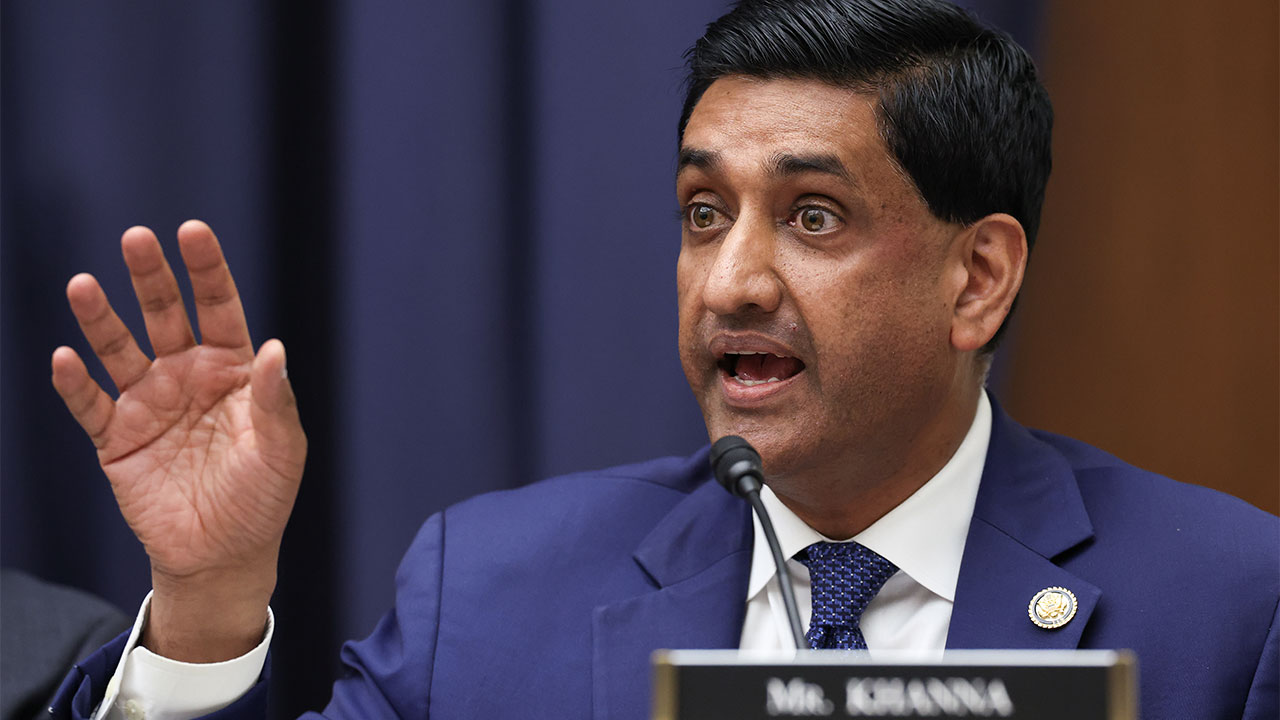
On July 26, 2023, three credentialed witnesses — Air Force intelligence officer David Grusch and Navy pilots Ryan Graves and David Fravor — testified before the House Oversight Committee. Anyone who has covered Capitol Hill knows witnesses are vetted exhaustively before they testify under oath.
Grusch described an active military program of UFO crash recovery, reverse engineering, and the retrieval of “biologic” remains. He said he was denied access when he asked for it. Either the witnesses were lying, or the government was. As a lawyer, my instinct was to look for what we call best evidence: the earliest accounts, made before anyone had reason to shade the truth.
That brings me to the documents.
RELATED: Pentagon publishes first tranche of ‘hidden’ UFO files
 AFP/Getty Images
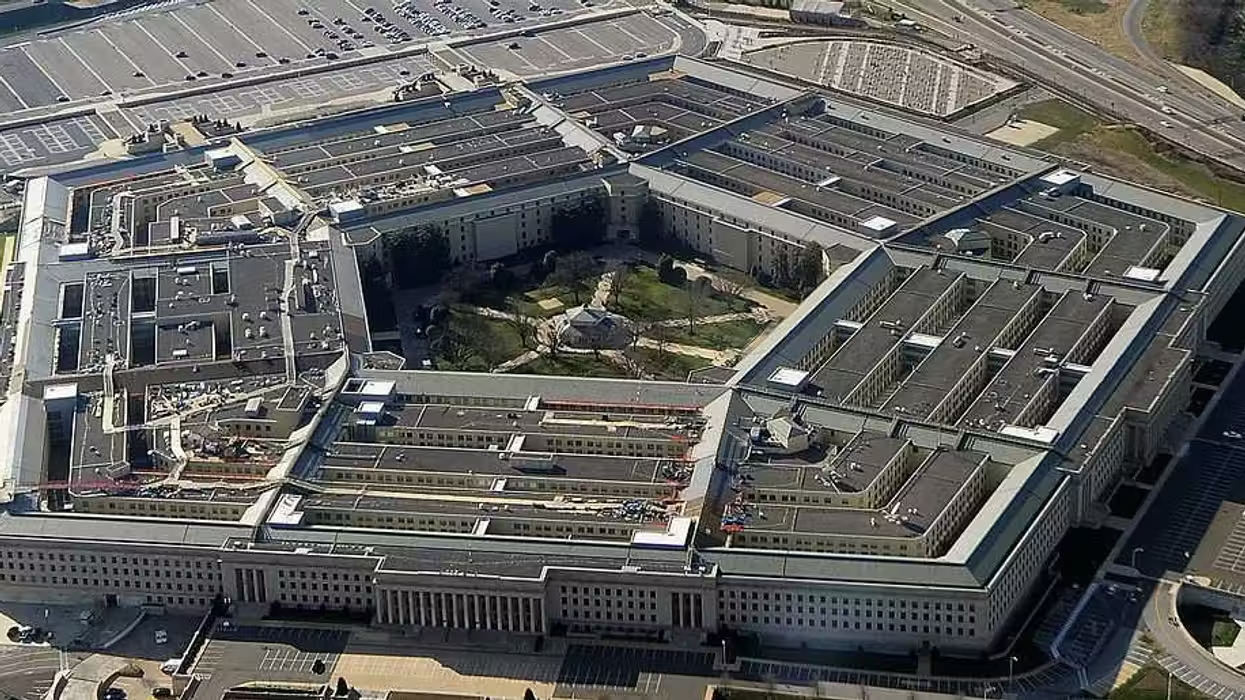
On May 8, the Pentagon began releasing what it calls “never-before-seen” files on unidentified anomalous phenomena under a new program called PURSUE. The first tranche, roughly 162 documents, includes Apollo-era astronaut sightings, decades-old military records, and pilot encounter reports over the Persian Gulf and elsewhere. More tranches are promised on a rolling basis. Director of National Intelligence Tulsi Gabbard called it “the first in what will be an ongoing joint declassification and release effort.”
One document, dated December 19, 1947, is a letter from H.M. McCoy, the Air Force chief of intelligence, transmitting reports on what were then called “flying discs.” McCoy wrote that continued reports from qualified observers still made the matter one of concern.
A second document — a September 23, 1947, assessment by Lt. Gen. Nathan Twining of the Air Materiel Command — is blunter. Twining concluded that “the phenomenon reported is something real and not visionary or fictitious.” He described disc-shaped objects roughly the size of manned aircraft, with metallic surfaces, maneuvering in ways that suggested intelligent control at estimated speeds above 300 knots.
That was the Air Force’s own view in 1947. In 2026, our best and brightest still cannot give the public a credible answer. We have walked on the moon. We have edited human DNA. Yet, we still cannot explain what military pilots record on infrared cameras over the Persian Gulf.
Credit where it is due. The May 8 release would not have happened without the Task Force on the Declassification of Federal Secrets, chaired by Rep. Anna Paulina Luna (R-Fla.), and the persistence of Reps. Tim Burchett (R-Tenn.) and Eric Burlison (R-Mo.). President Trump and Defense Secretary Pete Hegseth deserve credit for the directive that made it possible. This is real progress and the kind of transparency that should not be a partisan question.
But it is a first step, not a final one.
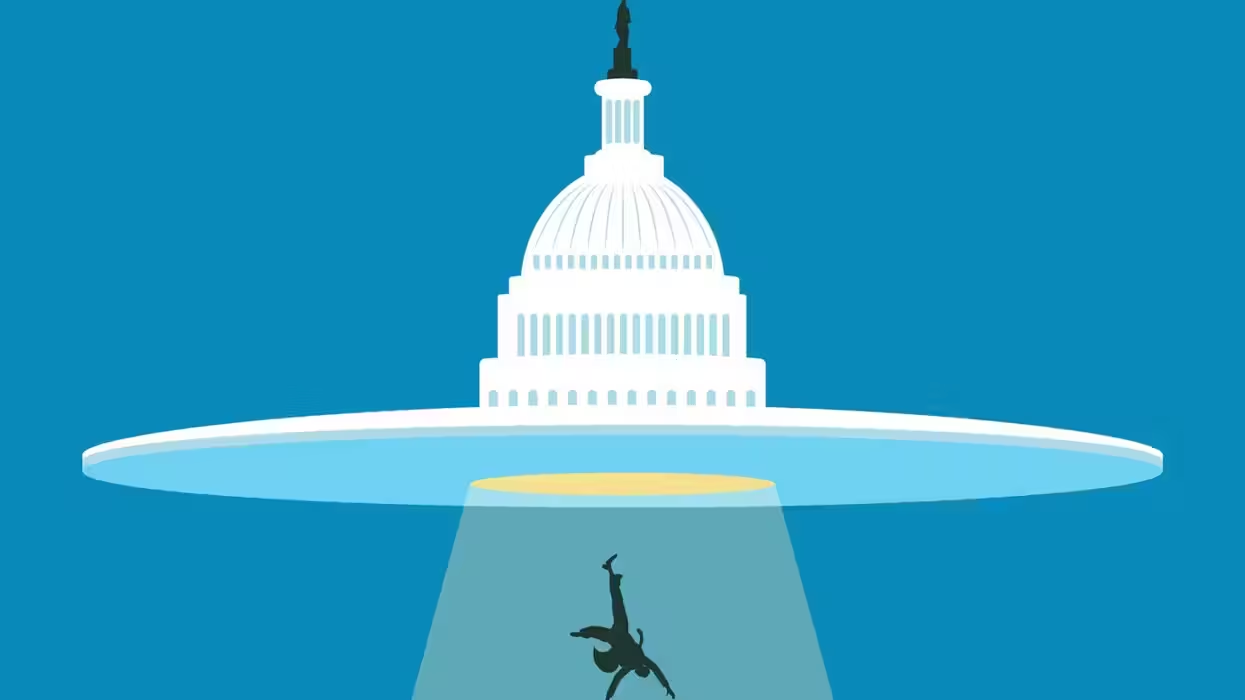
When I started the book, my co-author described a quiet war inside the national security state between two factions. One wanted “controlled” disclosure, a careful release at a pace the public could absorb. The other wanted “full” disclosure, the entire record at once. The first faction feared the second would trigger what it privately called catastrophic disclosure — a revelation severe enough to disrupt the basic institutions of public life.
RELATED: The real mystery isn’t UFOs — it’s what the government won’t explain
 Moor Studio/Getty Images
What that faction fears the public will learn, I do not know. I will not pretend I do.
Here is where Beck’s warning and my book meet. A faction that insists on deciding how much reality you can handle and an algorithm that quietly decides which reality you will see are two versions of the same problem. Both take away the same thing: the right to look at the evidence and judge it for yourself.
Beck worries that the machine will hand each of us a custom world and convince us we discovered it on our own. The defense against that is not a better algorithm. It is a shared, documented, public record — primary sources and sworn testimony any citizen can read and weigh.
That is exactly what disclosure produces. It is also exactly what the “controlled” faction wants to ration.
In an age when truth is splintered into a million private feeds, a common set of facts is not a small thing. It may be the only thing.
On June 12, Spielberg releases “Disclosure Day.” He has spent his career telling stories about contact, from “Close Encounters of the Third Kind” to “E.T. the Extra-Terrestrial.” He is a serious filmmaker with serious sources. The question is whether the disclosure he puts on screen looks like what the government released May 8 — or like something larger it is still holding back.
I hope it is the larger one.
Beck asks what is real. In a free country, the answer starts with the documents.
The American public can handle them. We have earned them.
More from this network:
Domains for Sale · GOTPeople.org · TheDSAPlatform · The Truth About Socialism
What's Your Reaction?
 Like
0
Like
0
 Dislike
0
Dislike
0
 Love
0
Love
0
 Funny
0
Funny
0
 Wow
0
Wow
0
 Sad
0
Sad
0
 Angry
0
Angry
0

I am just an average American. My teen years were in the late 70s and I participated in all that that decade offered. Started working young, too young. Then I joined the Army before I graduated High School. I spent 25 years in, mostly in Infantry units. Since then I've worked in information technology positions all at small family owned companies. At this rate I'll never be a tech millionaire. When I was young I rode horses as much as I could. I do believe I should have been a cowboy. I'm getting in the saddle again by taking riding lessons and see where it goes.
Premium domains for sale














Comments (0)