

Victor Davis Hanson: Is the Iran War About to Enter Its Final Phase?
Premium domains for sale
Freedom Is Back In Style
Editor’s note: This is a lightly edited transcript of today’s video from Daily Signal senior contributor Victor Davis Hanson. Subscribe to our YouTube channel to see more of his videos.
Freedom Is Back
In Style
Premium domains for sale
Hello, this is Victor Davis Hanson for the Daily Signal.
We’re at about 240 days since the Feb. 28 beginning of the so-called Iran War. We’re about five days from the midterm. The mantra of the Left and the Democratic Party, the Islamicist socialist alliance, is the war is lost. It’s Vietnam, a quagmire. The Strait is closed.
Before we analyze that, just remember certain data that’s not in dispute. The last three days, about 24 million barrels have left the Gulf’s exporting countries. In other words, they’re leaving through the Strait of Hormuz primarily at a level at or higher than during the period before the war, and they’re also leaving the Red Sea, and they’re also going out of the Strait of Oman.
The problem is not oil. It’s making up for the dearth of distillery. The distilleries in Russia have been hit by Ukraine. We don’t have enough in Western countries, so there’s a bottleneck on the refinement end, not on the supply.
We may have a kind of a short period where we have to catch up, but there is enough oil going out now, as much as there was in the pre-war. That suggests that this war is not going to affect oil prices into next year. It may have an effect on the midterms.
More importantly, though, we think that a strike is coming right after the midterms. We think that because Iran is preparing for it. They are trying to fortify their bunkers for the Islamic Revolutionary Guard Corps commanders. There are rumors they’re threatening us with new weapons. They promise to destroy the oil fields of the Gulf, all of this rhetoric. And Donald Trump says he wants to end this war after the midterms.
That raises a lot of questions that we don’t have the answers to. We’ve been talking about how many drones and missiles, we can call them the numerator, that we have destroyed, but we’ve never really known the denominator, how many existing drones and missiles were in the Iranian fleet before the war started. And we’re finding out that they were preparing for years for this war, and all through the Iranian mountain ranges, there are bunkers with mobile launchers almost everywhere.
So we still don’t know how much there are. We know how much we’ve destroyed. It’s quite a lot. We don’t know to what extent China and Russia is still supplying Iran. It doesn’t seem possible they can do it by sea. It doesn’t seem possible they can do it by air. But maybe the rail lines and the overland highways are allowing former provinces of the Soviet Union and Russian allies to facilitate rearming of missile defenses or drones or some rocketry.
And we don’t know the level of which we’ve damaged the industrial base of Iran that was responsible for producing their own missiles.
There’s some more unknowns. We don’t know to what extent the 500 to 800 military aircraft that we have located permanently in the Middle East and now augmented by three fleet carriers will be helped by the 300 to 400 planes that Israel has and the 500 to 600 that the six Gulf states have. That is an unknown.
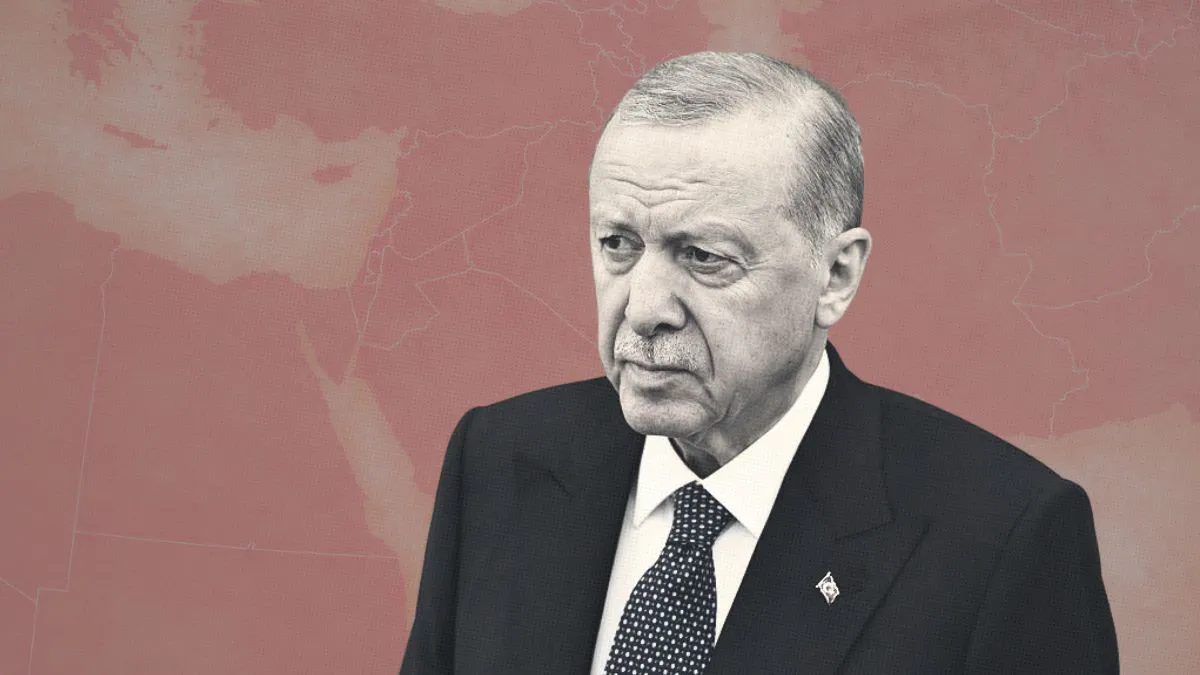
There’s another unknown, and that is the role of Turkey. Turkey has made it very clear that they did not want the Kurds or other ethnic minorities in Iran to be supplied by outside forces, whether Kurds in Iraq or the Israelis or the American CIA. And we don’t know to what extent the administration has fought back on that. Are we now giving arms to the dissidents?
Put it all together, I think in one way or another, the problem is going to be solved. Either we’re going to eliminate for good the Iranian threat, and we’re gonna damage the industrial base further, and these crippling secondary boycotts and embargoes are going to destroy really the economic viability of Iran to the degree that it cannot supply the Houthis or the Hamas terrorists or Hezbollah or even its own military with the force necessary and the economic support necessary to wage war against the moderate states of the Middle East and Israel, at least for the time being.
And so, we have a lot of known unknowns. But generally, I think we can conclude by making a few generalizations. If Israel and the Gulf States and the United States decide to bomb after the midterm elections are over, it will be to destroy Pickaxe Mountain, the industrial base of Iran that was used for the military and dual use targets.
If they want to take that risk to finish off Iran as an existential threat to the Middle East, I think you will see bridges and dock works and some highways and rail links hit. If they take that dangerous and controversial step after the midterms, I do think we will be joined by at least the Israelis and stealthily, probably by the Gulf States. And if we were to do that, there would be a 50/50 chance that within the next year that regime would fall.
Remember one final thing. They were prepared for years for a blockade, an embargo, and a war against them, given their aggression. They had killed hundreds of Americans in terrorist operations in Africa and the Middle East. They’d killed thousands probably with shaped charges in Iran and Iraq and Afghanistan. And they had probably slaughtered a lot of Israelis via Hezbollah, Hamas, and the Houthis.
And to end that threat for good, we should just finish on another consideration. They don’t have any oil now. It’s completely stopped from being transported. They can’t even transport very effectively by land. And the tankers that they stocked in anticipation for this war, they filled a number of huge tankers full of oil, and they docked them out in the Pacific to sell largely to China. And in addition to that, they filled their own storage facilities to the brim. They’re all empty now.
And so what are they going to do with their thousands of oil wells that have to pump pretty, pretty steadily to prevent collapse or salt intrusion or losing productive capacity when they have nowhere to store it?
Before, we really didn’t have complete sanctions. I don’t know why, but for March, April, and May, June, the sanctions were not absolute, and the oil was getting out. The Strait of Hormuz was being still used. It’s not now. There’s no overseas oil storage. There’s no storage inside Iran. And the oil wells pretty soon are either gonna have to pump the oil somewhere, I don’t know if they can make lakes or artificial ponds, or they’re going to suffer, suffer crippling losses.
The bottom line, one way or another, this chapter in Iranian history is gonna come to a close. Either we’re going to prevail and they are not going to have nuclear weapons, and we’re gonna set the stage for an end to this regime in the next two years, and we’re gonna defang it, or we’re gonna lose heart and go back home, and they will rearm and be a threat within three to five years.
It all depends on the steadiness of the Trump administration and their desire to end this 50-year nightmare once and for all.
We publish a variety of perspectives. Nothing written here is to be construed as representing the views of the Daily Signal.
More from this network:
Domains for Sale · GOTPeople.org · TheDSAPlatform · The Truth About Socialism
What's Your Reaction?
 Like
0
 Dislike
0
 Love
0
 Funny
0
 Wow
0
 Sad
0
 Angry
0

I am just an average American. My teen years were in the late 70s and I participated in all that that decade offered. Started working young, too young. Then I joined the Army before I graduated High School. I spent 25 years in, mostly in Infantry units. Since then I've worked in information technology positions all at small family owned companies. At this rate I'll never be a tech millionaire. When I was young I rode horses as much as I could. I do believe I should have been a cowboy. I'm getting in the saddle again by taking riding lessons and see where it goes.
Premium domains for sale









Comments (0)