

‘We Know What You Did Last Summer’: How Russian Memos Exposed the Real 2016 Collusion
Premium domains for sale
Freedom Is Back In Style
Recently declassified Russian intelligence memos—long buried until Director of National Intelligence Tulsi Gabbard’s releases—reveal that the Trump–Russia collusion narrative was never a sober counterintelligence inquiry. It was a frantic deflection straight out of the 1997 horror-thriller “I Know What You Did Last Summer.”
Freedom Is Back
In Style
Premium domains for sale
The film is about four careless teenagers who commit a hit-and-run, dump the body in the ocean, swear secrecy, and drive off convinced the nightmare is over: “No one saw. It’s finished.” But unbeknownst to the killers, a lone fisherman standing on the shore in the dark was witness.
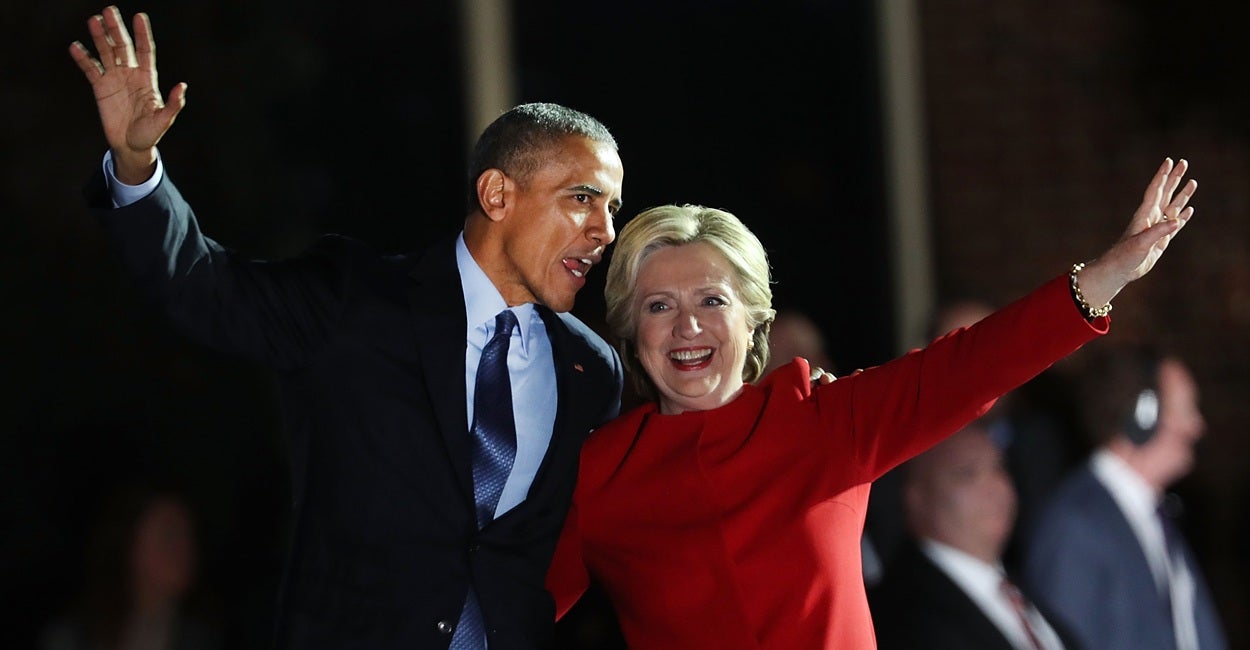
In Washington’s version, the “teenagers” were the Clinton campaign, the DNC, and sympathetic Obama administration figures. The hit-and-run was Hillary Clinton’s homemade private email server, used for official State Department business containing classified material. It involved deleted emails, back-channel reassurances, the DNC’s thumb on the scale against Bernie Sanders, and lingering questions about the Clinton Foundation’s alleged involvement in pay-to-play. These struck at the heart of public trust.
The Russians—eternal adversaries with sophisticated spying capabilities—played the lone fisherman on a foggy shore. They hacked, recorded, and filed detailed memos. Elements of the U.S. government, especially the FBI and Justice Department, were intercepting them.
By early 2016, those memos circulated among senior FBI and DOJ officials. They did not merely warn of Russian hacking. They exposed the Clinton team’s strategy to manufacture a Trump–Russia collusion narrative to deflect from its own scandals.
Through intercepted communications, the Russians were forcing evidence of the very criminal behavior the FBI was trying to bury back in the faces of senior officials. By documenting the deflection plan itself, they inadvertently incriminated the actions U.S. officials sought to conceal.
At the highest levels, the FBI was determined to end the Clinton email investigation and quietly exonerate her before Election Day. Yet the Russian memos kept surfacing inconvenient truths: deletion plans, back-channel coordination, and the weaponization of Russia as a shield.
One January 2016 intercept reportedly showed Debbie Wasserman Schultz assuring allies the FBI lacked “persuasive evidence,” citing “timely deletion of relevant data.”
Another described pressure from the “attorney general’s orbit” (referring to Loretta Lynch, potentially under then-President Barack Obama’s direction) to ease or shut down the Clinton email and Clinton Foundation investigations to protect the Democratic nominee and Obama’s legacy.
These memos were striking because real events tracked them with eerie precision. The Clinton team had used BleachBit to scrub the server even after a congressional subpoena for Benghazi emails.
Then came the June 27, 2016, tarmac meeting in Phoenix, where Lynch met privately with Bill Clinton days before Comey’s interview with Hillary. The optics screamed exactly the coordination the memos described.
Two tracks—Clinton’s email probe and Russian interference—collided. The FBI received intelligence that the actors under scrutiny planned to weaponize the Russia narrative as a shield, even as the Bureau worked to limit and exonerate the original scandal.
Declassified intelligence and DOJ watchdog findings show senior officials took steps to contain the Clinton email investigation (and reportedly the Foundation inquiry). Signals from the top favored caution and control. The investigations slowed as the election accelerated.
These memos never leaked to the press. They circulated quietly inside a government confronting intelligence that pointed uncomfortably close to its own political core.
As reports accumulated, they revealed deletion, coordination, deflection—and the dawning realization that their own actions were being documented by the very adversaries they would later blame.
The actors at the center began to hear the fisherman’s warning: We know what you did last summer.
Panic set in. The narrative had to flip—and fast.
Suddenly the story became that Russia was attacking our democracy with Trump as the vehicle. The collusion narrative engulfed the conversation not as narrow counterintelligence, but as a sweeping moral indictment.
This also explains one of 2016’s most revealing decisions: the FBI’s refusal to conduct its own forensic examination of the hacked DNC servers. The bureau dared not get involved directly. Any real investigation risked forcing agents to confront or document the very evidence of the Clinton email scandal and deletions that senior officials were trying to bury and exonerate. It was safer to outsource everything to the DNC’s hired contractor, CrowdStrike.
Yet every time the original vulnerabilities seemed buried, something resurfaced—another memo, another thread—pulling events back to the initial scandals. They were haunted by documentation.
The more aggressively the issues were submerged through media, opposition research, and messaging, the more persistent the facts became. Like the fisherman’s warning, the evidence kept washing ashore.
The full, declassified story—Russian intercepts, FBI decisions, tarmac meetings, deleted emails, and the deliberate reframing of one scandal into another—is laid out in detail in my new book, “Clinton Hoax, Obama Coup: The Declassified Story of the Trump Russia Delusion.“
History records the Russia-collusion narrative as the dominant story of 2016. But beneath it lies a more unsettling truth: one crisis was reframed through another, and institutions meant to clarify events instead became entangled in the scandals they were supposed to investigate.
The fisherman never left the shore.
And the story never stayed buried.
We publish a variety of perspectives. Nothing written here is to be construed as representing the views of The Daily Signal.
The post ‘We Know What You Did Last Summer’: How Russian Memos Exposed the Real 2016 Collusion appeared first on The Daily Signal.
More from this network:
Domains for Sale · GOTPeople.org · TheDSAPlatform · The Truth About Socialism
What's Your Reaction?
 Like
0
Like
0
 Dislike
0
Dislike
0
 Love
0
Love
0
 Funny
0
Funny
0
 Wow
0
Wow
0
 Sad
0
Sad
0
 Angry
0
Angry
0

I am just an average American. My teen years were in the late 70s and I participated in all that that decade offered. Started working young, too young. Then I joined the Army before I graduated High School. I spent 25 years in, mostly in Infantry units. Since then I've worked in information technology positions all at small family owned companies. At this rate I'll never be a tech millionaire. When I was young I rode horses as much as I could. I do believe I should have been a cowboy. I'm getting in the saddle again by taking riding lessons and see where it goes.
Premium domains for sale



Comments (0)