

What Does Victory Over Iran Look Like?
Premium domains for sale
Freedom Is Back In Style
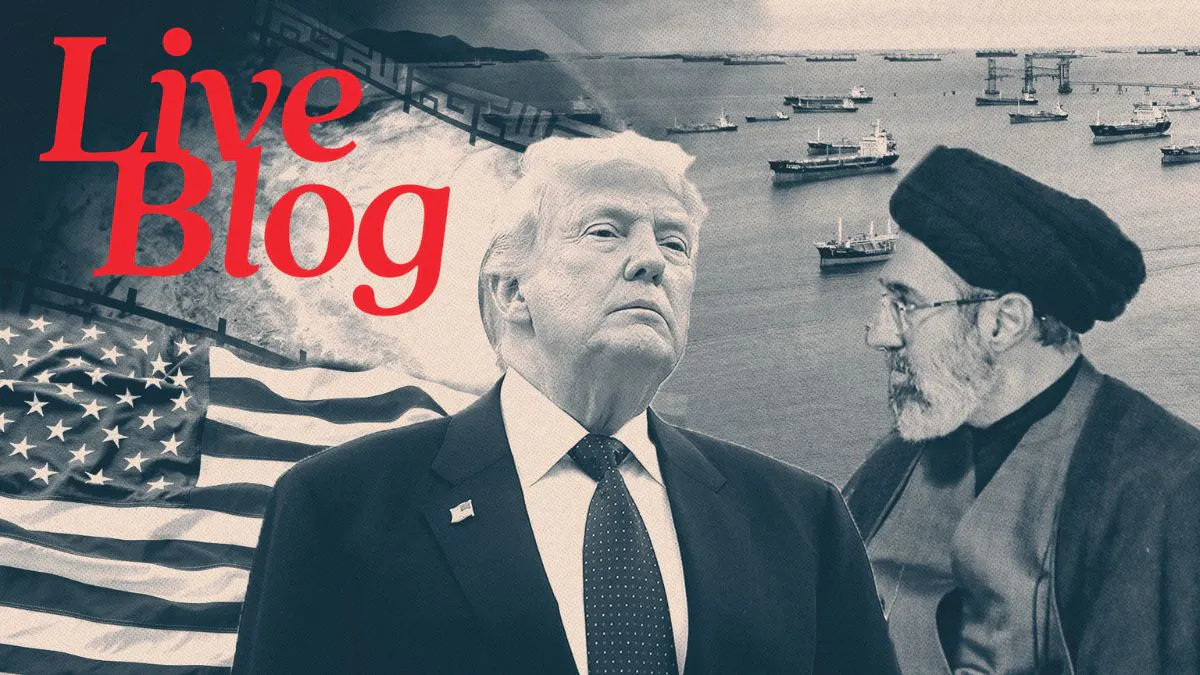
On Tuesday, President Trump announced that America has achieved a form of regime change in Iran.
Freedom Is Back
In Style
Premium domains for sale
To a certain extent, that is correct. President Trump has already announced that the war has effectively been won. From an American perspective, he’s right; the war has been won —on the military level. Iran has done minimal damage by any sort of standard to American forces and interests.
Meanwhile, Iran itself has been pummeled to dust. The ballistic missile program has basically been destroyed. Their nuclear facilities have been pounded again. Their drone program has been blown up. The only thing Iran can do at this point is harass people.
They can harass their neighbors with occasional missile and drone strikes. They can disrupt some shipping in the Strait of Hormuz.
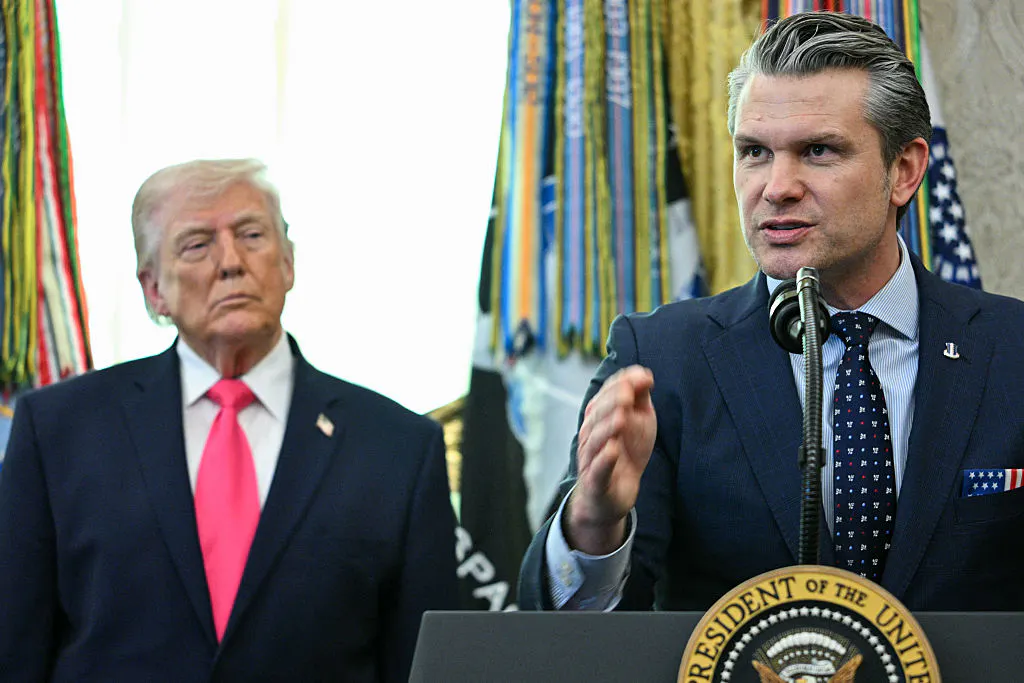
We’re not done yet, as Secretary of War Pete Hegseth has made clear, saying:
And that’s why we see ourselves as part of this negotiation as well. We negotiate with bombs. You have a choice. As we loiter over the top of Tehran, as the president talked about, about your future, the president has made it clear that you will not have a nuclear weapon. The War Department agrees. Our job is to ensure that.
And so we’re keeping our hand on that throttle as long as it’s hard as is necessary to ensure the interests of the United States of America are achieved on that battlefield. This is not Iraq and Afghanistan. This is not a president who’s interested in vague end states. He’s been very clear with us about what we need to accomplish, creating the conditions for them never to have a nuclear capability. And that’s exactly what we’re doing in historic fashion.

What would victory look like for the United States? There are two types of victory here: political victory and actual victory.
We may already have an actual victory. Let’s say that Iran ends up falling in the next couple of years; that victory will belong to President Trump, because we will have weakened all of the foundations upon which the Iranian regime stands, in the same way that the fall of the Soviet Union belonged to President Reagan.
It won’t be a political victory because you need an exclamation point for a political victory, some way to say we didn’t just win; Iran also lost.
Where is Iran right now? Did they totally lose? On the one hand, we can make the argument that simply to survive would be the regime winning, that survival amounts to not losing.
Israel and America’s other regional allies would have to continue to exercise overwatch of the regime to ensure they don’t renew their missile, drone, and nuclear programs.
But we do have to ask: Is not losing really a victory for Iran? It might be for the moment, but not for long, because Iran would remain isolated, throttled, and devoid of basic resources. Remember, before this war, there were already millions of people in the streets protesting the regime; the rial was running at 0.00001 to a dollar, and they had so little water that they were moving millions of people out of Tehran. They were actually evacuating their own capital.
Can this regime continue to limp along on that basis for many more years?
The question becomes whether or not President Trump can force the Iranians into a deal that achieves political victory, a good end state that he can go home and brag about. Despite members of the media and Democratic politicians saying they don’t actually believe that President Trump has been talking to Iran, it has now been confirmed that there are negotiations between the two countries indirectly.
What kind of concessions are they actually making? The devil remains in the details. President Trump said yesterday that Iran has agreed we will never have a nuclear weapon. But if they had to retain a nuclear program that could easily be turned toward weapons development, that’s not good enough. Will they retain enriched uranium? We’ll have to find out. President Trump has made clear that, in his view, they must never have a nuclear weapon.
President Trump has apparently released a list of demands: All existing nuclear capabilities will be dismantled — which I assume means all of their nuclear plans — a commitment that Iran will never strive to obtain nuclear weapons, which would have to be enforceable; no material will ever be enriched on Iranian soil; all enriched material would be handed it over to the IAEA in a short-term timetable to be defined between the parties; Natanz and Fordo would be decommissioned and also destroyed. The IAEA would have full access to all information within Iran’s borders. Iran would completely abandon its terror proxy network. Iran would stop financing and arming proxies in the region. The Strait of Hormuz would remain open, would be a free maritime zone; no one would block it.
As for the missile program, according to the talking points put out by the administration, there would be a decision at a later period, but they would have to limit the quantity and the range, and future use of missiles would have to be for self-defense purposes only.
In return for all of that, theoretically, Iran would have sanctions lifted and receive assistance in developing a civilian nuclear program in Bushehr. Basically, we would build them low-level nuclear programs for energy, and the threat of snapback sanctions would be removed.
I have a question: Does it sound like Iran is ready to do any of that? I have some very, very serious doubts.
At the same time, President Trump does not want to leave the rest of the region subject to the whims of the mullahs. President Trump’s strongest support for continued action, at this point, is coming from the Saudis, according to The New York Times:
In recent days, Mr. Trump has given more serious consideration to a military operation to seize Kharg Island, the hub of Iran’s oil infrastructure. Such an operation with airborne armed forces or an amphibious assault by Marines would be immensely dangerous. But Prince Mohammed has advocated ground operations in his conversations with Mr. Trump, according to people briefed by American officials.
I actually agree with Mohammed bin Salman’s assessment here. If America were to grab control of Kharg Island, the actual capacity of Iran to survive — even midterm — drops dramatically.
What comes next? The answer, as it has always been, is in the hands of the Iranian government. Remember, Iran could have, at any time for 50 years, reintegrated into the world economy by ending its global ambitions, its support for terrorism, and its nuclear program. They have not done that.
Maybe they’re willing to moderate now. I doubt it, but there are still plenty of levers left for the United States to pull. President Trump has already shown a high willingness to do just that.
The Wall Street Journal reported yesterday:
The Pentagon is planning to deploy about 3000 soldiers from the Army’s elite 82nd Airborne Division to the Middle East to support operations against Iran, according to two U.S. officials, with a written order expected in the coming hours. Officials cautioned that a decision for boots on the ground in Iran has not been made, but deploying the 82nd opens the door to President Trump for several strategic options.
Special operations, limited in duration; this is not the kind of “quagmire boots on the ground” stuff people were talking about. We’re not talking about 100,000 troops occupying Iran indefinitely. At most, we are talking about a ground operation to take away territory used to target the Strait of Hormuz, to take away the island.
That’s probably what we are talking about here.
More from this network:
Domains for Sale · GOTPeople.org · TheDSAPlatform · The Truth About Socialism
What's Your Reaction?
 Like
0
Like
0
 Dislike
0
Dislike
0
 Love
0
Love
0
 Funny
0
Funny
0
 Wow
0
Wow
0
 Sad
0
Sad
0
 Angry
0
Angry
0

I am just an average American. My teen years were in the late 70s and I participated in all that that decade offered. Started working young, too young. Then I joined the Army before I graduated High School. I spent 25 years in, mostly in Infantry units. Since then I've worked in information technology positions all at small family owned companies. At this rate I'll never be a tech millionaire. When I was young I rode horses as much as I could. I do believe I should have been a cowboy. I'm getting in the saddle again by taking riding lessons and see where it goes.
Premium domains for sale







Comments (0)