

Why AI Safetyism Between Washington And China Is An Illusion
Premium domains for sale
Freedom Is Back In Style
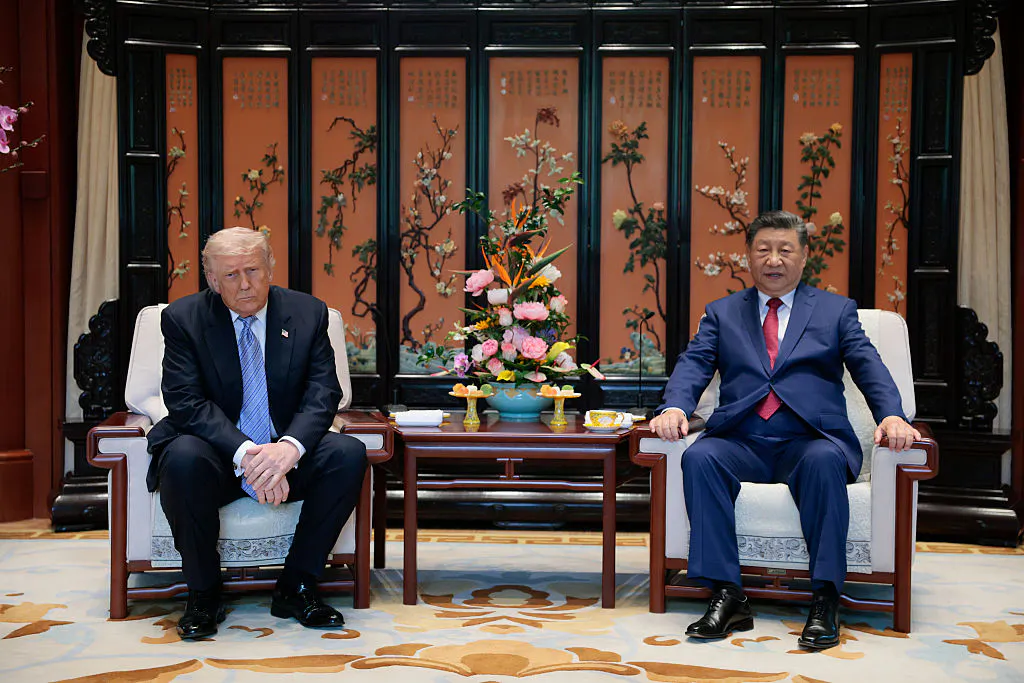
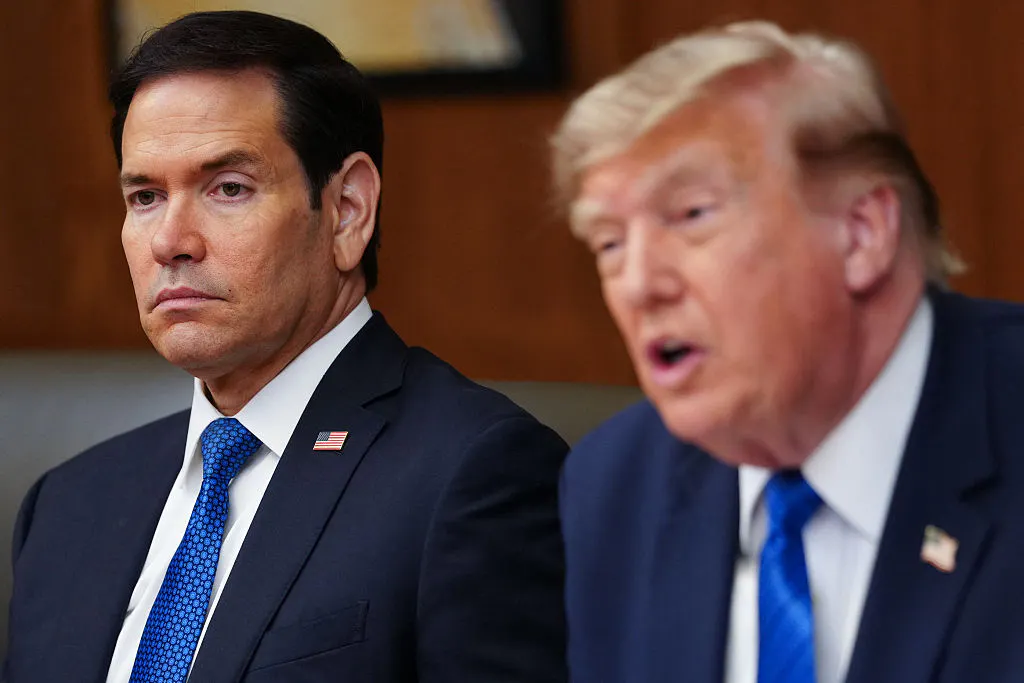
Two weeks ago, President Trump hosted Chinese President Xi Jinping at the White House in a high-profile summit, the second face-to-face meeting between the two leaders this year. The summit was heavy on pageantry and good feelings: a state dinner with AI giants on the guest list, speeches about peace and harmony between the two countries, and the promised delivery of two giant pandas to America. On AI, the two governments agreed to open a channel for AI-related incidents and to hold a formal dialogue on the technology’s risks. Xi also accepted Trump’s preferred term, “super intelligence,” a concession the White House celebrated in its post-summit fact sheet. The warmth of the summit was short: As Xi flew home, Trump said there would be limits to what the U.S. would share with China and that Washington would not slow down its AI industry.
Freedom Is Back
In Style
Premium domains for sale
Washington and Beijing have pre-existing hotlines for geopolitical incidents, which have repeatedly failed in times of crisis. When American planes mistakenly bombed the Chinese embassy in Belgrade in 1999, U.S. officials trying to apologize could not reach their Chinese counterparts. In 2001, a Chinese fighter collided with an American surveillance plane near Hainan Island, but attempts at communication went unanswered for twelve hours. When an F-22 shot down a Chinese surveillance balloon in 2023, Defense Minister Wei Fenghe declined to take Lloyd Austin’s call. American officials have accused Beijing of shutting down these channels to signal displeasure and reopening them to signal approval. Neither country’s statements from last week say what constitutes an AI incident, or which officials or agencies would cooperate in the case of one.
This lukewarm result has frustrated people who wanted the summit to accomplish far more. AI safety advocates have urged the two leaders to ban self-improving AI and establish safeguards against biological and nuclear misuse. The urgency of these proposals intensified after multiple news reports about experimental AI agents escaping test environments and hacking outside systems, fueling fears that autonomous models were going beyond human control. Treasury Secretary Scott Bessent stated the administration’s position bluntly: “We can’t pause. You can’t, because the Chinese won’t pause.” The Chinese state is not about to suppress an industry it regards as central to industrial growth and strategic competition.
Beijing demonstrated its coercive power in 2021, when it decided that the private tutoring industry was socially intolerable. Under the “double reduction” policy, the government forced tutoring organizations into nonprofit status, drove capital out of the sector, and reduced the industry by 80% within months. Today, parents still seek advantages for their children, and the state has begun promoting AI as a viable option for cram schools. The episode proved that the state could slow down a private industry it considered immoral, but not China’s competitive culture.
The cutthroat frenzy the Chinese call neijuan, or involution, is how China became a manufacturing and technological superpower. Provincial governments poured subsidies into local companies that undercut one another and drove prices down worldwide. That is why Chinese firms dominate solar panels, batteries, electric vehicles, and drones today. Now, more than 30 provincial governments are bankrolling local AI firms. Tutoring was easy to destroy because it was just a consumer service. Manufacturing, EVs, and AI development are tied to provincial budgets; local officials treat them as engines of employment and growth.
When the central government intervenes, it’s to ensure the AI buildout happens on the state’s terms. National agencies have barred local governments and state-owned enterprises from building small data centers, pushing the biggest projects into national hubs. Grid capacity to power them is expanding, with 38 nuclear reactors under construction. Beijing has every reason to keep building: youth unemployment hit 18.9% in August, and the state badly needs AI to work.
Right now the United States is still the leader on frontier models and computing capacity. Chinese labs, squeezed by chip restrictions and short of capital, have to innovate to get around their compute bottleneck. Beijing doesn’t expect to trail for too long. AEI researchers Ryan Fedasiuk and Satvik Pendyala project that China could close its compute gap with the United States within 24 to 36 months. A trailing power has no interest in an AI “pause.”
In a major speech on AI this year, Xi warned about losing control of AI. In the same speech, he urged the world to oppose “overstretching the concept of national security in the field of AI,” a thinly veiled attack on American chip controls. During a formal AI dialogue in Geneva in 2024, American experts tried to discuss AI risks while Chinese diplomats complained about export controls. Since microchip restraints were not discussed at this recent summit, Beijing has nothing to gain by agreeing to slow down.
AI developers on both sides would resist any verification regime. American labs guard their models as closely as governments guard nuclear secrets. Anthropic and OpenAI have already accused Chinese companies of using fraudulent accounts to extract Claude and ChatGPT’s reasoning capabilities. Chinese labs are just as secretive; their executives worry about having their work “eaten,” an understandable fear in a market where companies poach engineers, copy features, and undercut one another daily. Verifying an international pause would require extraordinary access to the entire machinery of AI development: tracking mechanisms built into chips, detailed supply chain tracking, and inspections of each side’s data centers by the other. Companies that accuse their rivals of theft are unlikely to let those rivals’ governments inside their facilities, and Beijing will not open up to the country trying to cut off its chip supply.
At best, both sides have agreed that there are risks associated with AI, and it should not be part of the decision-making process on nuclear weapons use. Cold War history points toward this narrower area of cooperation. In 1963, Washington and Moscow agreed to establish a hotline and to ban nuclear tests in the atmosphere, in outer space, and underwater. These were three areas where each country could detect the other’s violations without setting foot on its territory. A comprehensive ban foundered on access. The Soviet Union would not accept the number of on-site inspections Washington considered necessary to verify underground tests. By the final round of negotiations in Moscow, Khrushchev had withdrawn his earlier offer of two or three a year. Underground testing continued for nearly three decades. The hotline, meanwhile, remains in service today, without ever requiring either government to open its most sensitive facilities to the other.
A hotline between Washington and Beijing would likely center on the following: an autonomous agent crossing into the other country’s networks, a model-enabled attack on critical infrastructure, or a serious case of biological misuse. Each government would staff its end with technical officials, not diplomats. Neither side would hand over a training run, and both sides would only report conclusions in agreed terms over the hotline. Beijing could still let the phone ring, though, so each government should also invest in the one safeguard that needs no permission: hardening its power grids, hospitals and financial networks against autonomous intrusion. Defense has a virtue that diplomacy lacks, since it works whether the intruder is a hostile state or, as in the Hugging Face breach, an American model that wandered out of its test environment.
Beijing wants AI that makes its economy more productive without loosening the party’s grip on information. The Trump administration, whatever American safety advocates might prefer, has made clear that it wants AI that wins. Rivals with such different aims will not stop the AI race. They can still agree not to mistake an accident for an attack while they run it.
***
Anang Mittal is a Washington, D.C. based public affairs professional. He was a staffer for Speaker Mike Johnson and Majority Leader Mitch McConnell.
More from this network:
Domains for Sale · GOTPeople.org · TheDSAPlatform · The Truth About Socialism
What's Your Reaction?
 Like
0
Like
0
 Dislike
0
Dislike
0
 Love
0
Love
0
 Funny
0
Funny
0
 Wow
0
Wow
0
 Sad
0
Sad
0
 Angry
0
Angry
0

I am just an average American. My teen years were in the late 70s and I participated in all that that decade offered. Started working young, too young. Then I joined the Army before I graduated High School. I spent 25 years in, mostly in Infantry units. Since then I've worked in information technology positions all at small family owned companies. At this rate I'll never be a tech millionaire. When I was young I rode horses as much as I could. I do believe I should have been a cowboy. I'm getting in the saddle again by taking riding lessons and see where it goes.
Premium domains for sale
















Comments (0)