

‘You Can See Everything’ Has Everyone Falling For An Illusion
Premium domains for sale
Freedom Is Back In Style
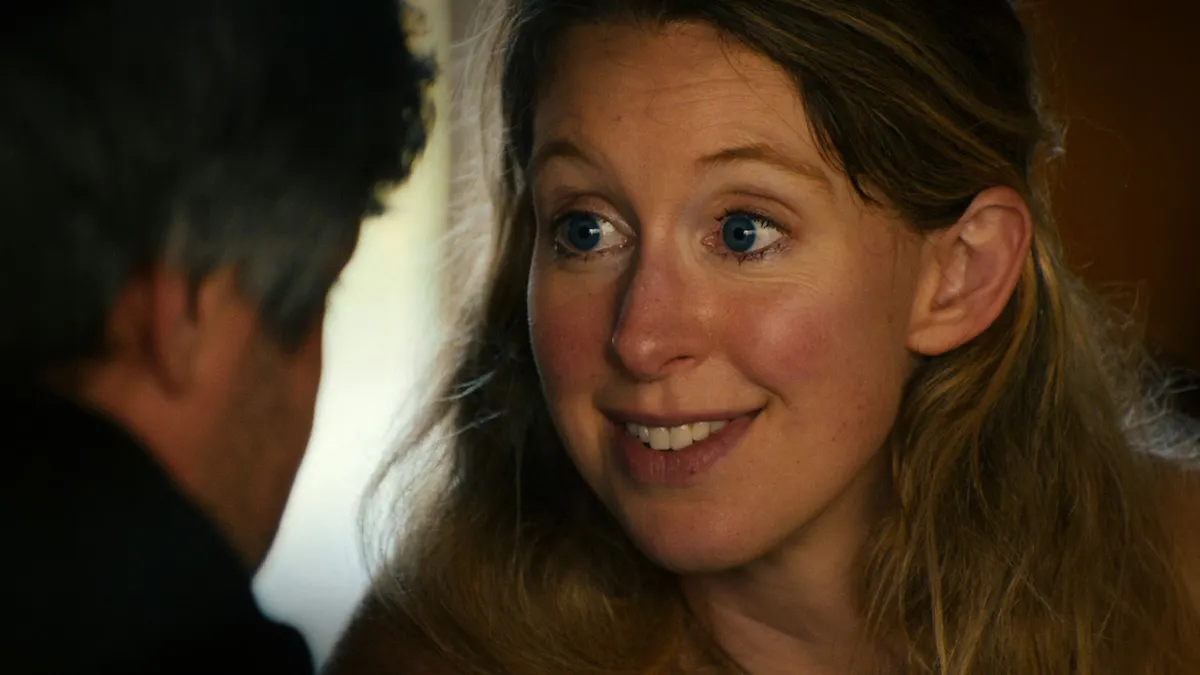
With a true crime junkie’s working knowledge of the rise and fall of Theranos, and critical intel on the best time to pee during the movie, I came to the theater prepared. But once I survived three hours under the spell of Nathan Fielder and Lance Oppenheim’s documentary “You Can See Everything,” I left with nothing but questions.
Freedom Is Back
In Style
Premium domains for sale
Still, after witnessing a magician behind the scenes — including her husband’s full-frontal shower and her Madonna-like breastfeeding moment, along with an unbelievable amount of unblinking eye contact and nodding — I wondered if maybe the questions were the answers to everything about Elizabeth Holmes’ schtick.
She’s still working the room. This is how Theranos happened in the first place. Welcome to Theranos 2.0.
For a woman who claims it took her “a really long time to be okay with letting someone see me cry,” Liz seems pretty comfortable crying in front of people. Unlike her formerly commanding Steve Jobs-esque persona, this new Liz — frizzy-haired, with ruddy cheeks and chapped lips — jogs knock-kneed on the beach and barely summons the necessary violence to scramble eggs with a fork. The film forces viewers to reconcile the incongruity of a mob boss in his elder years, appearing too meek to be the same person who once did terrible things.
My eyes got watery as Liz tearfully told her husband about the milk she left in the fridge for their baby as she headed to prison. I felt bad for her. Dang it — she got me, too.
What is it about this con woman that’s so irritatingly compelling? And why do so many people keep falling for it? Is she the evil villain or the innocent victim? Well, pass the popcorn because a three-hour doc-turned-dramatic-reenactment starring “The Dropout” star Amanda Seyfried only scraped the surface.
Part of me was hoping I’d witness more evidence that Liz was ultra guilty. She is, after all, the self-made billionaire and disgraced founder and CEO of Theranos — the blood-test startup that never lived up to the hype. When A24 cameras caught up with her 34 days ahead of her 11-year prison sentence in 2023, a jury had convicted her of four counts of fraud, and she and her former lover, Theranos president Ramesh “Sunny” Balwani, owed their duped investors $452 million in restitution.
Instead, Liz entered the frame blessed with the sympathy trope starter kit: a new baby to burp, the soft expressionlessness of “I have no idea what happened,” and a protective husband threatening to shut down filming and cuddle her like a codependent boa constrictor. Then there was the cinematic beach house rental along the windy shore, the dark wood paneling, and the moody blue glow of the ephemeral marine layer through the window. It was like watching her explore a pre-prison purgatory habitat. It was picturesque. Meditative even. Fake.
But an accomplice emerged, having made his debut in the first scene of the film: Liz’s husband, Billy Evans. Initial glimmers of a “knight in shining armor” soon gave way to “narcissistic rich guy” as he wielded his beta powers like a pouty dragon in gym shorts.
Possibly the most agile manipulator from his location outside of a prison cell, Billy was granted power of attorney over Liz before she went away. With this authority, he created an AI version of Liz to do and say whatever he pleased (he wasn’t worried about explicit deepfakes because they were going to happen anyway, he says), and he freely dropped F-bombs on Liz’s X account — as Liz — without her knowledge.
He’s controlling, calculating, and opportunistic, and he’s critical of Liz’s post-baby body as he shuts down conversation with the annoying snort of a total jack*ss. When he commented about how Liz’s greatest purpose in life was to build “monuments of love” to him, I threw my hands up at the screen in protest. Later, from prison, Liz would describe how they were building monuments of love together. Maybe it was a miscommunication. But from people who choose their words with the precision of a diagnostic automaton that actually works, probably not.
Once Liz enters prison, Amanda Seyfried cameos as an outside observer hovering above the story. By this point, Fielder’s in too deep, having broken off a real-life relationship and lost himself in Liz’s siren stare. Amanda, who played Liz on the Hulu series about her, almost disappears into her acting role. Amanda becomes Liz entwined with Fielder seeing Liz personified in Amanda.
Lines blur as real people morph into caricatures and the director becomes the subject. There is wine. Staged readings of scripted reenactments. And a tense confrontation between Amanda and Billy over dinner. Liz misses out on all of this. Fielder orchestrates it all to crank up the stakes. And it works. Until Amanda calls out Fielder’s Stockholm syndrome crush on Liz. The unsteadiness is palpable as the entire ruse almost topples.
Suddenly, everyone just seems human, putting together the mess of his or her own creation. As a viewer, I’ve barely moved. I’m in a trance. I’m not sure which part is real.
Earlier, Liz invites Fielder to go swimming in the ocean with her. Citing an awkwardly on-brand “fear of cold water,” he initially declines. Or so we think. Later, storybook vignettes reveal Liz and Fielder playfully diving into the surf together. They bob above frothy waves as the camera pans in from the house. We can’t hear their voices. Fielder reaches for Liz’s hand and pulls her across the rushing tide. Even if Fielder’s deadpan expression never changes, Liz looks like she’s laughing. They both seem free.
It’s almost beautiful. I no longer feel the discomfort of sitting too close to the screen thanks to shots cropped so tight I can only see eyelashes and pores. I’m now leaning in, wanting to know the true story. Whatever that is.
“You Can See Everything” brought in $15 million in its opening weekend as the most popular non-musical documentary since “Fahrenheit 9/11” in 2004. With a 98% score from audiences and critics on Rotten Tomatoes, it’s proving to be a satisfying watch for those who partake in this type of thing.
Even if Theranos 2.0 never finds its footing, Billy dutifully notes in one scene that Liz doesn’t see things like other people do. He says the same of Fielder. I’m not giving Billy any credit, but the film certainly represents what happens when creators use their powers to the benefit of art. Once again portraying a character, Liz works in much darker magic. And she won’t stop until she reels you in.
***
This article is part of Upstream, The Daily Wire’s new home for culture and lifestyle. Real human insight and human stories — from our featured writers to you.
More from this network:
Domains for Sale · GOTPeople.org · TheDSAPlatform · The Truth About Socialism
What's Your Reaction?
 Like
0
 Dislike
0
 Love
0
 Funny
0
 Wow
0
 Sad
0
 Angry
0

I am just an average American. My teen years were in the late 70s and I participated in all that that decade offered. Started working young, too young. Then I joined the Army before I graduated High School. I spent 25 years in, mostly in Infantry units. Since then I've worked in information technology positions all at small family owned companies. At this rate I'll never be a tech millionaire. When I was young I rode horses as much as I could. I do believe I should have been a cowboy. I'm getting in the saddle again by taking riding lessons and see where it goes.
Premium domains for sale





















Comments (0)