

‘You Can See Everything’: When The Documentarian Becomes The Con
Premium domains for sale
Freedom Is Back In Style
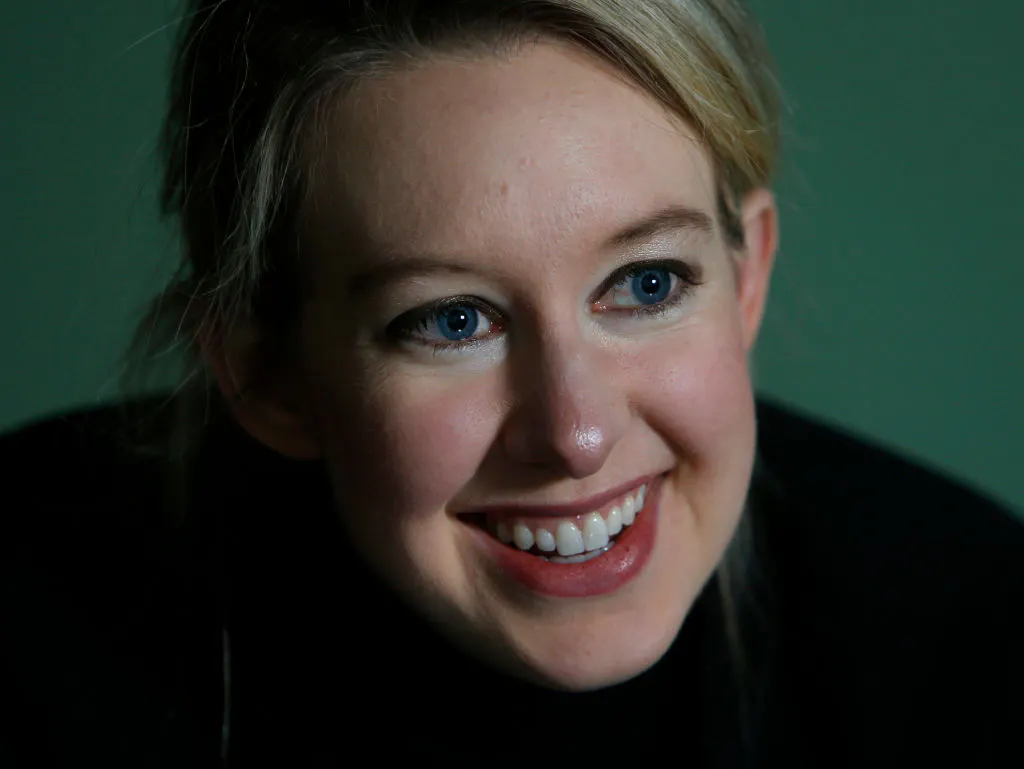
Can you trust someone who manipulated some of the most powerful men of our time and still doubles down on her innocence? And what kind of man begins a relationship with a woman at the height of a fraud scandal that would lead to her imprisonment?
Freedom Is Back
In Style
Premium domains for sale
These are the purported questions that come to mind in “You Can See Everything,” the new documentary focusing on Elizabeth Holmes’s last weeks before her 11-year prison sentence. Filmmaker Nathan Fielder moves in with her family to document their life and, she and her partner Billy Evans hope, to maybe rehabilitate her image — or at least show a more human side to the public.
Fielder and co-director Lance Oppenheim created what is easily among the most gripping documentaries in years: the pulse of a thriller with a thought-provoking heart and deftly handled meta-awareness.
Holmes and Evans are certainly humanized, though it’s hard to say whether for good or ill. The couple shares several moments that paint them as supportive, loving partners and parents. They play with their kids, praise each other’s minds, and share the easy physical affection of a happy family. Evans comforts Holmes when the prospect of her upcoming prison term overwhelms her, which is often.
But there are certainly cracks. While Holmes is warm, even intensely intimate with Fielder, Evans is hostile, and sometimes this extends to the interactions with Holmes. He not infrequently speaks on behalf of his fiancée, interrupts her conversations with Fielder even when she seems perfectly happy to keep talking, and sometimes talks about her more like a hyperintelligent child than an adult. His hostility to Fielder extends into odd displays of domination: looming over the shorter filmmaker, staring him down, and, in one unnecessary sequence, showering on camera, fully exposing himself.
In a film about a woman as famous for an unsettling intensity as her lies, paired with a filmmaker who dances on the line between reality and fiction with overwhelming awkwardness, somehow the boyfriend comes across as the villain. It’s ambiguous, however, whether this too is framing.
If you’re watching hoping to see Holmes crack under her unwavering declarations of her own innocence, this isn’t the movie for you. But if you’re intrigued by borderline futile attempts to understand her, question the nature of truth, and struggle to connect with a woman whose cognitive dissonance drives an almost alien understanding of language and the world, you’ll be as riveted as I was.
A sequence where Fielder shows Holmes and Evans “Who’s on first,” which she understands is funny but can’t grasp the fairly elementary concept, as an allegory for the pair talking past each other, brilliantly distilled the deeply odd trio.
A near three-hour runtime sounds punishing, especially with such off-putting individuals at the center, but it flew by, each hour complicating the narrative and each twist pulling me closer to the edge of my seat that I was on the verge of falling by the time the credits rolled.
Despite the documentary purportedly focusing on Holmes, it becomes increasingly meta-textual, a documentary about its own creation that examines the creator as much as the subject. Fielder, not Holmes, is the star, and it’s baffling to imagine a version where he stayed exclusively behind the camera.
It’s a revelatory film largely because of the relationship between Fielder and Holmes. A supposed tell-all from a famously untruthful person is a challenging ask, especially when the documentarian, who is meant to at least hold some distance to parse truth from fiction, becomes emotionally entangled.
The film is functionally divided into a three-act structure. At just over the 60-minute mark, Holmes turns herself in and goes to prison. After an emotional goodbye to her family and an unexpectedly tender hug with Fielder, I was baffled, wondering how nearly two more hours could remain when the story is over and the film’s subject is unreachable for the next 11 years.
Then came the twist that fundamentally altered the doc’s trajectory forever: Nathan sits on a sofa in an unfamiliar living room, showing highlights from the last hour of content to another giant-eyed blonde, actress Amanda Seyfried.
With the loss of his female lead, Seyfried becomes something of a surrogate. Fielder finally has a sounding board, someone outside of this little two-person cult. At first, Seyfried appears to almost be a voice of reason. For the most part, she is a refreshing figure, asking Fielder questions many in the audience were likely already thinking.
He brought her on to reprise her Emmy-winning role in recreations of the meetings with Holmes from before the cameras were present, an additional layer of artifice. It’s a testament to how strange Evans and Holmes truly are when a movie star comes across as relatively normal. As the film progresses, however, Seyfried reveals her own oddities, demonstrating an increasing self-obsession as she centers herself in the narrative.
The film drops the thread of Holmes’s perception of her own guilt almost entirely in the back half, instead focusing on Evans’s motives and Fielder’s growing lack of professional detachment.
If you can believe anything about Holmes, it’s her love for her family. She adores Evans and her children with startling devotion. Whether he returns this adoration to the same extent, uses her notoriety for some confusing end, or something else entirely, is less clear.
This concern could just be a trick of the filmmaking, or audience members projecting innocence onto a sweet-seeming mother while mistrusting the less agreeable man. Holmes is a convicted criminal, serving 11 years for defrauding investors, and appears to have absolutely no guilt for her crimes, but seeing her with her children and her borderline religious worship of Evans creates a relatable sympathy. Evans’s controlling tactics and unpleasantness are similarly recognizable. Not every viewer has been a defrauded investor or preyed on by a dishonest medical test, but almost everyone knows a man with Evans’s alleged faults taking advantage of a far more invested significant other.
Or all of this could be a fabrication by Fielder, Holmes, Evans, or some combination thereof. Holmes is among the most notorious liars and fraudsters of our age. Evans knowingly entered into a relationship with her at the peak of her scandal and has shown a degree of comfort with mistruth himself. Fielder is, at the end of the day, making a movie, one intended to entertain as much as, if not more than, inform. Even a film that actively interrogates its own biases isn’t fully trustworthy. We cannot, in fact, see everything.
Can you make an objective documentary about someone you’ve grown to love? “You Can See Everything” says no. But this nontraditional, personal film is far more gripping than a conventional take, so the lack of objectivity is a welcome trade-off.
***
Paulina Enck is a media specialist in Washington, D.C.
More from this network:
Domains for Sale · GOTPeople.org · TheDSAPlatform · The Truth About Socialism
What's Your Reaction?
 Like
0
 Dislike
0
 Love
0
 Funny
0
 Wow
0
 Sad
0
 Angry
0

I am just an average American. My teen years were in the late 70s and I participated in all that that decade offered. Started working young, too young. Then I joined the Army before I graduated High School. I spent 25 years in, mostly in Infantry units. Since then I've worked in information technology positions all at small family owned companies. At this rate I'll never be a tech millionaire. When I was young I rode horses as much as I could. I do believe I should have been a cowboy. I'm getting in the saddle again by taking riding lessons and see where it goes.
Premium domains for sale




















Comments (0)