

Your Grocery Bill Could Be Going Up Because of This California Law
Premium domains for sale
Freedom Is Back In Style
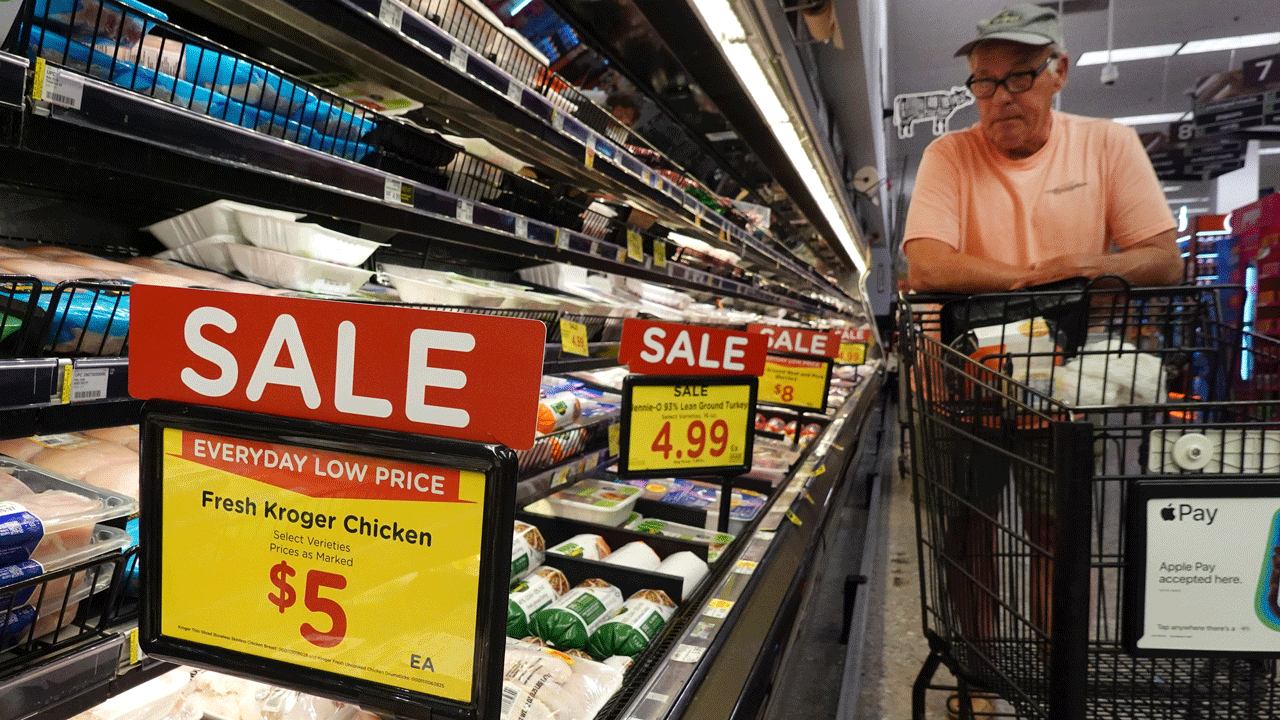
A California law set to take effect Aug. 3 is expected to increase costs for households by as much as $190 a year, with some industry groups warning that the impact on grocery bills could be even higher.
Freedom Is Back
In Style
Premium domains for sale
Senate Bill 54, the Plastic Pollution Prevention and Packaging Producer Responsibility Act, was designed to reduce plastic waste by requiring companies that produce packaging to help pay for the cost of recycling and disposing of it.
Supporters say it shifts landfill cleanup costs from taxpayers to manufacturers, but critics argue those costs will either shut down businesses altogether or ultimately be passed on to consumers.
In an interview with the Daily Signal, Assemblyman Carl DeMaio, R-San Diego, challenged both the environmental benefits of SB 54 and its impact on affordability.
“A lot of these environmental mandates are actually bad for the environment, and they cost consumers much, much more in the form of a higher cost of living,” he said.
DeMaio pointed to California’s 2014 plastic bag ban as an example.
“These people are not even good environmentalists with these band-aids. The last time they did an environmental mandate, it was banning plastic bags in 2014, quadrupling the waste in landfills because people started buying thicker plastic bags. So, many of these band-aids are being sold as good for the environment, and they’re actually bad for the environment, and worse than that, they increase costs.”
Asked what he would say to Californians worried about higher grocery costs, DeMaio didn’t hold back.
“Well, bend over and take it, because California Democrats don’t seem to care about your cost of living.”
Organizations such as the Dairy Institute of California warn that their estimates on the cost for California families are much higher than $200. Executive Director Katie Davey told SFGate that the group’s analysis found SB 54 could increase grocery costs by an average of $1,300 per household annually—far above CalRecycle’s estimate of roughly $60 to $190 per household per year.
The debate comes as ConsumerAffairs recently ranked California as the least affordable state in the nation, and with many Californians concerned that this bill will only add to the financial stress placed on families.
SB 54 is also facing legal challenges from critics who say the law could affect consumers far beyond California.
A coalition of 17 Republican attorneys general and the National Association of Wholesaler-Distributors filed lawsuits arguing the law unlawfully regulates businesses beyond California’s borders.
They contend that because many manufacturers use the same packaging nationwide, California’s requirements could force companies to redesign packaging for products sold across the country, rather than create California-specific versions.
The plaintiffs argue that those additional compliance costs could ultimately be passed on to consumers beyond California’s borders.
During a recent interview on Newsmax, DeMaio said the average California family of four spends $29,000 more each year than families in other parts of the country on necessities such as housing, groceries, insurance, and utilities.
“Policies like SB 54 cost consumers, and we’re nickeling and diming them, and it all adds up to that $29,000 figure—it crushes working families. And this is why people are fleeing the state of California. They just can’t afford to live here.”
More from this network:
Domains for Sale · GOTPeople.org · TheDSAPlatform · The Truth About Socialism
What's Your Reaction?
 Like
0
Like
0
 Dislike
0
Dislike
0
 Love
0
Love
0
 Funny
0
Funny
0
 Wow
0
Wow
0
 Sad
0
Sad
0
 Angry
0
Angry
0

I am just an average American. My teen years were in the late 70s and I participated in all that that decade offered. Started working young, too young. Then I joined the Army before I graduated High School. I spent 25 years in, mostly in Infantry units. Since then I've worked in information technology positions all at small family owned companies. At this rate I'll never be a tech millionaire. When I was young I rode horses as much as I could. I do believe I should have been a cowboy. I'm getting in the saddle again by taking riding lessons and see where it goes.
Premium domains for sale























Comments (0)