

How ‘Grand Theft Auto VI’ Could Become The Biggest Launch In Entertainment History

Premium domains for sale
Freedom Is Back In Style
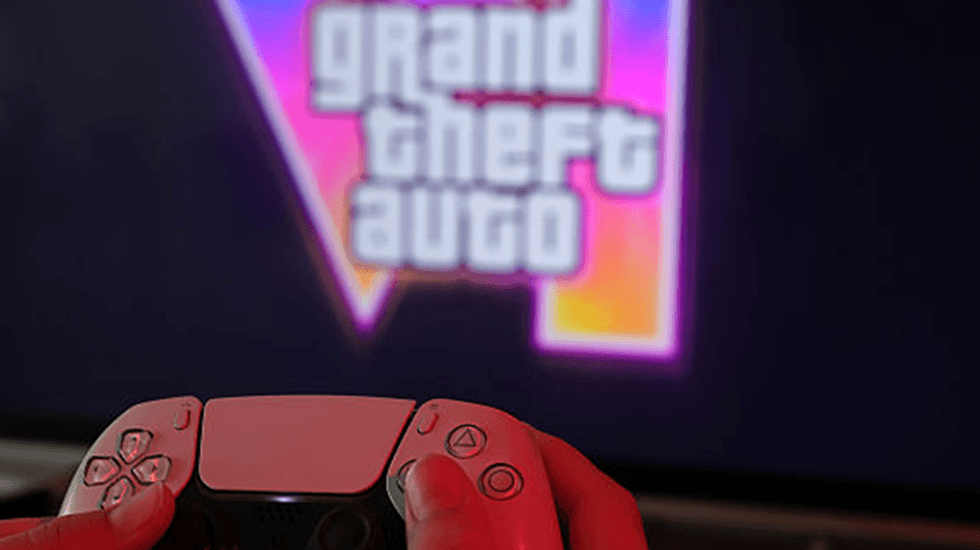
A video game comes out on Thursday that is expected to make more money in its first few days than any movie, album, or concert tour ever. More than “Avatar.” More than “Thriller.” More than the Eras Tour. It’s “Grand Theft Auto VI.”
Freedom Is Back
In Style
Premium domains for sale
Politicians, the press, and watchdog groups spent 25 years trying to bury this franchise. As the Streisand effect predicts, they only fanned the flames.
“Grand Theft Auto” started in 1997 as a crude, top-down game from a small studio in Scotland. The publisher’s PR strategy was basically “get a British tabloid mad at us.” It worked, and it became a pattern.
The real turning point was “Grand Theft Auto III” in 2001. Most console games back then were linear: The game told you where to go, and you went. “GTA III” dropped you into Liberty City, a parody of New York that looks more like actual New York every year, and said, “Do whatever you want.” You could drive a cab or just flip through radio stations full of satire sharper than real TV.
You could also steal cars, shoot cops, and hire a prostitute, then beat her up to get your money back. Which, to be clear, is bad. You should not do that. But the game didn’t stop you. Rockstar Games producer Leslie Benzies said the crime was meant as comedy, “not to be taken seriously.” GameSpy named it 2001’s Most Offensive Game of the Year. It also named it Game of the Year.
The New York Times and a long list of watchdog groups piled on, and cashiers started actually carding kids for M-rated games. “GTA III” sold about 14.5 million copies. Controversy, it turns out, is great marketing.
“Grand Theft Auto: San Andreas” followed in 2004 and became the best-selling PlayStation 2 game ever. Then, in 2005, came Hot Coffee. Tech-savvy players who customized the game found a sex mini-game Rockstar had cut but left buried in the code: blocky, fully clothed characters on a bed, with the player hitting timed button prompts. Think “Guitar Hero,” but deeply uncomfortable.
The ratings board re-rated “San Andreas” “Adults Only,” a death sentence since almost no major retailer stocks AO games. Walmart pulled it, and the recall reportedly cost Rockstar parent company Take-Two $20 million to $25 million. Then-Sen. Hillary Clinton (D-NY) called for a federal investigation, saying games like this were “stealing the innocence of our children.” The House voted 355-21 to ask the Federal Trade Commission to look into it. Take-Two settled in 2006 without paying a fine.
My favorite character in this saga is state Sen. Leland Yee (D-CA), who wrote a law banning the sale of violent video games to minors. In 2011, the Supreme Court struck it down 7-2, with Justice Antonin Scalia writing that video games are protected by the First Amendment, just like books and movies. In 2014, the FBI arrested Yee in a corruption sting. Prosecutors said he’d offered to help an undercover agent buy weapons, including shoulder-fired missiles, from an arms dealer tied to an Islamist rebel group. The man who thought video games were too violent went to federal prison. Rockstar’s writers couldn’t have scripted it better.
By 2008, “GTA” had stopped being a scandal and started being an event. In 2013, “Grand Theft Auto V” hit $1 billion in three days, a Guinness record. It took “Iron Man 3,” that year’s biggest movie, about three weeks to make that kind of money.
“GTA V” has since sold more than 230 million copies. Only “Tetris” and “Minecraft” have sold more. Its online mode lets players skip hours of grinding by buying in-game cash with real money, and by 2018, the game had brought in an estimated $6 billion, about double the box office of “Avatar.”
All that success is why fans waited 13 years for a sequel. “GTA VI is never coming out” became one of the internet’s longest-running jokes. In 2022, a teenage hacker leaked about 90 videos of early footage while out on bail, using a hotel TV, an Amazon Fire Stick, and his phone. The second trailer, in May 2025, drew around 475 million views in its first day. That’s more than the populations of the United States and Canada combined, all watching an advertisement.
Now the math. Rockstar has never said what “GTA VI” cost. Outside estimates run from $1 billion to $3 billion. The most expensive movies ever made cost $400 million to $500 million. Call it $2 billion. The game sells for $79.99, and Sony and Microsoft take roughly 30% of digital sales, leaving Rockstar about $56 per copy. Just breaking even takes about 36 million copies. For almost any other game, 10 million is a massive hit.
Sensor Tower projects around 25 million digital pre-orders by launch. Even that cautious number is a $2 billion launch, bigger than the record opening weekend of “Avengers: Endgame.” And Take-Two doesn’t need it to pay off in a year. Thirteen years later, “GTA V” still sells about 5 million copies every three months. “GTA VI” is built for the next decade.
Other publishers have treated November like hurricane season and moved their big games out of the way. Except Nintendo, which is releasing its “Ocarina of Time” remake, but when has Nintendo ever known what the rest of the world was up to? People signed up for Netflix to watch a 27-minute trailer six hours before it hit YouTube for free. An Army battalion at Fort Stewart, Georgia, is offering a four-day pass to soldiers who reenlist, timed for launch week. At least one business is closing on launch day because its staff will be “in Vice City.” Uber, DoorDash, fast food: Expect the service industry to shut down from November 19 through 22.
Parents should know what’s coming, too. “GTA VI” is rated M for Mature, for intense violence, nudity, strong sexual content, and drug and alcohol use. The advice from 2001 still applies: That “M” on the box means something.
Whatever you think of its content, “GTA” survived moral panics, a federal investigation, a Supreme Court case, and the biggest leak in gaming history. Every time someone tried to bury it, it got bigger.
***
Michael Knipp is a husband, father of five children, and nerd culture enthusiast. He works in IT at The Daily Wire.
This article is part of Upstream, The Daily Wire’s new home for culture and lifestyle. Real human insight and human stories — from our featured writers to you.
What's Your Reaction?
 Like
0
 Dislike
0
 Love
0
 Funny
0
 Wow
0
 Sad
0
 Angry
0

I am just an average American. My teen years were in the late 70s and I participated in all that that decade offered. Started working young, too young. Then I joined the Army before I graduated High School. I spent 25 years in, mostly in Infantry units. Since then I've worked in information technology positions all at small family owned companies. At this rate I'll never be a tech millionaire. When I was young I rode horses as much as I could. I do believe I should have been a cowboy. I'm getting in the saddle again by taking riding lessons and see where it goes.
Premium domains for sale









Comments (0)