

A SpaceX Rocket Is About To Crash Into The Moon
Premium domains for sale
Freedom Is Back In Style
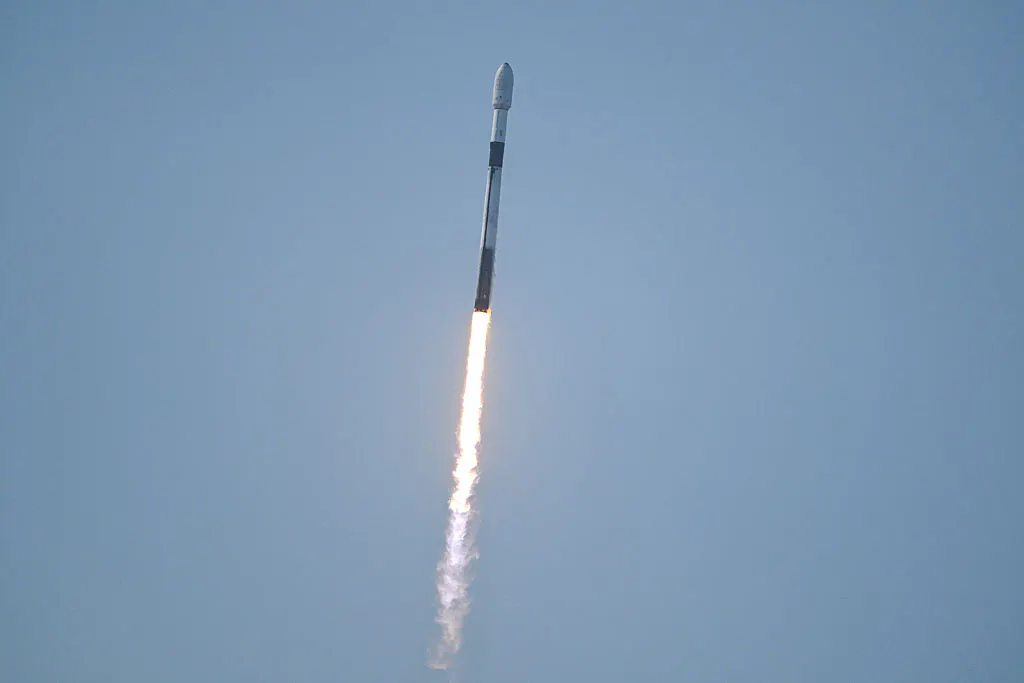
A decommissioned SpaceX rocket that got off course is expected to slam into the moon at 5,400 miles per hour on Wednesday morning.
Freedom Is Back
In Style
Premium domains for sale
The upper stage of a SpaceX Falcon 9 rocket will likely crash into the moon at 2:35 a.m. ET on Wednesday after drifting for 19 months in a moon-crossing high-Earth orbit. Typically, the upper stage of the rocket would enter a highly elliptical orbit of the Earth before eventually being brought down and catching fire before it landed in a remote part of the ocean. But gravitational pulls from Earth, the moon, and the sun gradually altered the rocket’s trajectory. The rocket was used to launch commercial moon landers into space before it was decommissioned.
Julianna Scheiman, the director of NASA science and Dragon programs at SpaceX, said that the company performed “a different maneuver [than deorbiting] to ensure that the second stage itself is safe per the appropriate rules and regulations.”
“What has happened is, essentially, a mixture of solar activity and gravity forces have put it on a path towards the moon,” Scheiman added.
Astronomer Bill Gray, who first predicted the date and time of the collision, estimates the crash will release energy equivalent to 15,000 sticks of dynamite and will create a considerable debris plume. Despite the power and scale of the impact, scientists say the crash will be too dim and too fast to spot with the naked eye from Earth. NASA says the collision poses no threat to Earth and that the agency “will continue to track the booster for training purposes, as well as later observe the impact site for scientific purposes.”
Los Alamos National Laboratory researcher Benjamin Fernando said that the collision “provides an opportunity to test pipelines for measuring flash properties to locate impact events seismically, and to better understand the multi-modal hazards posed to future lunar infrastructure and astronauts from space debris impacting the moon.”
The crater caused by the collision is expected to be 90 feet wide and 16 feet deep. NASA will point its Lunar Reconnaissance Orbiter, a robotic spacecraft that maps the moon, at the site before and after the strike.
Wednesday’s impact will mark just the second time a spent rocket has hit the moon accidentally. In 2022, a Chinese rocket booster collided with the moon’s far side. In that crash, researchers initially suspected it was a SpaceX Falcon 9 rocket before realizing it was China’s Long March 3C rocket that had launched a trip around the moon in October 2014.
As NASA prepares to establish a sustained human presence on the moon, managing space debris in lunar orbit will become increasingly important. Future collisions could eject debris from the lunar surface, creating potential hazards for astronauts, spacecraft, and nearby operating infrastructure.
More from this network:
Domains for Sale · GOTPeople.org · TheDSAPlatform · The Truth About Socialism
What's Your Reaction?
 Like
0
Like
0
 Dislike
0
Dislike
0
 Love
0
Love
0
 Funny
0
Funny
0
 Wow
0
Wow
0
 Sad
0
Sad
0
 Angry
0
Angry
0

I am just an average American. My teen years were in the late 70s and I participated in all that that decade offered. Started working young, too young. Then I joined the Army before I graduated High School. I spent 25 years in, mostly in Infantry units. Since then I've worked in information technology positions all at small family owned companies. At this rate I'll never be a tech millionaire. When I was young I rode horses as much as I could. I do believe I should have been a cowboy. I'm getting in the saddle again by taking riding lessons and see where it goes.
Premium domains for sale

























Comments (0)