

ACLU Looks to Dismantle Ohio Election Integrity Law
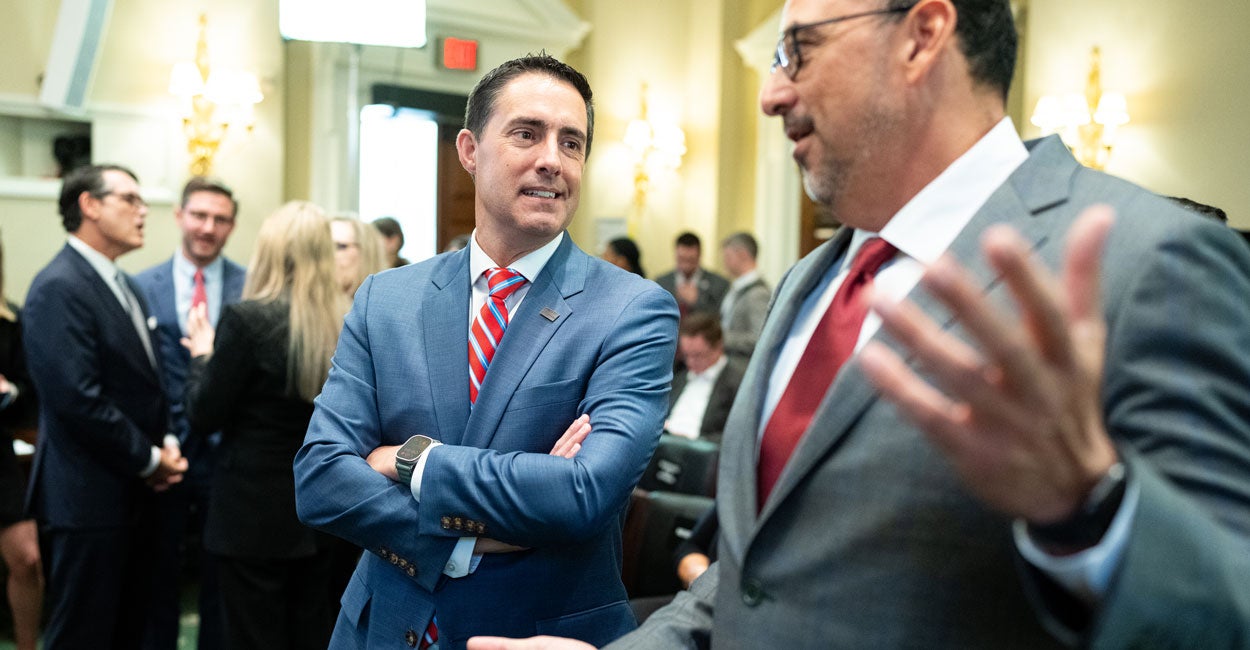
As President Donald Trump and congressional Republicans seek to protect election integrity at the federal level with the SAVE America Act, Ohio is fighting its own battle.
Live Your Best Retirement
Fun • Funds • Fitness • Freedom
Last week, the American Civil Liberties Union, representing the League of Women Voters of Ohio and CAIR-Northern Ohio, filed a lawsuit against Ohio Secretary of State Frank LaRose over its new Ohio election integrity law.
SB 293 was signed into law last December by Republican Gov. Mike DeWine and is set to go into effect next month. SB 293 uses citizenship data to purge suspected noncitizens from voter rolls.
But the ACLU claims that the law disenfranchises voters if they are purged from the voter rolls without ample time to correct issues.
It’s a lawsuit the secretary’s office claims is “frivolous.”
“Frivolous and unfounded lawsuits are nothing new for these groups. We are confident the legislation passed by the Ohio General Assembly complies with federal law,” Ben Kindel, press secretary for LaRose, told The Daily Signal.
“SB 293 directs Ohio’s secretary of state to systematically check and compare state voter registration data with the citizenship records of the state Bureau of Motor Vehicles (BMV) and the federal Systematic Alien Verification for Entitlements (SAVE) system. Individuals flagged under these citizenship-check requirements will have their voter registrations cancelled without prior notice or any opportunity to respond. These purges will take place at least once a month, continuing right up through elections,” League of Women Voters Ohio stated in a press release.
League of Women Voters Ohio claims the law is “problematic” because data is “outdated,” purging goes up to the eve of elections, and the law lacks “enough protection to ensure wrongly removed voters will be able to fix their registration in time to vote.”
“Once a green card holder goes through the naturalization process, they’re a citizen, and thus eligible to vote. But if they don’t update their driver’s license—which are valid for four to eight years, and new citizens aren’t required to update—according to the state of Ohio they still look like a noncitizen,” the Ohio Capital Journal also explained.
LaRose posted to X on Wednesday urging voters to act promptly if they’re asked to update or verify their information.
“Instead of welcoming new voters who have gone to great lengths to participate in our democracy, SB 293 creates an unnecessary, discriminatory hurdle for naturalized citizens to cast their ballots,” said Jen Miller, executive director of the League of Women Voters of Ohio. “Most Ohioans believe that democracy works best when we can all participate freely and fairly. That’s why we’re headed to court—to ensure that all eligible Ohioans can trust that their registrations won’t be cancelled.”
The Daily Signal reached out to plaintiffs and the ACLU but did not receive a response in time.
LaRose and League of Women Voters Ohio were involved in a back and forth over X on Thursday over the concern of noncitizens voting in elections.
Honest Elections Project Action’s Vice President Chad Ennis, who provided testimony in favor of SB 293, warned about if plaintiffs should get their way.
“This lawsuit by the League of Women Voters and CAIR is another example of the Left attempting to foil any attempt at cleaning voter rolls. When the government has information from official sources that confirm someone is not a citizen, it would be terrible policy to allow that person to remain on the rolls and vote. But that is exactly what the lawsuit seeks to force Ohio to do,” he told The Daily Signal.
SB 293 includes other provisions. According to the bill’s text, its aim is “to modify the law governing, voter roll maintenance, provisional voting, the return of absent voter’s ballots, and the membership of the Ohio Election Integrity Commission.”
The legislation revises the deadline in which absent voter ballots can be returned, eliminating the grace period of four days after Election Day in which mail-in ballots can arrive.
The law was co-sponsored by state Sen. Theresa Gavarone, who stands by SB 293. “I believe in the legislation I sponsored. While this matter is pending, I won’t be commenting further,” she told The Daily Signal. “I trust the Attorney General will be successful and that this law will be fully enacted.”
Heritage Action’s Paul Lagemann also testified in support of the bill, focusing on eliminating the grace period. In speaking with The Daily Signal, he shared that voters “should operate under that standard of having your ballot in on time,” stressing that a “consistent standard is the way to go.”
“Heritage has models on several of the issues in the bill, including voter ID and including other issues, such as citizen voting,” Lagemann said regarding other provisions in the bill, including those the lawsuit seeks to address.
While Congress tries to pass the SAVE America Act, which is regarded by Heritage Action as a “key vote,” Lagemann pointed to how states can also pass their own laws on election integrity. “The beauty of doing [election integrity] in the states is that we can do it quickly, thoroughly, and in a way that is tailored to the state,” he shared.
Ohio is currently tied at 11th among states in election integrity, according to Heritage’s Election Integrity Scorecard, along with Mississippi, Texas, and Wisconsin.
The post ACLU Looks to Dismantle Ohio Election Integrity Law appeared first on The Daily Signal.
What's Your Reaction?
 Like
0
Like
0
 Dislike
0
Dislike
0
 Love
0
Love
0
 Funny
0
Funny
0
 Wow
0
Wow
0
 Sad
0
Sad
0
 Angry
0
Angry
0

I am just an average American. My teen years were in the late 70s and I participated in all that that decade offered. Started working young, too young. Then I joined the Army before I graduated High School. I spent 25 years in, mostly in Infantry units. Since then I've worked in information technology positions all at small family owned companies. At this rate I'll never be a tech millionaire. When I was young I rode horses as much as I could. I do believe I should have been a cowboy. I'm getting in the saddle again by taking riding lessons and see where it goes.


















Comments (0)