

After Daily Wire Legal Win, Americans Shouldn’t Wonder Who’s Silencing Them Online
Premium domains for sale
Freedom Is Back In Style
It is easy to forget the dystopian excesses of the Covid era: business closures, shuttered schools, and mask and vaccine mandates. A new development in Missouri v. Biden, a Covid-era lawsuit, serves as an important reminder of how precarious our basic freedoms become in the face of a perceived disaster. For the past four years, a coalition of state attorneys general, courageous scientists, and First Amendment advocates waged a counterattack against the federal government’s efforts to strong-arm social media companies into silencing those espousing views contrary to the government-approved narrative.
Freedom Is Back
In Style
Premium domains for sale
Last week, the plaintiffs and the federal defendants submitted a consent decree to the court for approval. The proposed consent decree is both a real win for free speech and a blueprint for further protections necessary to safeguard our First Amendment rights.
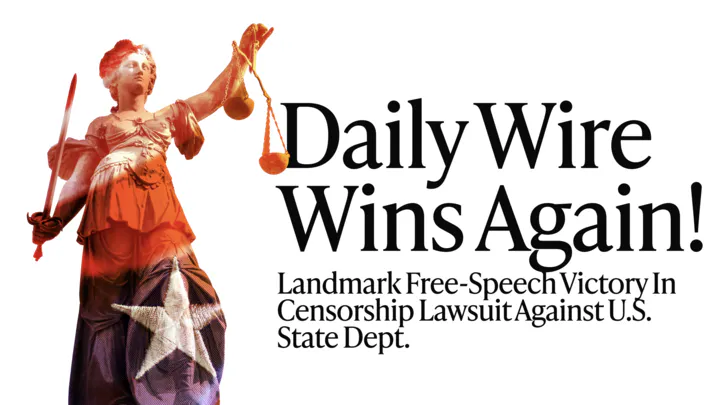
That need is underscored by another recent free speech victory by The Daily Wire, in which the State Department agreed to stop supporting efforts that targeted protected speech by American media outlets. That settlement also imposed ongoing compliance oversight, helping ensure the government cannot quietly return to the same tactics.
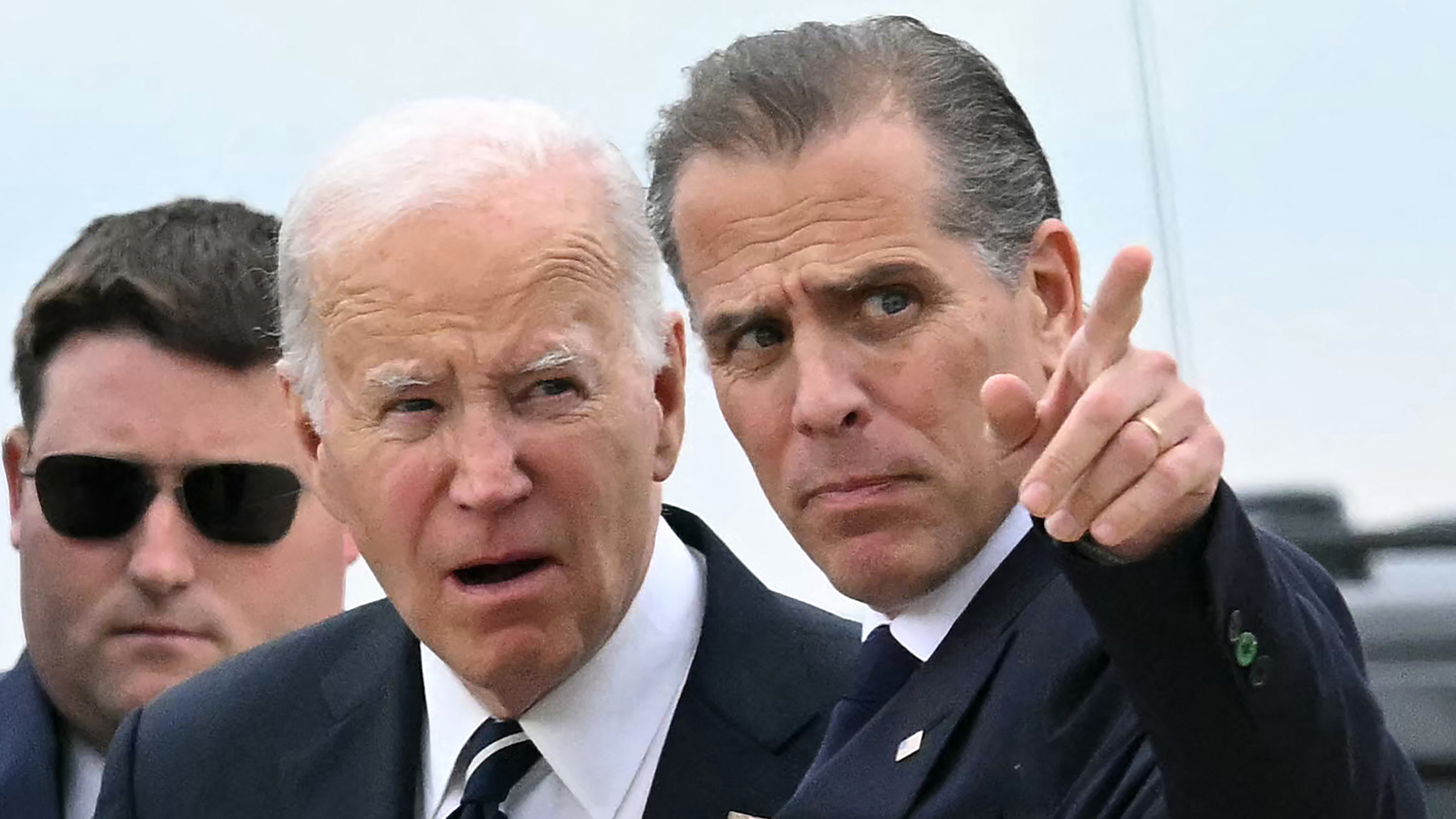
The core allegation in Missouri v. Biden was that senior officials across multiple federal agencies had engaged in an unprecedented campaign to coerce and pressure major social media platforms into censoring lawful speech. The plaintiffs argued that the Biden administration had effectively outsourced government censorship to private companies, leaning on platforms like Facebook, Twitter, and YouTube to suppress content related to Covid origins and treatments, the Hunter Biden laptop story, and election integrity.
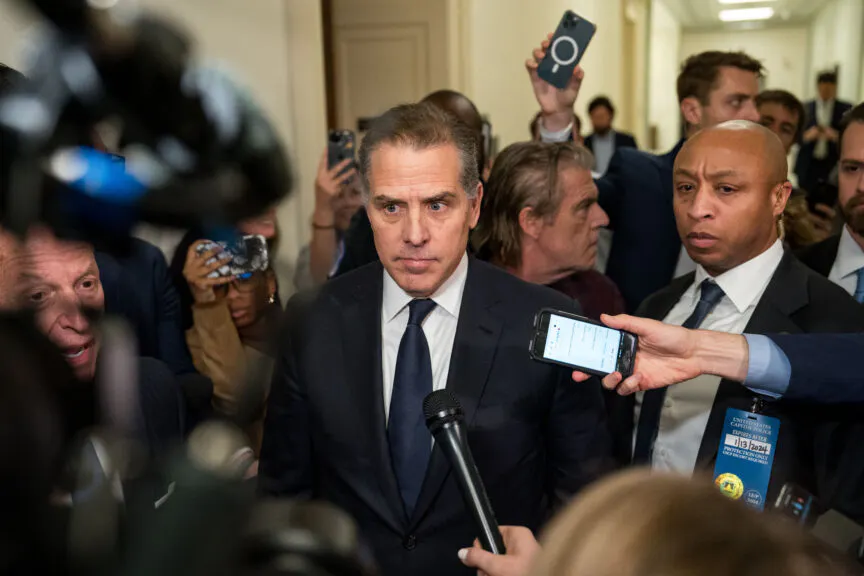
Photo by Kent Nishimura/Getty Images
For example, Rob Flaherty, the director of digital media in the Biden Administration, tried to coerce Meta into suppressing posts critical of the Covid vaccine on Facebook, accusing Meta of driving “vaccine hesitancy.” Flaherty even demanded that Meta explain what it would do to suppress anti-vaccine content on WhatsApp, a private messaging application. Flaherty made clear he was not speaking just for himself, but rather for, “the highest — and I mean the highest — levels of the White House.”
The case bounced between trial and appellate courts, including a stop at the Supreme Court, as judges evaluated the nuances of the thorny, at times novel, claims at issue in the case. With the change in presidential administrations, however, the federal government no longer was the adversary, though it was still the nominal defendant.
On his first day back in office, President Trump signed an Executive Order entitled, “Restoring Freedom of Speech and Ending Federal Censorship,” which condemned the types of censorship the plaintiffs in Missouri v. Biden had filed suit regarding. With a sympathetic administration in office, the plaintiffs were able to negotiate a consent decree rather than spend many more years embroiled in litigation.
The consent decree is focused on preventing the type of coercion, known as jawboning, that the federal government had used to do indirectly during Covid what it could not do directly: prevent Americans from speaking out in public about the major issues of the day. The parties agreed that the government would no longer take actions designed to bully social media companies into removing or suppressing content containing free speech. The consent decree further prohibits the government from directing or vetoing social media companies’ content moderation policies.
A critical limit in the consent decree, however, exposes the clear need for the government to take protective measures outside the confines of the Missouri v. Biden lawsuit. For technical legal reasons related to standing and jurisdiction, the consent decree is focused on the parties to the case. Rather than enjoin the federal government as a whole, the consent decree binds the Surgeon General, the Centers for Disease Control and Prevention, and the Cybersecurity and Infrastructure Security Agency (CISA), which engaged in some of the most blatant jawboning efforts during the Covid period. The consent decree further protects only the plaintiffs in the case, that is, the states and individuals who sued the government. (In a bit of poetic justice, two of the plaintiffs, Jay Bhattacharya and Martin Kulldorff, withdrew from the case after accepting senior posts in the Trump administration.)
The Missouri v. Biden plaintiffs are not the only litigants who have prevailed in challenges to Biden-era free speech violations. As The Daily Wire reported, this week, a federal judge issued a consent decree in a challenge to the Biden-era State Department’s practice of partnering with outside organizations to label various outlets — including this one and the Federalist — as disinformation. The State Department agreed that it would no longer engage in efforts to suppress, censor, demonetize, or downgrade the constitutionally protected speech of Americans and domestic news outlets.
While these consent decrees are real victories for the plaintiffs who had the courage to take on the federal government in court, they will not stop a future administration from engaging in similar tactics that we saw during Covid, in the wake of the 2020 election, and throughout the Biden Administration. Americans as a whole deserve the robust protections the Missouri v. Biden plaintiffs earned in that litigation.
Congressional action of any sort is admittedly a difficult feat. But there are few bedrock principles more important than those embodied in the First Amendment. If Congress wants to protect Americans’ free speech rights, the proposed consent decree in Missouri v. Biden is a useful roadmap. All federal agencies and officials, not just the select handful named in the proposed consent decree, should be prohibited from trying to control speech by telling social media companies what content is and is not allowed. And all Americans should be able to speak on social media with the assurance that the government cannot tell social media platforms to silence them.
The plaintiffs in Missouri v. Biden and their attorneys should be praised for bringing a landmark lawsuit in the face of tremendous government overreach and achieving a real victory in the process. Congress should follow suit by extending those protections to everyone else.
* * *
Jesse Franklin-Murdock is the Miles Visiting Fellow at the Center for American Liberty, and he is a partner at Sweigart Murdock, LLP in San Francisco, where he specializes in First Amendment and defamation law, political law, and civil rights.
More from this network:
Domains for Sale · GOTPeople.org · TheDSAPlatform · The Truth About Socialism
What's Your Reaction?
 Like
0
Like
0
 Dislike
0
Dislike
0
 Love
0
Love
0
 Funny
0
Funny
0
 Wow
0
Wow
0
 Sad
0
Sad
0
 Angry
0
Angry
0

I am just an average American. My teen years were in the late 70s and I participated in all that that decade offered. Started working young, too young. Then I joined the Army before I graduated High School. I spent 25 years in, mostly in Infantry units. Since then I've worked in information technology positions all at small family owned companies. At this rate I'll never be a tech millionaire. When I was young I rode horses as much as I could. I do believe I should have been a cowboy. I'm getting in the saddle again by taking riding lessons and see where it goes.
Premium domains for sale







Comments (0)