

America Lost An Infamous Wargame To Iran. That’s Why We’re Winning Now.
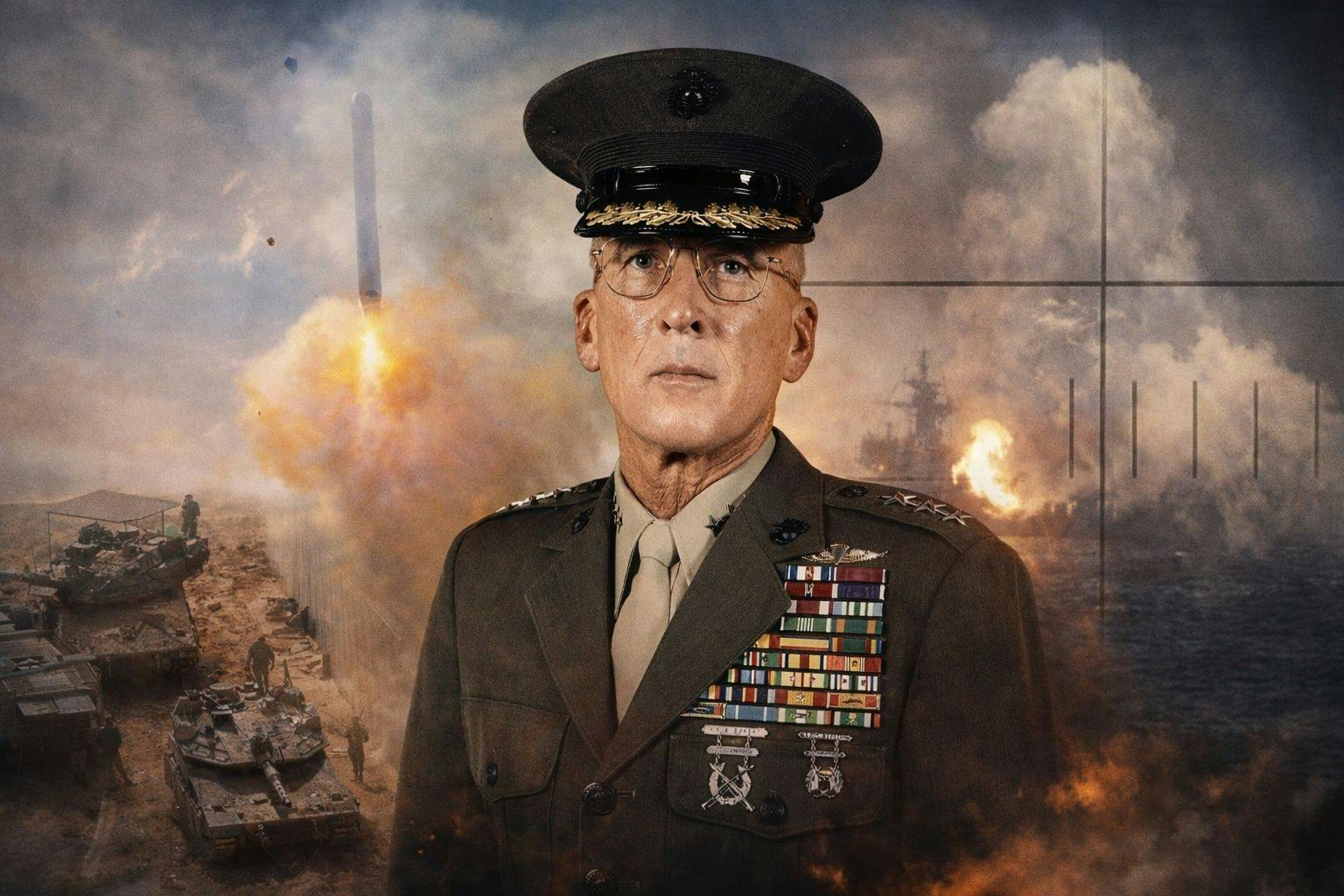
The most significant threat to the United States military is the strategic divide between the citizen and the soldier, a distance that has only increased in recent decades as more and more Americans live removed from military life. A peek under the hood at the military planning apparatus can create an eye-opening experience for many otherwise well-informed citizens. Such is the case with a controversy that has spread like wildfire through the pages of Reddit and posts on X since the current Iran Operation began, focused on the infamous Millennium Challenge wargame, and particularly the approach of Marine Lieutenant General Paul Van Riper.
Live Your Best Retirement
Fun • Funds • Fitness • Freedom
During peacetime, the military professionals of this country conduct serious and deliberate research in an attempt to understand “What is the American way of war? What are its strengths and weaknesses?” Far from an academic exercise, this self-understanding is vital to winning our nation’s wars. As American bombs fall on Tehran and our Navy dismantles what remains of Iran’s fleet, most Americans are watching the explosions without understanding the decades of quiet work that made this moment possible.
In the summer of 2002, the Pentagon conducted a $250 million exercise called Millennium Challenge, the most expensive war game in American history. A retired Marine Lieutenant General named Paul Van Riper was chosen to command the opposing force (a thinly veiled Iran). Van Riper was brilliant, aggressive, and innovative. He used motorcycle couriers instead of radios and signaled attacks from mosque loudspeakers. He launched swarms of suicide boats and a massive cruise missile salvo against a carrier battle group inside the Persian Gulf. In the first hours of the exercise, he sank sixteen warships and killed over twenty thousand Americans on paper.
This was an astounding result. The exercise was halted, the ships “refloated,” and the game restarted with a script guaranteeing an American victory. Van Riper struggled under increasing “control mechanisms,” which he viewed as unfair, and then stepped down as the OPFOR commander mid-exercise.
The conventional reading of Millennium Challenge is that it was an expensive embarrassment. On the one hand, critics posited that Pentagon brass couldn’t stomach honest results, and more conservative voices faulted Van Riper for “breaking” the exercise. The latter argued that the simulation had been exploited: small boat swarms carrying unrealistically large explosive loads, couriers simulated as instantaneous, and air forces conjured from nowhere. They opined that Van Riper was overplaying. They pointed to Operation Praying Mantis in 1988, and later the events of April 2024. When Iran launched over three hundred drones and missiles at Israel in April 2024, 99% of them were intercepted. The pattern held in October 2024 and the Twelve-Day War of June 2025. Every real-world test confirmed what skeptics argued: Iran could never execute the Van Riper playbook.
Here is what amateurs and skeptics miss. The military effectiveness of Operation Epic Fury is precisely because Van Riper played the enemy so aggressively. This is why we were prepared.
Every day for decades, gray-faced staff officers swiped into the CENTCOM compound in Tampa and burned the midnight oil for uncelebrated hours upon hours to develop solutions to Millennium Challenge — think of it as the equivalent of the Kobayashi Maru. The 752-page JFCOM after-action report acknowledged what Van Riper had proven: that a 24-hour notice to Iran could be devastating to the United States; that we must focus on anti-access threats consistently; and that we lacked deployment agility and needed to take care in our basing.
These findings became vital data points to planners. Across two decades, posture was developed in depth, we upgraded our weapons (Arrow-3, upgraded Aegis), ringed the Gulf with THAAD batteries, and refined counter-drone and counter-small-boat technologies. We stopped giving adversaries twenty-four-hour ultimatums. We increased carrier standoff. All measures built against the Van Riper challenge. That is the legacy of Millennium Challenge ‘02.
There is a growing chasm in this country between those who serve and those who don’t, and nowhere is it wider than in understanding what the military does when it isn’t fighting. There are no movies or medals for the men and women who spend careers in the windowless vaults at CENTCOM, producing war plans upon contingencies, upon war plans upon contingencies — all classified, most never executed, none glamorous. I was one of them. What those planners do, year after year, is imagine the worst scenarios and build the architecture to defeat them. The dominance you are witnessing against Iran was not born on February 28, 2026. It was born in those vaults, over decades, by people whose names you will never know.
A perceptive cynic might see this as the self-gratifying sentiment of a retired Colonel, and maybe so. More importantly, however, with Operation Epic Fury, we are answering one of our own vital questions: “What is the American way of war?” It is an opportunity for an honest reckoning of where we excel and a humble review of where we falter.
We are outstanding planners, inheritors of the discipline of Alfred von Schlieffen and the foresight of the Rainbow Plans of the 1920s. Give America two decades to plan a theater war against a known adversary, and we will execute with devastating precision. No nation on earth comes close. But we ought to pause and ask harder questions about how we respond to the unexpected. We should ask ourselves whether we are a one-trick pony — vulnerable to conflicts in places that don’t look like the National Training Center at Barstow, against enemies we haven’t spent a generation gaming out. Today, we recognize the gift that preparation gives us.
Twenty-four years ago, Paul Van Riper sank our fleet on a computer screen, and a lot of very serious people in concrete rooms took notice. As a community, we studied his moves, debated their veracity, and then built systems to counter them. We war-gamed and rehearsed his tactics until the countermoves became doctrine and the doctrine became muscle memory. Now, Iran has attempted the real thing by unleashing drone swarms, missile barrages, closing the Strait of Hormuz, and conducting attacks across the Gulf. All of which are being decisively defeated.
So today, we owe our thanks and gratitude to Lt. Gen. Van Riper. His courage and insight fueled every nameless planner who will walk through the CENTCOM gates next month and do it all again — because that is what makes victory possible.
* * *
COL (ret) Alexander “Xander” Bullock served in the U.S. Army from 1997-2024, with a tour at U.S. Central Command from 2016–2020 as a logistics planner, logistics operations officer, and advisor in the CENTCOM Commander’s Action Group.
The views expressed in this piece are those of the author and do not necessarily represent those of The Daily Wire.
What's Your Reaction?
 Like
0
Like
0
 Dislike
0
Dislike
0
 Love
0
Love
0
 Funny
0
Funny
0
 Wow
0
Wow
0
 Sad
0
Sad
0
 Angry
0
Angry
0

I am just an average American. My teen years were in the late 70s and I participated in all that that decade offered. Started working young, too young. Then I joined the Army before I graduated High School. I spent 25 years in, mostly in Infantry units. Since then I've worked in information technology positions all at small family owned companies. At this rate I'll never be a tech millionaire. When I was young I rode horses as much as I could. I do believe I should have been a cowboy. I'm getting in the saddle again by taking riding lessons and see where it goes.























Comments (0)