

Aspen Ideas Festival Is Only One Lib Short Of An NPR Editorial Board
Premium domains for sale
Freedom Is Back In Style
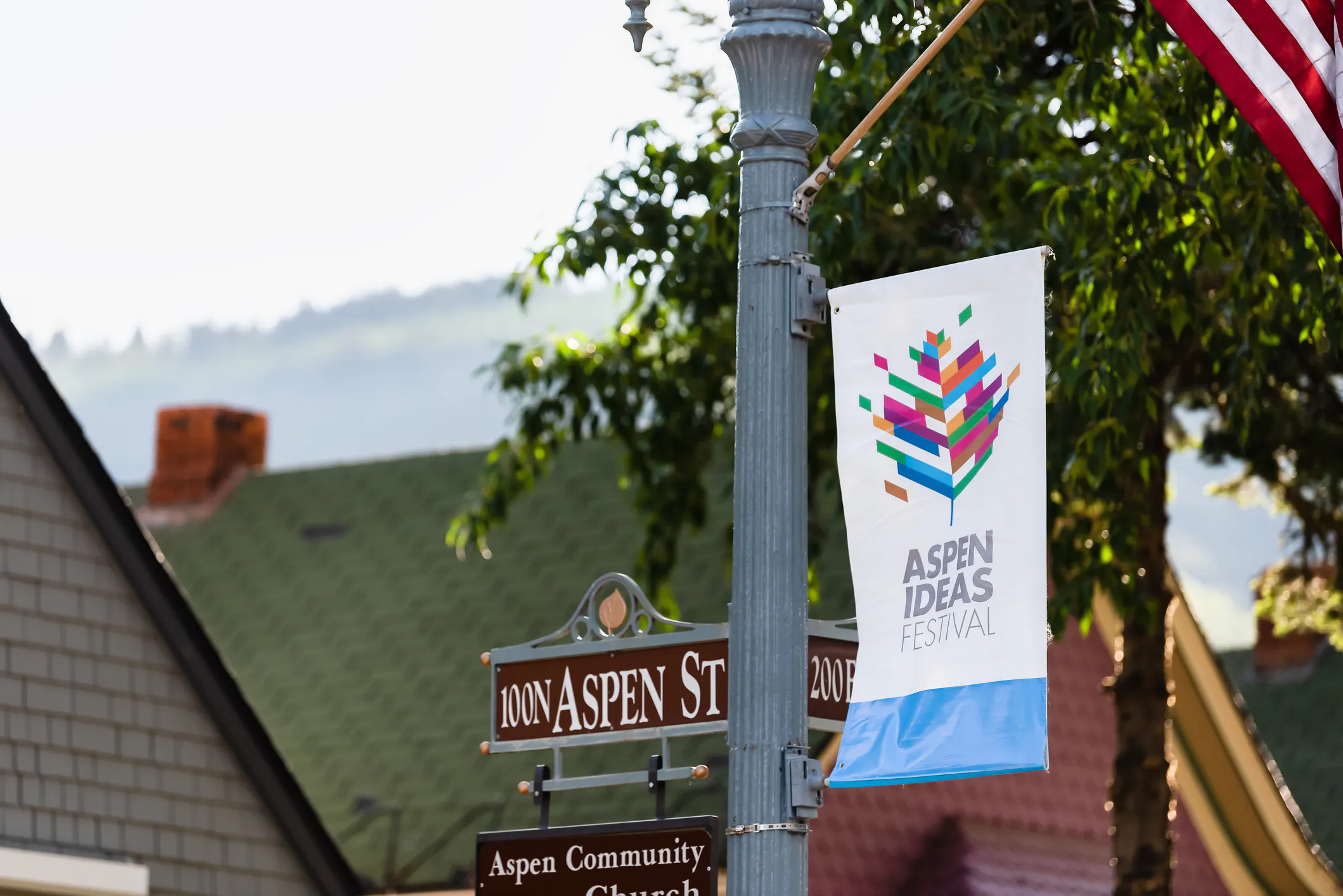
Can a conference purporting to be a place for “curious seekers,” who want to “stretch [their] minds,” stand any actual intellectual diversity? If the latest lineup at the Aspen Ideas festival is anything to go by, NPR libs aren’t budging any of the stereotypes about their political close-mindedness.
Freedom Is Back
In Style
Premium domains for sale
Of the speakers listed so far for the famous festival, which is attended by a wealthy, elite, and ostensibly well-educated – or at least credentialed – crowd, not a single one could fairly be described as a full-throated Trump supporter.
Those selected to represent the Right are an unusual bunch indeed in a party where the president enjoys historic approval among Republican voters. Mysteriously, nearly every ostensible Right-winger at Aspen falls in the anti-Trump camp.
The Davids – Brooks and French – are perennial favorites at the “conservative case against conservatism” game, but even the lesser-known Right-leaning figures invited are of the anti-Trump stripe. Take, for example, Benjamin Ginsberg, a fellow at the Hoover Institution who nevertheless told the New York Times in 2022 that the Right was “destroying itself on the altar of Donald Trump.” Or Alberto Gonzales, a former George W. Bush attorney general, who endorsed Kamala Harris in 2024.
While politicians from both parties are a staple of the conference lineup, Republican politicians are hardly represented. The governor of Wyoming, who was censured by his own party a few years after they expelled anti-Trump Republican Liz Cheney, and for similar reasons, is widely seen as out of step with the MAGA spirit of the party. The Never Trumper mayor of Oklahoma City, David Holt, and (former) Republican Senator Jeff Flake are on the roster as well. Maybe they’ll round out the Republican lineup this year by adding the recently ousted Senator Bill Cassidy, who is licking his Trump-inflicted political wounds.
Among invited politicians, only the mayor of Dallas, Eric Johnson, a recent convert to the Republican Party, could be considered somewhat more in the party mainstream.
The closest thing to someone who might represent the views of the majority of voters in the country who will be speaking at Aspen this year is Larry Fink, the notorious CEO of BlackRock, who has a working business relationship with the president (as he has with Democratic and Republican presidents in the past, like many business leaders) and joined him on his recent China junket. Or perhaps the great Walter Russell Mead, who has shown himself to be a level-headed observer of history.
There may be a few more Trumpers among the dozens of speakers, but unlike in Washington, D.C., and the rest of the country, they still seem to be in hiding. No one is a recognizable and consistent defender of the president. While it’s certainly every American’s right to criticize the president, the problem is less with inviting people on the Right who do so constantly and more that they seem to have such a vastly disproportionate voice in venues like Aspen, especially considering they represent such a small percentage of voters. If attendees honestly wish to “hear the other side,” they won’t really be getting it from this lineup.
There was a brief window after the 2016 election, when Donald Trump overcame the 99% chance for Hillary Clinton on the New York Times political predictor, when the legacy media thought to themselves, “Huh, we really missed that one, maybe we should figure it out.” Newsrooms prepared to dispatch armies of latte-sipping Columbia journalism school grads (whose dean is speaking at Aspen, of course) to The Boonies, to talk to the elusive and incomprehensible Trump voter much as one would study monkeys scratching their heads in a zoo.
I should at this point note that during this crack in the façade, a few of us were invited to make the pilgrimage in reverse and climb the summit at Aspen as emissaries to the liberal elite. Was it the suggestion to read Ann Coulter’s In Trump We Trust we left hanging on your book recommendation tree, or when my co-panelist, Hillsdale professor David Azerrad, elicited gasps from the crowd for calling Ta-Nahisi Coates “one of the greatest charlatans in the country” that was the final straw? I guess we’ll never know.
Unfortunately for the country, the elite Left’s short-lived glimmer of interest in understanding their fellow Americans winked out, displaced by the psychological relief of the Russia hoax, followed by recommitment to the principle that half of America was simply irredeemably racist.
All jokes aside, politics is, properly understood, a replacement for war, and the fragile wall between the political arena and real combat is crumbling. Surveys show a growing part of the Left, especially the younger Left, no longer rejects political violence. That rejection is not limited to the 20-something Democratic Socialists of America activists who elected Mamdani. It was starkly visible in the huge numbers of professional, “respectable” Americans – doctors, nurses, librarians – who celebrated when Charlie Kirk received an assassin’s bullet to the neck for holding conservative views. The bare minimum – accepting each other’s existence and political legitimacy – is not kumbaya “unity” talk, it’s a flimsy line that’s dissolving in the acid environment created by institutions that would rather shut their eyes while the ship goes down than engage in constructive self-criticism.
A decade later and nearly two years into the second Trump administration, the institutional Left’s flagship conference has not yet given up on pretending that the millions of Trump voters they share a country with don’t exist.
Well, maybe next year.
***
Inez Stepman is a senior legal analyst with Independent Women.
More from this network:
Domains for Sale · GOTPeople.org · TheDSAPlatform · The Truth About Socialism
What's Your Reaction?
 Like
0
Like
0
 Dislike
0
Dislike
0
 Love
0
Love
0
 Funny
0
Funny
0
 Wow
0
Wow
0
 Sad
0
Sad
0
 Angry
0
Angry
0

I am just an average American. My teen years were in the late 70s and I participated in all that that decade offered. Started working young, too young. Then I joined the Army before I graduated High School. I spent 25 years in, mostly in Infantry units. Since then I've worked in information technology positions all at small family owned companies. At this rate I'll never be a tech millionaire. When I was young I rode horses as much as I could. I do believe I should have been a cowboy. I'm getting in the saddle again by taking riding lessons and see where it goes.
Premium domains for sale










Comments (0)