

Back to Business at Delta?

Premium domains for sale
Freedom Is Back In Style
On March 25, 2021, Georgia Gov. Brian Kemp signed the Election Integrity Act of 2021, a law designed to codify some of the emergency measures put in place during the 2020, COVID-19-year election and to increase election security more generally. The most “controversial” provisions of the law were a requirement that an ID be presented when requesting an absentee ballot and a ban on the delivery of food, drink, or “gifts” within 150 feet of a polling station.
Freedom Is Back
In Style
Premium domains for sale
In response, Democrats—including then-President Joe Biden—accused the state’s Republican legislative majority of trying to make it more difficult for voters, and black voters in particular, to cast their ballots. Stacey Abrams, the state’s most famous two-time gubernatorial race loser, called the law “Jim Crow 2.0” and “Jim Crow in a suit and tie.”
Almost immediately, the business world decided that Abrams was right and that the Georgia law was the worst thing in history, that somehow, the ban on handing out water bottles to those waiting in line was the equivalent of poll taxes or literacy tests. I put it this way in the preface to the paperback edition of my book “The Dictatorship of Woke Capital”:
Within a few days, the political fever raised by “election integrity” spread throughout the country. On Saturday, April 10, more than one hundred CEOs nationwide participated in a Zoom call—convened by Kenneth Chenault, the former CEO of American Express, and Kenneth Frazier, the CEO of Merck—the purposes of which were to encourage them to get involved in the pushback against the Georgia law and to organize resistance to similar proposed laws in other states, notably Texas.
The commissioner of Major League Baseball was so upset about the prospect of Georgia requiring photo ID to vote that he pulled the annual All-Star Game out of Atlanta—a city that is 52 percent black, has black business ownership of 30 percent, and is rated the #5 city in the country (out of 124) for black-owned businesses—and moved it to Denver, which is about 8 percent black, has 3.5 percent black business ownership, is ranked 106th for black-owned businesses, and is located in a state that also requires photo ID to vote. And he did it all in the name of racial justice. Or something.
By the time the proverbial dust had settled, businesses and their leaders felt empowered to attack the duly elected representatives of Georgia, even if they did not call them out by name.
Hundreds of companies and executives placed a two-page ad in The New York Times condemning election integrity legislation without specifically naming Georgia. A separate national statement opposing voting bills in general was signed by the CEOs of Target, Salesforce, and ViacomCBS, among others.
Perhaps most famously, or infamously, Ed Bastian, the CEO of Georgia-based Delta Air Lines, issued two statements. In the first, he praised the law, stating that “The legislation signed this week improved considerably during the legislative process, and expands weekend voting, codifies Sunday voting and protects a voter’s ability to cast an absentee ballot without providing a reason. For the first time, drop boxes have also been authorized for all counties statewide and poll workers will be allowed to work across county lines.”
A few days later, after he learned that the truth was not enough to save the law from political exploitation, he issued a second statement apologizing for being foolish enough to think that he could say nice things about Republican-sponsored legislation. “I need to make it crystal clear,” he recanted, “that the final bill is unacceptable and does not match Delta’s values.”
The 2022 state primary elections, the first test of the law, largely proved the “Jim Crow” narrative to be not just false, but ridiculous. Early voting saw a 212% increase from 2020 and a 168% increase from 2018. Almost 900,000 voters turned up for the primary, a significant increase for both parties.
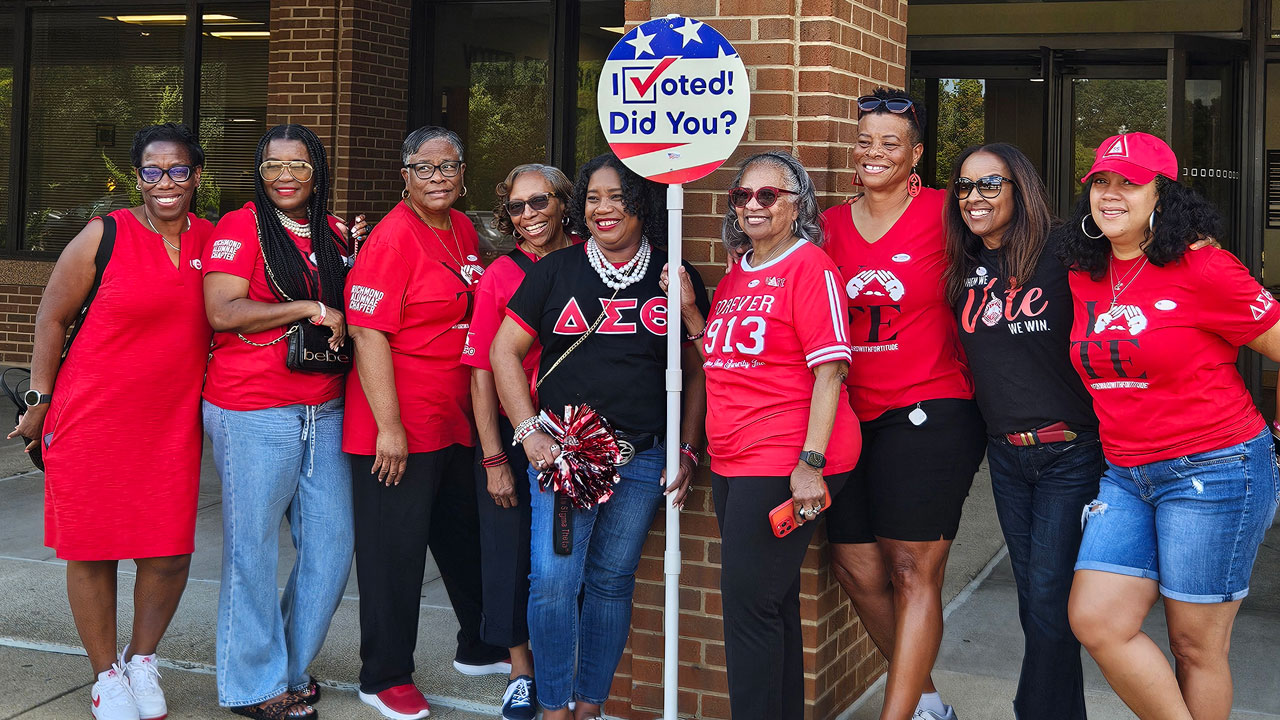
Black voters reported no irregularities, and voters generally reported shorter lines and wait times. Patsy Reid, “70 years old, Black and retired,” told The Washington Post that “she was surprised she didn’t encounter problems when she voted early this month.”
“I had heard that they were going to try to deter us in any way possible because of the fact that we didn’t go Republican on the last election, when Trump didn’t win,” she told the paper. “To go in there and vote as easily as I did and to be treated with the respect that I knew I deserved as an American citizen—I was really thrown back.”
Now, to be clear, none of this proves definitively that the law had no negative effect whatsoever on black voters. And other data show that the increased vote count in 2022 was largely due to an increase in white voter turnout, rather than a jump in black voters. Nevertheless, the “Jim Crow” Armageddon predicted by the likes of Abrams and Biden was shown to be little more than partisan rhetoric, a vain attempt to create racial animosity and foreboding.
Not that any of the CEOs felt the need to retract their statements. They all just sort of hoped that the controversy would go away, and because this was near the height of the era of corporate politicking, it mostly did go away, with very few corporate fiduciaries ever having to account for their unnecessary and unwelcome foray into politics.
Delta’s Bastian, to name one, suffered very little for his political flip-flopping. Bastian’s total compensation in 2025 was 46% higher than it was in 2020, before his involvement in the voting-law kerfuffle. He has never recanted his complaints and has never apologized for his exaggerations.
On Fortune’s “Leadership Next” podcast in June 2023, Bastian said that he had “no regrets” about speaking out but did admit that, perhaps, he was too willing to get involved in politics when he was newer on the job. Given statements attributed to him this week, however, one might reasonably question whether he has truly learned that lesson.
This week, it was reported that Bastian defended his decision not to follow his competitors’ example of connecting Delta flights to SpaceX Starlink satellite Wi-Fi by denigrating SpaceX CEO Elon Musk. “We do not want to be with Elon Musk,” Bastian allegedly said. “Trust me.”
While one might be able to make the case that this was a business-related decision, given Bastian’s clumsy history, the statement appears, at least superficially, political or personal and almost certainly not in the airline’s business interests.
“If you know his reputation,” Bastian reportedly continued, “it’s all true what they say about him.”
Even if this were not, ultimately, a personal or political statement, it was unwise and unnecessarily derogatory.
Musk, for his part, responded by saying that Bastian will “lose his job over this”—and while Bastian has generally done well as CEO, Musk still might be right. United, for example, has more than 600 planes equipped with Starlink Wi-Fi. The system Bastian is rolling out for Delta will not be ready until 2028 at the earliest.
After the issue blew up on social media, United immediately offered Delta’s customers a frequent flier status match. American Airlines has also chosen Starlink for its Wi-Fi and offered Delta customers a similar status match. If other Starlink customers follow suit, Bastian and Delta may well lose a not insignificant number of customers. And in any case, they still won’t have next-generation satellite Wi-Fi on their planes for at least 18 months.
As my friend and colleague Allen Mendenhall noted last week, The Heritage Foundation’s American Investor Initiative exists specifically to help push corporations away from political and personal spats and back to business, back to neutral.
It’s too bad for Delta shareholders that Ed Bastian didn’t learn the lesson of his last major foray into politics. If he had been chastised at all for his behavior in 2021, he might have known enough not to get into a political or personal fight now.
As it stands, his failure to learn that lesson may end up costing him—and Delta shareholders—a good bit.
More from this network:
Domains for Sale · GOTPeople.org · TheDSAPlatform · The Truth About Socialism
What's Your Reaction?
 Like
0
Like
0
 Dislike
0
Dislike
0
 Love
0
Love
0
 Funny
0
Funny
0
 Wow
0
Wow
0
 Sad
0
Sad
0
 Angry
0
Angry
0

I am just an average American. My teen years were in the late 70s and I participated in all that that decade offered. Started working young, too young. Then I joined the Army before I graduated High School. I spent 25 years in, mostly in Infantry units. Since then I've worked in information technology positions all at small family owned companies. At this rate I'll never be a tech millionaire. When I was young I rode horses as much as I could. I do believe I should have been a cowboy. I'm getting in the saddle again by taking riding lessons and see where it goes.
Premium domains for sale

















Comments (0)