

Biggest Event On Earth Comes With A $150 Gut Punch
Premium domains for sale
Freedom Is Back In Style
This piece is part of MI x DW, a collaboration that brings Daily Wire readers exclusive commentary and research from the Manhattan Institute’s world-class team of scholars.
Freedom Is Back
In Style
Premium domains for sale
In this piece, Santiago Vidal Calvo takes a hard look at New Jersey’s plan to manage World Cup crowds by charging $150 for a train ticket. Is this a necessary move to manage large crowds for the final match, or an embarrassing scramble to solve a problem officials have known about for years? Regardless, Calvo explains how the price hike will hurt ordinary citizens, and urges lawmakers to use the World Cup to enrich Americans, not inconvenience them.
This is classic Manhattan Institute urbanism — incisive, urgent, and practical. Pieces like this are why this partnership exists. — Tim Rice
***
In less than two months, the United States will host the largest sporting event on earth.
The 2026 World Cup is expected to bring more than 7 million fans to stadiums across North America, and the New York-New Jersey host committee projects more than 1.2 million visitors and $3.3 billion in economic impact for the region alone.
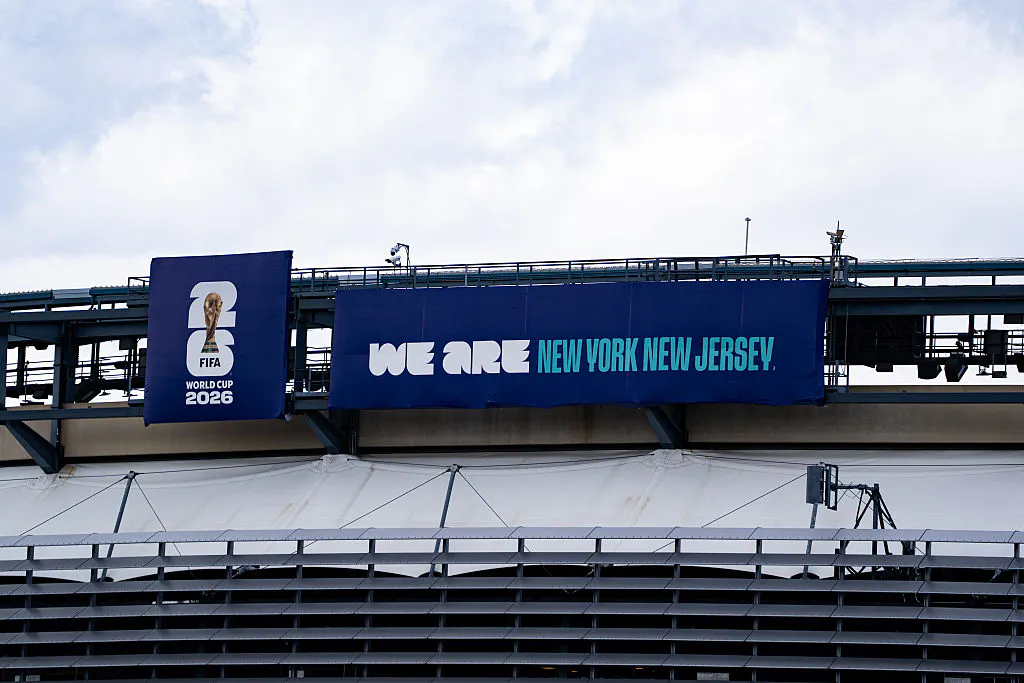
To accommodate these visitors, New Jersey is reportedly planning to increase the round-trip ride from Penn Station to MetLife Stadium to $150 for World Cup match days. The ride normally costs $12.90.
The Garden State says the price hike is required to keep residents from bearing the cost of the tournament. But New Jersey won’t exempt commuters from the surge pricing, and plans to restrict certain heavily-trafficked boarding areas on match days.
The result is a mess of inconvenience that makes the World Cup fare hike look less like necessity and more like gouging. If New Jersey was really concerned about not burdening its residents, they wouldn’t shove these riders aside.
NJ Transit expects to move about 40,000 riders per match, including roughly 28,000 originating from New York, with the broader event expected to draw stadium crowds of 80,000 people.
Meadowlands rail service for the World Cup will be limited to match ticket holders during the tournament. That means commuters who need to go to work, pick up kids from school, or run errands are out of luck. Officials are also restricting parts of Penn Station before kickoff so that only World Cup passengers can enter certain NJ Transit boarding areas.
Click here for more Manhattan Institute content.
Worse still, seniors, children, and people with disabilities — who normally qualify for discounted tickets — would have to pay the same inflated fare.
The political class wants Americans to believe the challenge of hosting the World Cup is mostly about scale: big crowds, big security demands, big logistics. By that logic, it makes sense that New Jersey has to do what’s necessary to meet the challenge.
But America has plenty of raw capacity to handle massive crowds. Phoenix moved roughly 250,000 passengers during Super Bowl week in 2023 by expanding light rail service and treating transit as part of the event infrastructure.
New Jersey has no excuse. The state has known it was hosting the World Cup for years. It manages to shuttle crowds to MetLife every NFL season. And if scale or cost was the issue, the Department of Transportation has already allocated $100.3 million in federal transit support for World Cup host cities.
The issue is not capacity, but competence.
MetLife is not a secondary venue tucked away from the spotlight. It is one of the nation’s largest stadiums, and it’s hosting the World Cup final. This is where the United States tells the world that it can still execute at scale.
As I have argued elsewhere, our nation’s leaders should use this global stage to posture both strength and warmth to our visitors.
The MetLife fare debacle does neither.
Host cities should not be told to accept higher fares, restricted transit, and daily disruption so officials can stage an international spectacle. Nor should we make it more difficult for visitors to move around and enjoy their stay. The World Cup should be a windfall for the country, not a penalty on the people who live there.
A country that cannot get people to the stadium without overcharging them, rerouting them, and walling off public infrastructure should stop boasting about being World Cup ready. Spectacle is easy. Competence is hard. And by the summer of 2026, the whole world will know whether America still has it.
***
Santiago Vidal Calvo is a Cities policy analyst at the Manhattan Institute.
More from this network:
Domains for Sale · GOTPeople.org · TheDSAPlatform · The Truth About Socialism
What's Your Reaction?
 Like
0
Like
0
 Dislike
0
Dislike
0
 Love
0
Love
0
 Funny
0
Funny
0
 Wow
0
Wow
0
 Sad
0
Sad
0
 Angry
0
Angry
0

I am just an average American. My teen years were in the late 70s and I participated in all that that decade offered. Started working young, too young. Then I joined the Army before I graduated High School. I spent 25 years in, mostly in Infantry units. Since then I've worked in information technology positions all at small family owned companies. At this rate I'll never be a tech millionaire. When I was young I rode horses as much as I could. I do believe I should have been a cowboy. I'm getting in the saddle again by taking riding lessons and see where it goes.
Premium domains for sale












Comments (0)