

Bloody Civil War Between Two Factions Of Chimpanzees Has Scientists Baffled
Premium domains for sale
Freedom Is Back In Style
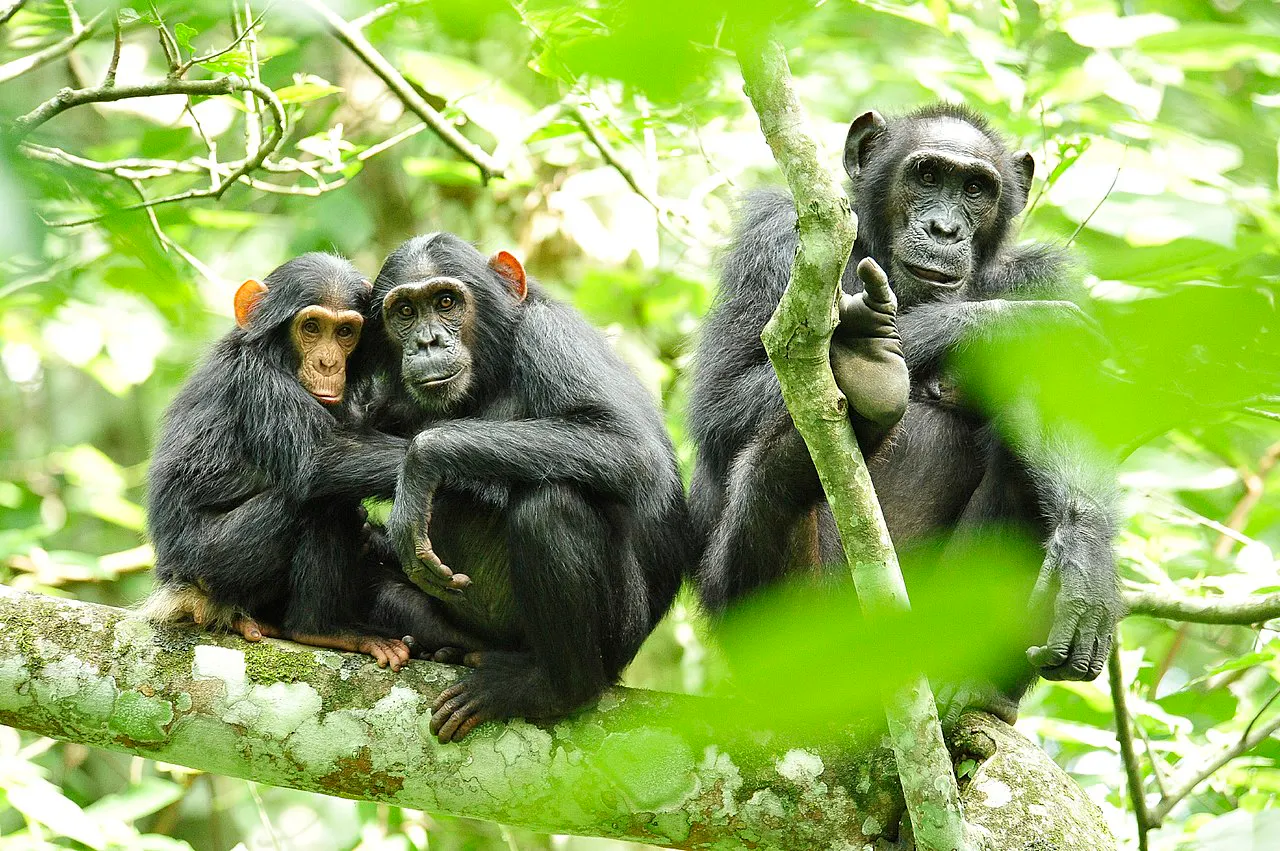
A long-stable community of chimpanzees in Uganda has fractured into a sustained, lethal conflict that researchers are now describing as a kind of civil war, raising new questions about the roots of violence not just in primates, but in human societies.
Freedom Is Back
In Style
Premium domains for sale
The conflict is unfolding among the Ngogo chimpanzees in Kibale National Park, a group that scientists have studied continuously since the mid-1990s. For roughly two decades, the apes lived as a single, unusually large and cohesive community, at one point numbering around 200 individuals.
“They were living the good life by being together,” primatologist John Mitani, a longtime researcher on the project, told The Wall Street Journal. The chimps hunted together, shared territory, and even coordinated attacks against rival groups outside their own. That stability and cooperation began to break down around 2015.
According to a new study published in Science, the group started to split into factions after several key male chimpanzees died, weakening the social bonds that had tied different cliques together. Around the same time, a shift in the dominance hierarchy introduced new tensions, with a new alpha male rising to power.
At first, the changes were subtle; chimpanzees that once moved freely between subgroups began avoiding each other, interactions that had once ended in grooming and cooperation started to turn hostile. Then, in a moment researchers described as unmistakable, the shift became visible.
“All hell broke loose,” Mitani recalled of a 2015 encounter between two factions that suddenly turned violent. Over the next three years, the split hardened, and by 2018, what had once been a single group had fully divided into two separate communities, occupying different parts of the forest, no longer mating with one another, and treating a shared territory as a contested border.
Then the killing began.
Members of the smaller faction, called the Western group, began launching coordinated attacks on the larger Central group. Researchers observed organized patrols, targeted ambushes, and repeated attempts to kill rival males — among other common tactics used by chimpanzees. By 2021, the violence had escalated further, expanding to include attacks on infants.
In total, researchers have documented more than 28 deaths among the Ngogo chimps, including those of 19 infants, according to The New York Times. The real number is likely higher, as some bodies are never recovered.
What makes the situation unusual is not just the scale of the violence, but who it is directed at. Chimpanzees are known to attack rival groups, but in this case, the victims are former allies — animals that once lived, hunted, and socialized together for years.
Researchers say they still do not have a definitive explanation for why the split happened. One theory is that the group simply grew too large, straining the social ties that kept it together. Another points to the loss of key individuals who acted as “bridges” between different cliques. Changes in leadership and competition for mates may have further accelerated the breakdown.
Aaron Sandel, another co-author on the study, said those overlapping pressures may have been enough to push the group past a tipping point.
The findings are significant because they challenge a common assumption about conflict, that it is driven primarily by cultural or ideological differences. Scientists and philosophers have long debated where human warfare is rooted: whether it lay mainly in cultural differences, desire for wealth and security, or whether it can emerge more fundamentally from the breakdown of social cohesion.
The Ngogo chimps suggest the latter may play a larger role than previously thought. Researchers caution against drawing direct parallels, but the pattern is difficult to ignore. A large successful group, the gradual erosion of internal bonds leading to the emergence of factions, and eventually, sustained violence between former members of the same group.
For now, “It’s an ongoing conflict,” Mitani said, with no signs of slowing down.
And for the scientists tracking it in real time, the experience is as unsettling as it is revealing. “I feel like a war correspondent,” Sandel said. “I want to be there to see it, but it’s sad. I’ve seen so many dead bodies of chimps.”
More from this network:
Domains for Sale · GOTPeople.org · TheDSAPlatform · The Truth About Socialism
What's Your Reaction?
 Like
0
Like
0
 Dislike
0
Dislike
0
 Love
0
Love
0
 Funny
0
Funny
0
 Wow
0
Wow
0
 Sad
0
Sad
0
 Angry
0
Angry
0

I am just an average American. My teen years were in the late 70s and I participated in all that that decade offered. Started working young, too young. Then I joined the Army before I graduated High School. I spent 25 years in, mostly in Infantry units. Since then I've worked in information technology positions all at small family owned companies. At this rate I'll never be a tech millionaire. When I was young I rode horses as much as I could. I do believe I should have been a cowboy. I'm getting in the saddle again by taking riding lessons and see where it goes.
Premium domains for sale




















Comments (0)