

California Doesn’t Have A Voting System, It Has A Fraud Reward System
Premium domains for sale
Freedom Is Back In Style
Something strange happened overnight in Los Angeles, and the internet noticed.
Freedom Is Back
In Style
Premium domains for sale
Karen Bass and Nithya Raman each saw their vote totals surge by over 10,000 votes while the sun was down and people were asleep. Meanwhile, Spencer Pratt, the only candidate with a coherent plan to rescue a city drowning in vagrancy, methamphetamine, fire, and fecal matter, apparently received zero votes out of more than 20,000 cast.
Zero. Not one. Statistically, that is not an anomaly. That is an impossibility.
As for the gubernatorial race: days after election night, only 60% of ballots have been counted, with several million votes still outstanding. We do not yet know which mayoral or gubernatorial candidates will advance to the runoff. We may not know for weeks. Or months. Or, at the rate California operates, sometime before the next Ice Age.
California’s voting system is not broken by accident. It is meticulously designed to corrode public trust, and it is succeeding. Here is exactly how they did it.
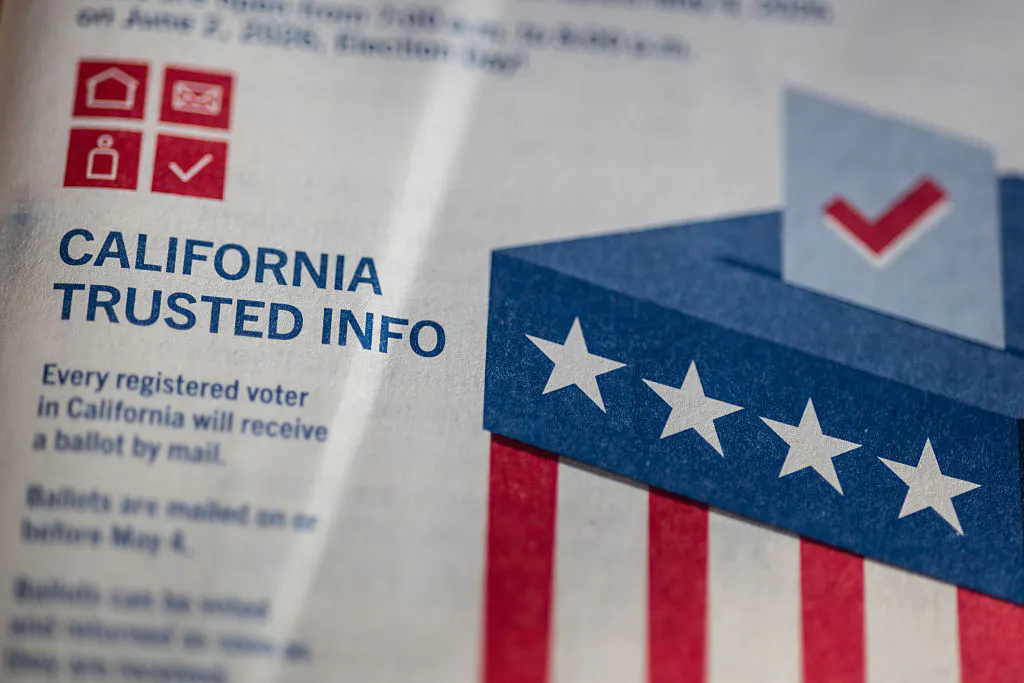
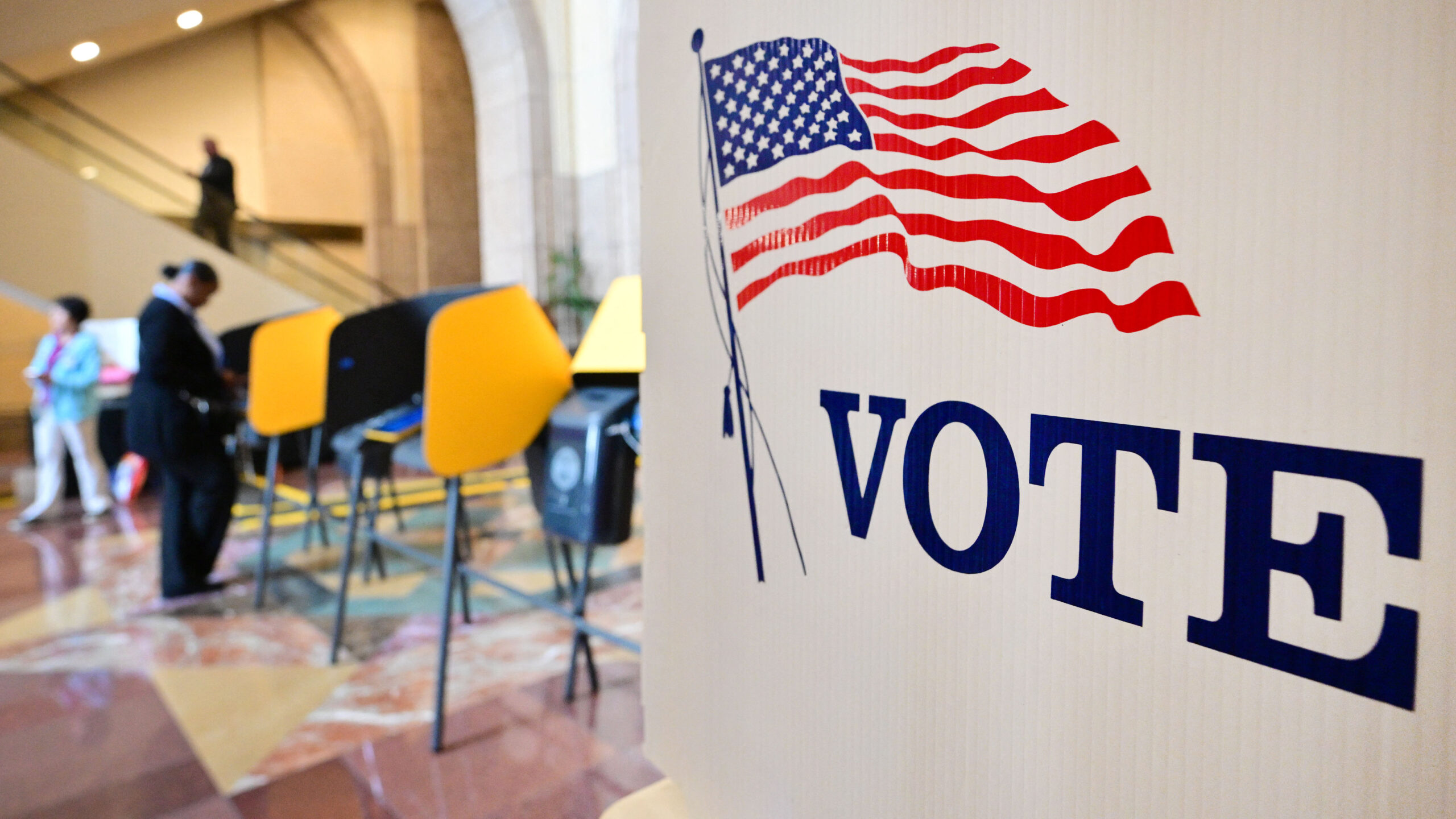
California operates the most mail-in-dependent voting system in the country. Every registered voter automatically receives a ballot. Ballots can be postmarked on election day itself and still accepted up to seven days later. Counties then have weeks to verify signatures and process returns. “Election Day” in California is less of a civic event and more of a suggestion, a starting pistol for a bureaucratic marathon that ends whenever the state decides it’s done.
California must have a case of dyslexia like their governor, Gavin Newscum, because they saw “Election Day” and read “months.”
The predictable consequence, which is not a coincidence, is that Republicans routinely lead on election night, only to watch their margins dissolve as weeks of late mail-in ballots roll in and “flip” the race.
It tends to feel like officials just wait to call elections until enough of their blue mail-in ballots come through the mail. Whether that is intentional coordination or simply negligent design that consistently benefits one party is, at this point, a distinction without a difference.
Florida processes over 10 million votes in a single evening with paper ballots and same-day results. California, home of Silicon Valley, Stanford, and the most vaunted tech economy on the planet, cannot finalize an election before the next one is scheduled.
The state that puts a computer in your pocket cannot count ballots in a week.
In a world where you can design elections for speed and trust, it raises the question of why you wouldn’t, unless you had ill intentions, which California Democrats do.
They’ve rigged election law to favor their own candidates, and the machine is able to coordinate its institutions and nonprofit apparatus to reap votes. It’s legalized and sophisticated fraud. We’re watching it happen.
They’ve perfected the ballot harvesting game, where a third party can collect and submit an unlimited number of ballots with almost no oversight. Unions, Democratic Socialists of America chapters, activist networks, homeless-service groups, and the entire institutional apparatus of the California Left operate sophisticated, well-funded, voter-contact operations that collect and deliver ballots at scale.
They know exactly which precincts to target, which populations to harvest, and precisely when to submit to maximize impact.
They could just channel this energy towards, I don’t know, simply putting up normal candidates, but that would apparently be insane.
Republicans, who do not have an equivalent organizational infrastructure in California and who remain ideologically skeptical of the practice itself, cannot match this.
The asymmetry is not incidental. The rules were written by the people who benefit from them.
Layered on top of this is no voter ID requirement for mail ballots and signature verification that is often rubber-stamped under pressure, and you get a system where people counting and delivering votes have more power than the voters themselves.
Democrats in California do not need to be compelling, charismatic, or responsive to constituent concerns. They do not need innovative policy, persuasive messaging, or genuine community engagement. They need an organized harvesting operation and a permissive legal framework. They have both.
Then there is the voter roll catastrophe, which is not a bug but a feature.
A recent lawsuit exposed 873,000 inactive “ghost voters” still on California’s rolls. Of those, 150,000 had been inactive for four or more consecutive elections, a direct violation of the National Voter Registration Act, a federal law that California has simply elected not to follow. Los Angeles County alone carries 5.8 million registered voters, a figure that exceeds the total population of most American states and defies every reasonable demographic analysis.
Yet the same registrar-recorder offices that get $336 million a year (and pay top officials almost half a million) can’t keep the lists clean.
Taxpayer dollars are always being used with the utmost love, care, and respect in the Golden State.
But inflated, unaudited rolls are not just embarrassing; they are operationally useful. They provide plausible deniability for questionable ballots, make large-scale harvesting easier, and create the conditions under which late vote “discoveries” in close races appear to be administrative processing rather than manipulation.
When a system refuses to purge ghost voters but spends lavishly on ballot processing infrastructure, you are not watching negligence. You are watching strategy.
Combine all of it: voter registration at locations without ID verification, no mail ballot ID requirement, unlimited harvesting with minimal oversight, unmonitored drop boxes, ballots counted weeks after election night, and rolls packed with hundreds of thousands of legally ineligible inactive voters. The result is a system where accountability is structurally impossible to enforce, and no one trusts a darn thing.
People are not stupid. We can see what’s going on and draw rational conclusions.
If Nithya Raman ultimately surpasses Spencer Pratt, it will further fuel distrust in elections and simply certify that Los Angeles hates itself. They’d rather engineer outcomes for the political machine that built it than abide by the will of the people.
The fraud is not cinematic. There are no masked operatives rappelling into polling stations. It is drab, procedural, and conducted entirely in the open, in statutes, in nonprofit 990 filings, in late-night batch uploads, in signature verification logs that no one audits. It is legalized, systematized, and optimized.
And California is proud of it.
If they won’t change, then fine. Let them wither and rot in it. They don’t deserve Spencer Pratt or Steve Hilton.
More from this network:
Domains for Sale · GOTPeople.org · TheDSAPlatform · The Truth About Socialism
What's Your Reaction?
 Like
0
Like
0
 Dislike
0
Dislike
0
 Love
0
Love
0
 Funny
0
Funny
0
 Wow
0
Wow
0
 Sad
0
Sad
0
 Angry
0
Angry
0

I am just an average American. My teen years were in the late 70s and I participated in all that that decade offered. Started working young, too young. Then I joined the Army before I graduated High School. I spent 25 years in, mostly in Infantry units. Since then I've worked in information technology positions all at small family owned companies. At this rate I'll never be a tech millionaire. When I was young I rode horses as much as I could. I do believe I should have been a cowboy. I'm getting in the saddle again by taking riding lessons and see where it goes.
Premium domains for sale














Comments (0)