

Can police access your cellphone location data? Supreme Court issues huge ruling
Premium domains for sale
Freedom Is Back In Style
An armed robbery from seven years ago has led to a monumental ruling that some Supreme Court justices say will have "seismic" effects on the way the Fourth Amendment is interpreted.
Freedom Is Back
In Style
Premium domains for sale
A man was indicted for a robbery of a credit union in 2019, demanding money at gunpoint and eventually making off with almost $200,000.
'Police intrude on that constitutionally protected interest when they demand the information.'
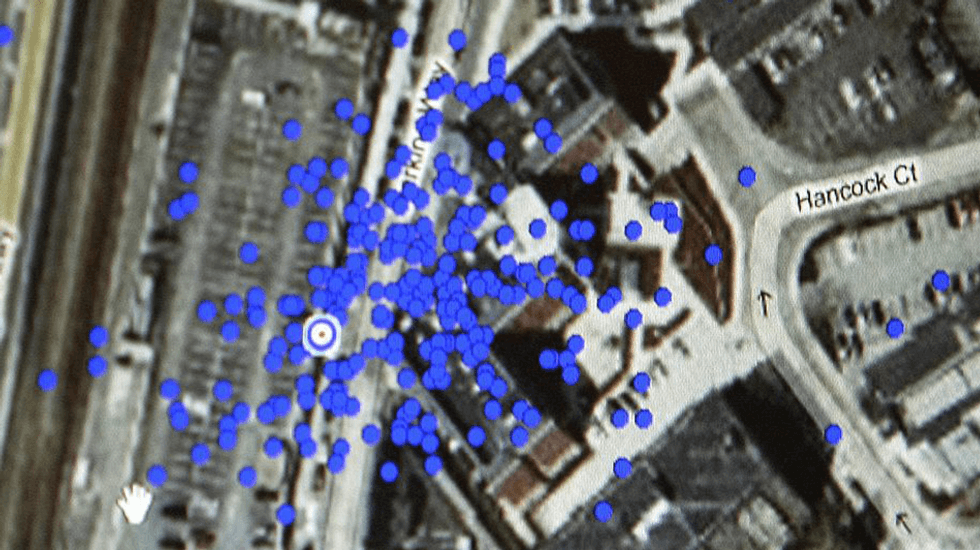
The Midlothian, Virginia, robbery had no immediate suspects, so police obtained a warrant directing Google to produce anonymous location data for all devices within 150 meters of the bank within an hour of the crime.
This process included police obtaining the data, then requesting information on a more narrowed subset of the data, before finally asking Google to provide information on three specific sets. Google then provided the names, phone numbers, and account details for those three users.
One of the three users was Okello Chatrie, whose data placed him at the scene of the crime, while other data pertaining to where he was at other times was also revealed. SCOTUSblog reported that the location data led to law enforcement obtaining a warrant to search two residencies linked to Chatrie, where they found "$100,000 of the stolen cash, a gun, and demand notes."
This led to a federal indictment of the 24-year-old.
However, the Supreme Court recently found that in Chatrie v. United States, the warrant used by police to obtain historical cellphone location data from Google was in violation of the Fourth Amendment.
RELATED: Killer drones have conquered the skies. Can we ever be safe again?
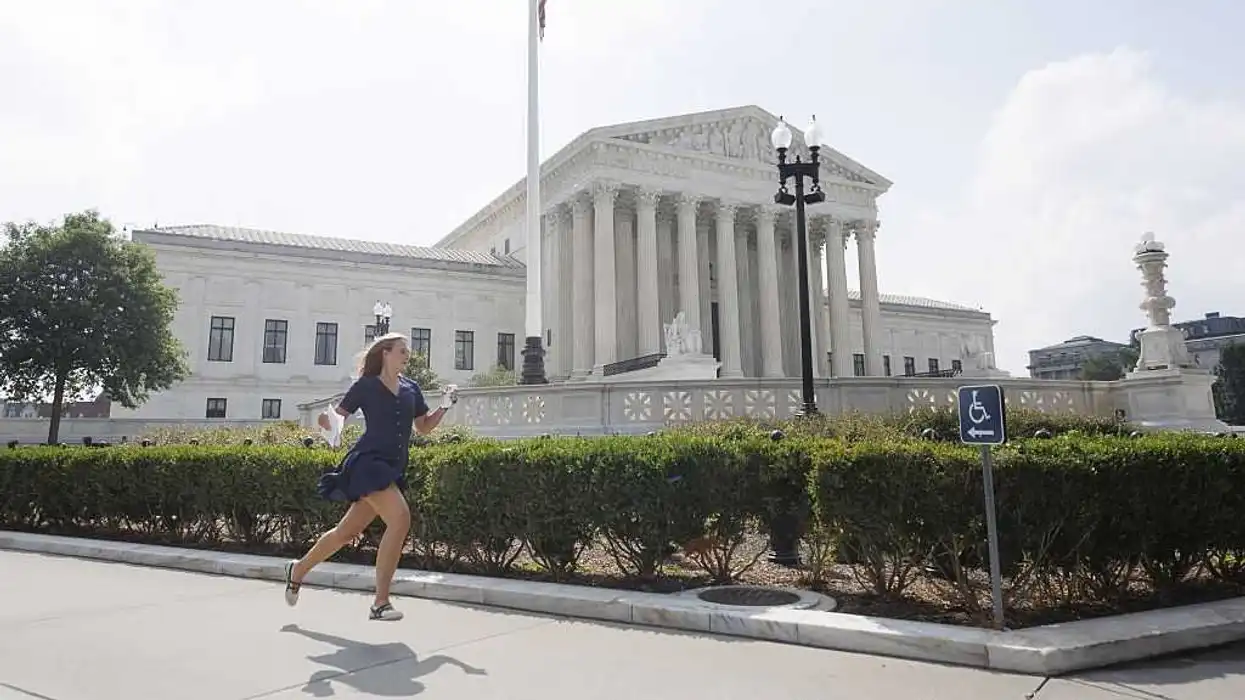 Tom Brenner/Getty Images
The Supreme Court voted 6-3 on the decision, with Justice Elena Kagan writing for the majority, which also included Justices Neil Gorsuch, Brett Kavanaugh, Ketanji Brown Jackson, John Roberts, and Sonia Sotomayor.
Kagan wrote that "an individual has a reasonable expectation of privacy in records about his cell phone's location, and police intrude on that constitutionally protected interest when they demand the information — even though for only a limited time, and from a third-party tech company."
Justice Samuel Alito wrote in dissent — joined by Justices Amy Coney Barrett and Clarence Thomas — saying that the majority's opinions "will send seismic waves through our Fourth Amendment doctrine" but ultimately would not have any effect on Chatrie's case.
RELATED: Google's Fitbit overhaul is actually great. There's just one catch.
 Jaap Arriens/NurPhoto/Getty Images
Kagan further argued, joined by five of her colleagues, that the government conducts a "search" when it invades an area that "an individual seeks to preserve ... as private" and that the "expectation of privacy is one that society is prepared to recognize as reasonable."
Chatrie pleaded guilty to bank robbery and was sentenced to nearly 12 years in prison, along with three years of supervised release.
Like Blaze News? Bypass the censors, sign up for our newsletters, and get stories like this direct to your inbox. Sign up here!
More from this network:
Domains for Sale · GOTPeople.org · TheDSAPlatform · The Truth About Socialism
What's Your Reaction?
 Like
0
Like
0
 Dislike
0
Dislike
0
 Love
0
Love
0
 Funny
0
Funny
0
 Wow
0
Wow
0
 Sad
0
Sad
0
 Angry
0
Angry
0

I am just an average American. My teen years were in the late 70s and I participated in all that that decade offered. Started working young, too young. Then I joined the Army before I graduated High School. I spent 25 years in, mostly in Infantry units. Since then I've worked in information technology positions all at small family owned companies. At this rate I'll never be a tech millionaire. When I was young I rode horses as much as I could. I do believe I should have been a cowboy. I'm getting in the saddle again by taking riding lessons and see where it goes.
Premium domains for sale























Comments (0)