

China’s new AI master plan is a glimpse at total technological control
Premium domains for sale
Freedom Is Back In Style
A national five-year plan tells you what a regime believes about the unfolding of society over time: that the future is an engineering problem, history has a rhythm, and the state holds the baton. China is now in its 15th such plan. Its language has evolved over the decades. Whereas early plans stressed Soviet-assisted heavy industry, the current one elevates “AI Plus,” swarm intelligence, embodied AI, and intelligent agents. The word “rejuvenation” appears with the frequency of a liturgical response. But the plan remains a metronome for national development, as an official commentary put it in 2026.
Freedom Is Back
In Style
Premium domains for sale
China spent 3.93 trillion yuan on research and development in 2025, or 2.8% of GDP. The country holds 6.3 million valid invention patents and installed 295,000 industrial robots in a single year, 54% of all the industrial robots installed on Earth. Nature Index ranks the Chinese Academy of Sciences as the world’s leading research institution.
China’s supercomputers now hold the top global ranking.
For the first time, the World Intellectual Property Organization placed China in the global innovation top 10 and says the country leads the world in knowledge and technology outputs. Stanford’s AI Index reports that the performance gap between American and Chinese AI models has mostly closed. These indicators report a condition that already exists.
However, the interesting question about China’s technological future has never been whether its numbers are big, but what kind of civilization produces them and, in return, what kind of civilization they produce.
Engineering everything
Writer Dan Wang calls China an “engineering state,” which he contrasts with America’s “lawyerly society.” In a lawyerly society, problems are disputes to be adjudicated, interests to be balanced, rights to be negotiated in the shadow of precedent. In an engineering state, problems are systems to be optimized. You do not argue about the bridge; you build the bridge. You build it faster than anyone expected, and then you build the rail line to the bridge and then the city around the station, and soon the question of whether the city was a good idea becomes moot because the city is already there and full of people buying things on their phones.
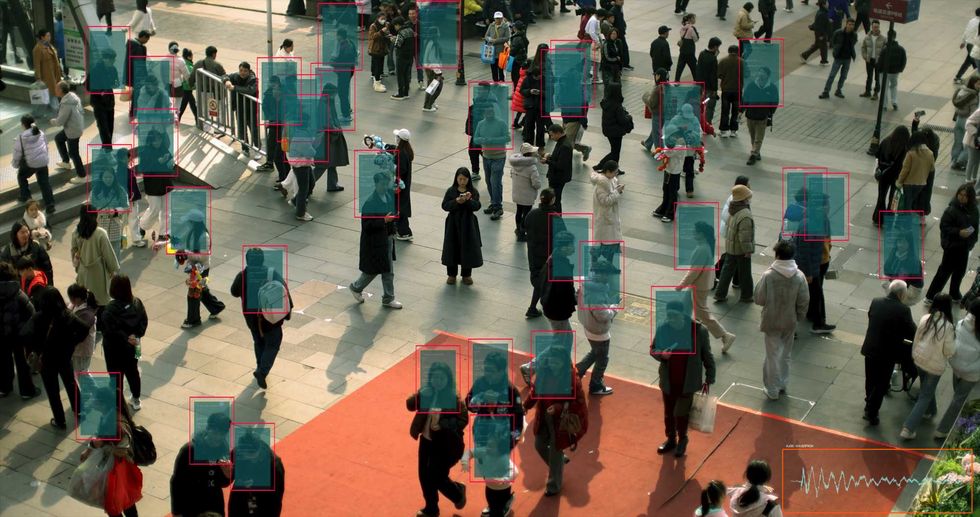
By December 2024, China had 1.1 billion internet users, more than a billion online payment users, and 974 million online shoppers. Seventy percent of citizens over 60 were shopping online. Short-video platforms had become major retail channels, with 71% of viewers reporting purchases after watching. What is happening is a compression of social acts: Entertainment, advertising, recommendation, checkout, and social proof collapse into a single continuous interface. Commerce is atmosphere, the feed a way of life.
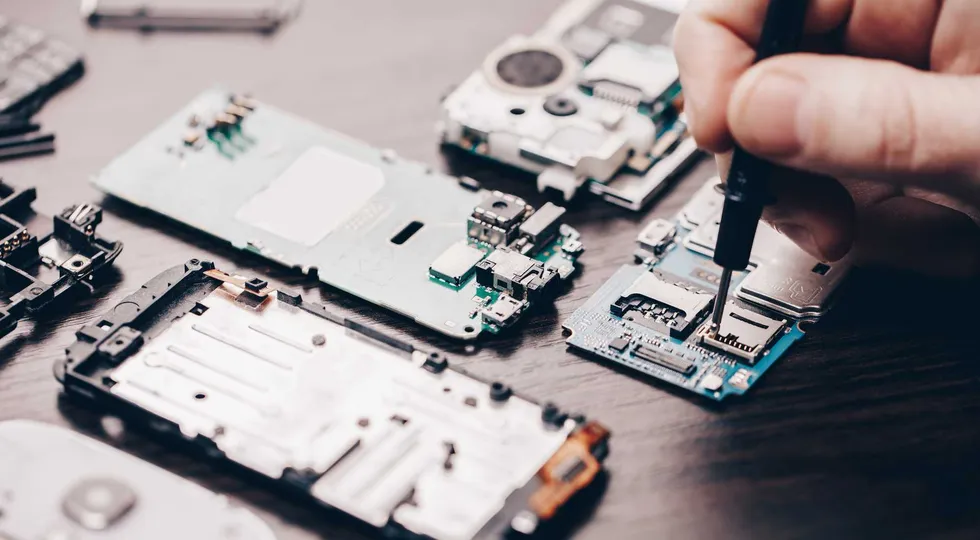
RELATED: Just how American is the Trump phone? This teardown reveals the truth.
 Eduard Lysenko/Getty Images
The philosopher Yuk Hui has argued that technology is never culturally neutral, that different civilizations articulate different relationships between nature and technical practice, and that the assumption of a single universal technics, Greek in origin and Western in development, has blocked serious thought about what Chinese technology might mean on its own terms. For example, China has built a governance architecture around AI that looks little like America’s approach of permissionless innovation followed by belated regulation. China’s algorithmic recommendation rules already require platforms to promote “mainstream values” and “positive energy.” Its measures on generative AI require legal data sources, accuracy improvements, and safeguards against harmful outputs. Its 2025 labeling rules mandate disclosure of AI-generated content. China is engineering the moral atmosphere in which its AI systems operate.
A civilization at stake
The question this raises is the oldest one in the modern history of Chinese technology, first posed during the Self-Strengthening Movement of the 1860s, when Qing reformers tried to borrow Western military and industrial methods without disturbing the civilizational order that received them. The May Fourth intellectuals of 1919 radicalized the problem by turning science into a slogan for national salvation. The People’s Republic added the Soviet planning apparatus. Each generation has found a new way to ask the question: How much of modern power can be adopted technically without rewriting the civilization that adopts it?
The answer apparent in the current data is that China has become extraordinarily good at a specific kind of technological work but has not yet settled the deeper question. China leads the world in deployment, turning research into factories, interfaces, supply chains, and mass habits with a speed no other country can seem to match. Its Shenzhen industrial parks run AI models that optimize manufacturing parameters 30 times an hour. Its robot installations outnumber those of every other nation combined. Its open-weight AI models such as DeepSeek V4 have pushed cost-efficient, deployable intelligence to the center of the national ecosystem.
Our future?
The United States still produces more frontier AI models, holds higher-impact patents, and dominates AI data-center infrastructure. China’s basic-research share of R&D spending, while rising, remains low among top performers: 7.08% in 2025, up from 6% in 2019, which represents real movement as well as a persistent tilt toward application over inquiry. China’s supercomputers now hold the top global ranking, but on benchmarks more relevant to AI workloads they rank fourth, running on domestic chips not yet at the leading edge. The semiconductor constraint and export controls are real. The gap between “registered users” and “actual users” of generative AI, between 600 million and 249 million, tells its own story about the distance between infrastructure and habit.
The most plausible future is that China becomes the place where 21st-century technologies are most completely socialized — embedded into schools, factories, transport, shopping, and the daily texture of regulation and moral instruction. China will be the civilization that most thoroughly absorbs technology into ordinary life, and in so doing, reshapes what ordinary life can mean. The question is whether absorption at that scale and speed leaves room for the things that cannot be optimized. That question, too, is very old, and the five-year plan cannot answer it.
More from this network:
Domains for Sale · GOTPeople.org · TheDSAPlatform · The Truth About Socialism
What's Your Reaction?
 Like
0
Like
0
 Dislike
0
Dislike
0
 Love
0
Love
0
 Funny
0
Funny
0
 Wow
0
Wow
0
 Sad
0
Sad
0
 Angry
0
Angry
0

I am just an average American. My teen years were in the late 70s and I participated in all that that decade offered. Started working young, too young. Then I joined the Army before I graduated High School. I spent 25 years in, mostly in Infantry units. Since then I've worked in information technology positions all at small family owned companies. At this rate I'll never be a tech millionaire. When I was young I rode horses as much as I could. I do believe I should have been a cowboy. I'm getting in the saddle again by taking riding lessons and see where it goes.
Premium domains for sale


















Comments (0)