

Chuck Norris: Martial arts legend who submitted to a mother's prayers
Premium domains for sale
Freedom Is Back In Style
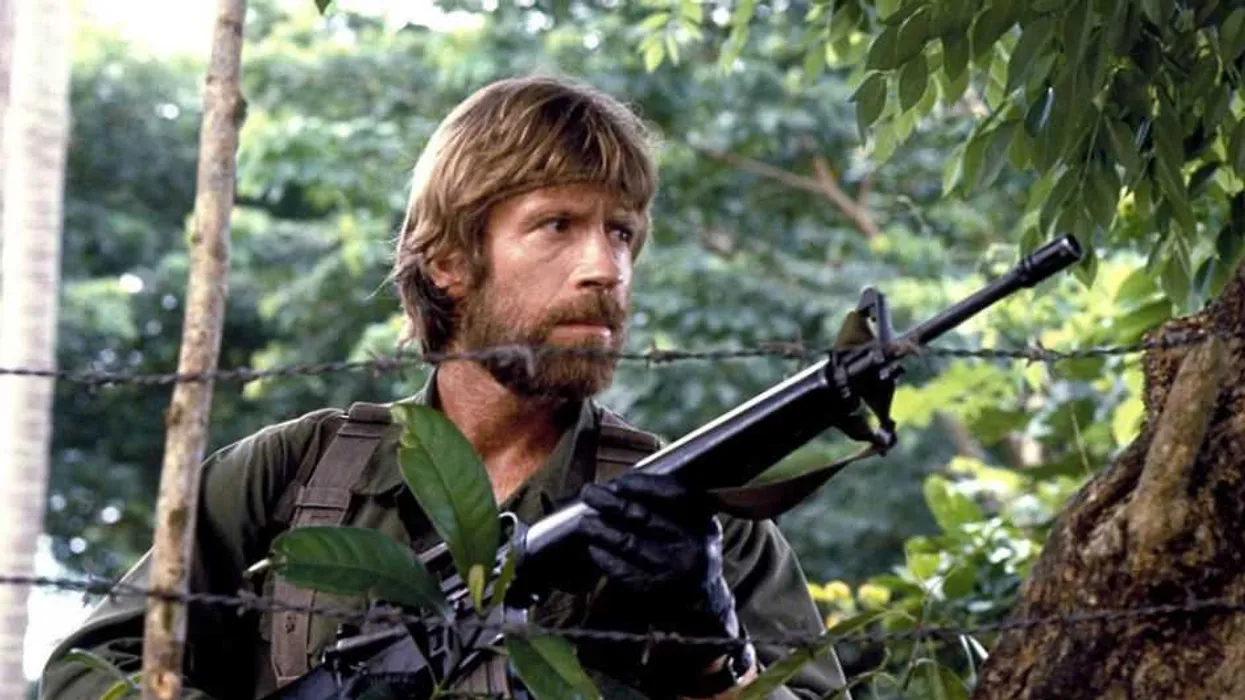
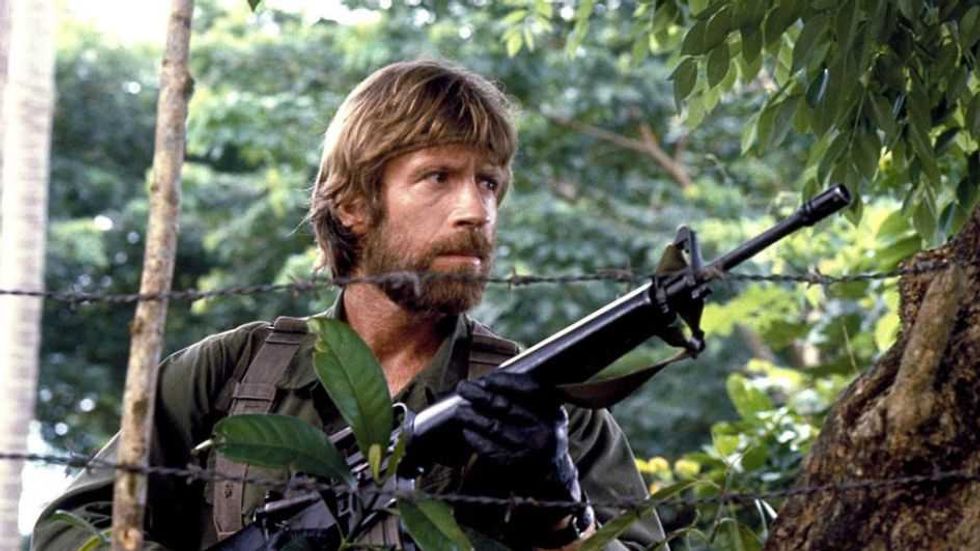
A generation came of age on Chuck Norris “facts.” When the boogeyman goes to sleep, he checks under his bed for Chuck Norris. Chuck Norris counted to infinity — twice. He doesn't do push-ups; he pushes the Earth down. Superman owns a pair of Chuck Norris pajamas.
Freedom Is Back
In Style
Premium domains for sale
Freedom Is Back
In Style
Premium domains for sale
These lines have been repeated so often that they have become their own mythology. And they point — sideways, lovingly — at something true. The man was singular. Which is why his death on March 20, age 86, deserves more than a eulogy dressed in silly jokes. It deserves honesty about what he actually represented.
A life that could have been reduced to folklore and fists and an endless loop of roundhouse kicks is best remembered as a love story.
A Hollywood star who kept his soul, a conservative who kept his convictions, and a son whose life was saved not by fists, but by faith.
That is the real story. Not the kicks. Not the films. The knees.
His mother's knees, specifically. On the floor, in prayer, while her son was becoming an American icon.
A man's man
Chuck Norris was a man’s man, a legitimate martial artist, not a choreographed facsimile. The fight community knew it then. They know it still. Chael Sonnen — former UFC title contender, sharp-tongued analyst, not a man given to sentimentality — recently paid homage to Norris' genuine ability. Fighters don't flatter easily.
Norris wasn't a stuntman in a gi. He held black belts in Tang Soo Do, Brazilian jiu-jitsu, and judo. Bruce Lee, who distributed respect like the IRS distributes refunds, cast him as the sole opponent worthy of a final fight in "The Way of the Dragon," a scene that remains one of the most watchable moments in martial arts cinema.
Norris was a genuine Hollywood star, too. "Walker, Texas Ranger" ran for eight seasons and made Saturday nights like a civic duty. "Missing in Action" made $26 million on a $2 million budget. "Code of Silence." "The Delta Force." "Lone Wolf McQuade." He owned a particular frequency — the man of few words who doesn't start trouble but finishes it decisively, who stands for something every red-blooded American recognized instinctively. Movie theaters filled up. The lines entered the cultural lexicon. The legend was self-sustaining.
And yet.
Prayer warrior
Hollywood has a metabolism all its own. It rewards those who adapt , who update their beliefs like software, who stay elegantly vague on anything that costs them. Norris didn't. His conservatism required no management, no spokesperson, no careful framing for a hostile room. It was constitutional, not cosmetic.
Success, he would later acknowledge, had done what success tends to do. It offered enough to make a man comfortable and comfortable enough to make him careless. The faith grew distant. Hollywood filled the space that God had occupied. His mother, however, didn't move an inch. She prayed through his success. Through the excess that follows success. Through the gradual erosion of whatever lay beneath the action hero. Back home, while the credits rolled and Roger Ebert wrote rave reviews, she was petitioning a higher power.
She never stopped. Not when he was an infant fighting for his life, not when he was yielding, by degrees, to what fame asks of those it favors, not when the distance widening between the man she raised and the man Hollywood was making seemed irreversible. She simply kept praying — stubbornly, faithfully, across decades.
Norris never forgot it. "My mother has prayed for me all my life, through thick and thin," he wrote. The scope of that sentence deserves a moment. All his life. Not a season of intercession. Not a crisis response. A lifetime of it.
Nonnegotiable faith
When Norris returned to God, he did so completely, without a hint of reservation. Faith was not compartmentalized, managed, or diluted for public consumption. He said what he believed, to whoever was listening, without apology. On abortion, he rejected the path of least resistance that Hollywood had so generously paved. It was not, in his view, a policy question or a political calculation. Not a matter of preference, nuance, or personal freedom conveniently defined. A moral line, absolute and non-negotiable.
In an industry that treats the unborn as an inconvenience and their defenders as embarrassments, Norris stood apart. He understood that confusion about life is downstream of confusion about God. Lose your sense of the divine, and you lose your sense of limits. Lose limits, and life becomes conditional — weighed, assessed, and discarded when the calculus demands it, by people who have never once doubted their own right to exist. Norris saw that trajectory clearly, because he had briefly walked it himself.
A life that could have been reduced to folklore and fists and an endless loop of roundhouse kicks is best remembered as a love story — between a son who wandered and a mother who wouldn't let him stay lost. Chuck Norris is gone. But the America he embodied — patriotic, God-fearing, and entirely unembarrassed about both — is still here. Still worth defending.
What's Your Reaction?
 Like
0
Like
0
 Dislike
0
Dislike
0
 Love
0
Love
0
 Funny
0
Funny
0
 Wow
0
Wow
0
 Sad
0
Sad
0
 Angry
0
Angry
0

I am just an average American. My teen years were in the late 70s and I participated in all that that decade offered. Started working young, too young. Then I joined the Army before I graduated High School. I spent 25 years in, mostly in Infantry units. Since then I've worked in information technology positions all at small family owned companies. At this rate I'll never be a tech millionaire. When I was young I rode horses as much as I could. I do believe I should have been a cowboy. I'm getting in the saddle again by taking riding lessons and see where it goes.
Premium domains for sale

















Comments (0)