

Is the FCC’s Crackdown on Disney Over DEI an Attack on Free Speech? Brendan Carr Sets the Record Straight
Premium domains for sale
Freedom Is Back In Style
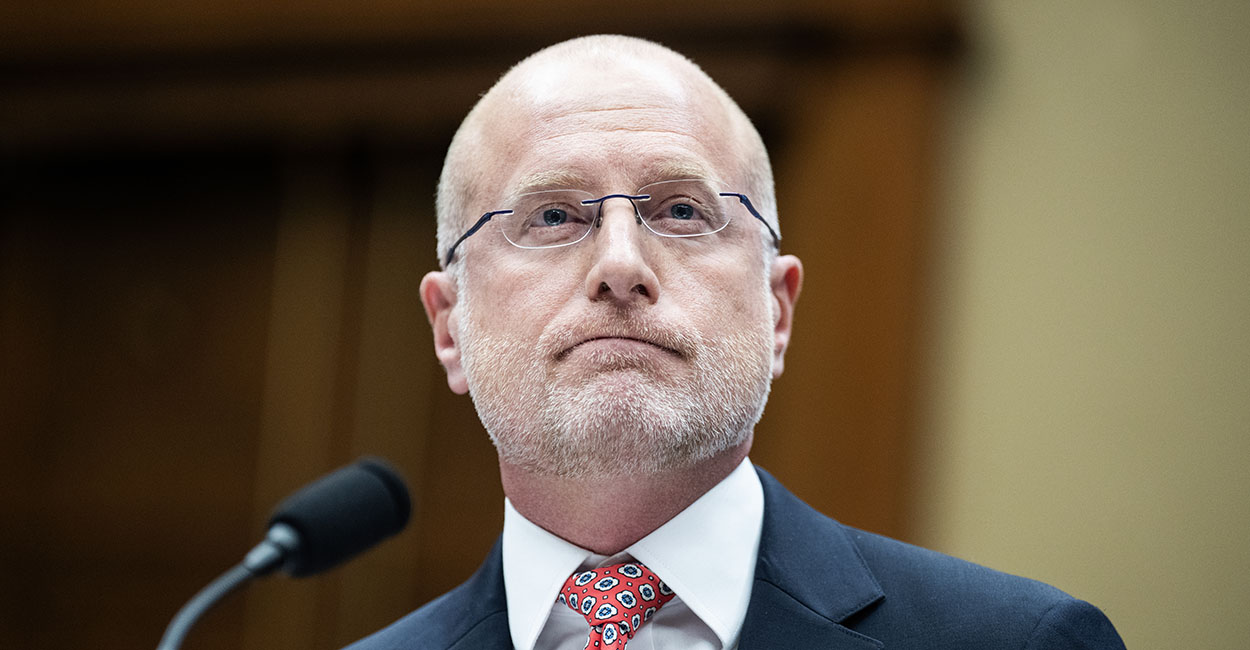
Federal Communications Commission Chairman Brendan Carr is pushing back after a TV broadcaster owned by the Walt Disney Company accused the commission of violating the First Amendment.
Freedom Is Back
In Style
Premium domains for sale
WABC-TV, a New York affiliate of the American Broadcasting Corporation, objected to the FCC ordering the station to apply for early license renewal amid an investigation into so-called diversity, equity, and inclusion practices at Disney.
“The order has no legitimate purpose,” the station wrote. The TV station claimed that the order is “plainly incompatible with the First Amendment, categorizing it as an “effort to suppress speech under the guise of bureaucratic process.”
Carr, however, emphasized President Donald Trump’s executive orders, which directed federal agencies to apply laws forbidding racial discrimination, regardless of claims that DEI practices are necessary to reverse historic discrimination.
“If a broadcaster engaged in illegal DEI discrimination, the FCC will hold them accountable,” he told the Daily Signal in a statement Friday.
“The FCC has been investigating Disney based on DEI concerns for over a year now,” Carr added. The FCC opened the investigation in March 2025.
“The agency determined that Disney’s responses to date have been deficient, disingenuous, and incomplete. The FCC will follow the facts and law wherever they lead,” Carr said.
The DEI Disney Investigation
Carr announced the investigation in a letter to Disney CEO Bob Iger last year.
“As you may know, the Communications Act and Commission rules prohibit regulated entities like Disney’s ABC from discriminating on the basis of race, color, religion, national origin, age, or gender,” the FCC chairman wrote. “Indeed, the FCC’s longstanding equal employment opportunity or [equal employment opportunity] rules set forth specific requirements to which Disney’s regulated operations must adhere.”
Carr cited a list of “public reports” painting “a disturbing picture of Disney’s DEI practices,” including efforts to launch racially-segregated affinity groups and spaces, mandatory standards forcing racial and identity quotas into multiple levels of production, use of race-based hiring databases, and restricting fellowships to select demographic groups. While the company publicly distanced itself from DEI messaging, Carr warned, “it is not clear that the underlying policies have changed in a fundamental manner.”
— Tyler O'Neil (@Tyler2ONeil) December 4, 2023
BREAKING: Internal docs reveal a MASSIVE gov't corruption scandal between Disney
& Reedy Creek Improvement District (RCID). Disney effectively controlled local gov't through bribes
, including Disney World passes not available to the public.
1/16 https://t.co/LhAaMT6oca
Why the FCC Regulates Disney
The FCC regulates the invisible radio frequencies of the electromagnetic spectrum that carry wireless signals, such as Wi-Fi, cellular data, and television broadcasts. The spectrum is a finite resource, so the FCC regulates it to prevent interference, promote fair access, and maximize public benefit.
The FCC issued a public notice Thursday, emphasizing that broadcasters such as ABC do not have a right to spectrum and that broadcasters using spectrum have an obligation to do so in the public interest.
“No broadcaster has a ‘right’ to use the public spectrum,” the notice explains. “Indeed, the U.S. Supreme Court has recognized that certain FCC regulatory efforts in furtherance of its statutory mandate ‘enhance rather than abridge the freedoms of speech and press protected by the First Amendment.'” The notice cites Red Lion v. FCC (1969).
The notice explains that federal law prohibits broadcasters from engaging in “news distortion,” requires them to “provide equal opportunity to political candidates,” and forbids them from airing “obscene, indecent, and profane content, or broadcast hoaxes.”
“Programming decisions by broadcasters must be made in service of the public,” the notice adds. The FCC promotes its “traditional public interest goals of promoting competition, localism, and viewpoint diversity.”
When the FCC finds that a broadcaster has failed to serve the public interest, it may take action, including requiring a licensee to file an early renewal application, terminating renewals, or granting renewal applications with conditions or on a short-term basis.
The FCC launched a separate inquiry into whether “The View” qualifies for an exemption from equal-time rules, which require shows that invite candidates on during elections to also extend invitations to those candidates’ opponents. The agency is seeking public comments about whether “The View” should be considered a bona fide news program.
When it comes to the spectrum license renewal, WABC-TV’s objection noted that the FCC “had not demanded early renewal in over five decades.”
Disney’s DEI practices began comparatively recently, however, and the Trump administration’s efforts to enforce federal bans on racial discrimination in response to these policies only started in 2025.
— Tyler O'Neil (@Tyler2ONeil) May 12, 2026
Are you sick of TV and streaming shows pushing transgender ideology on your kids? Well, I've got good news for you—the FCC wants to hear from you.Want to avoid this? Take a look at this
More from this network:
Domains for Sale · GOTPeople.org · TheDSAPlatform · The Truth About Socialism
What's Your Reaction?
 Like
0
Like
0
 Dislike
0
Dislike
0
 Love
0
Love
0
 Funny
0
Funny
0
 Wow
0
Wow
0
 Sad
0
Sad
0
 Angry
0
Angry
0

I am just an average American. My teen years were in the late 70s and I participated in all that that decade offered. Started working young, too young. Then I joined the Army before I graduated High School. I spent 25 years in, mostly in Infantry units. Since then I've worked in information technology positions all at small family owned companies. At this rate I'll never be a tech millionaire. When I was young I rode horses as much as I could. I do believe I should have been a cowboy. I'm getting in the saddle again by taking riding lessons and see where it goes.
Premium domains for sale









Comments (0)