

Cousin Marriage: The Strange Politics Of Inward-Branching Family Trees
Premium domains for sale
Freedom Is Back In Style
American eyebrows were raised when news broke that the mother of Maine Democrat candidate for U.S. Senate Troy Jackson’s children was his second cousin. The couple shares only 3% of their DNA, but first cousins share over 12% of DNA, and their children are twice as much at risk of genetic defects as children of unrelated couples.
Freedom Is Back
In Style
Premium domains for sale
In America, marrying a first cousin is still legal in 16 states and Washington, D.C. But Jerry Lee Lewis notwithstanding, it’s rare: only around 0.1% of marriages.
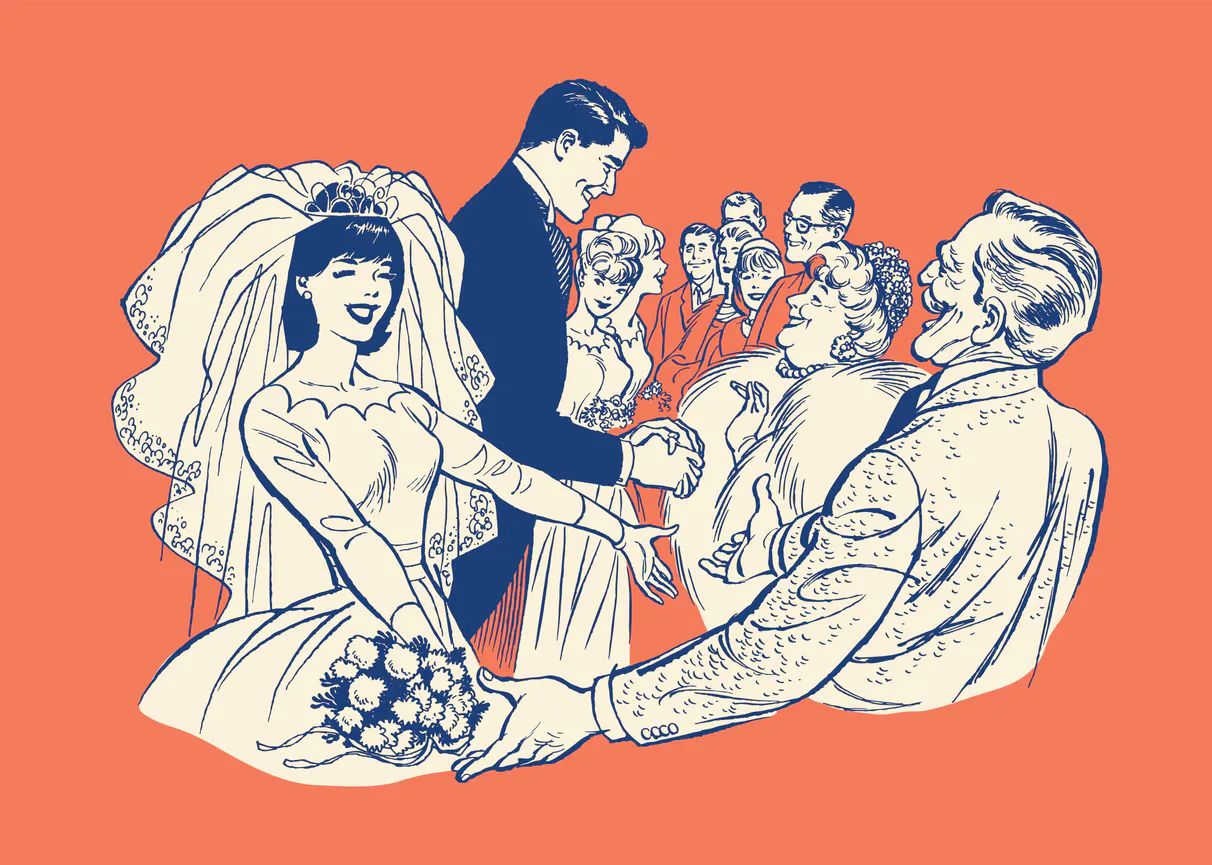
In the United Kingdom, there is no ban on marrying your first cousin, and it was fairly common until the late 19th century. Readers of Jane Austen remember Fanny Price marrying her cousin Edmund in “Mansfield Park,” or Henrietta Musgrove marrying her cousin Charles in “Persuasion.” It wasn’t just in fiction; Queen Victoria married her cousin, Albert of Saxe-Coburg-Gotha.
One reason was that most people lived their entire lives within a small radius of their birthplace, so they didn’t have a wide selection of partners. The circle was even smaller for the nobility. Many of Europe’s royals married relatives, which sometimes led to genetic defects and unfortunate traits.
Cousin-marriage rates dropped when genetics research demonstrated the risks of inbreeding. Charles Darwin (who married a cousin) saw defects in inbred plants, but in 1902 Archibald Garrod publicized the link between inbreeding and defects tied to recessive genes.
“By the 20th Century the proportion of marriages between cousins had declined to about 1%” in Britain, the BBC reported last year. The low national percentage has apparently risen since mass immigration began from countries where cousin marriage is common. In 2025, over half — 55% — of Pakistanis in Britain were reportedly married to first cousins — a higher rate than in Pakistan itself.
Today, the risks are irrefutable. Children born to parents who are cousins have more than twice the risk of a congenital abnormality. In a study of the English city of Bradford, more than 30% of birth defects in babies of Pakistani origin were born to parents who were cousins. Also in Bradford, “more babies are born with genetic conditions than elsewhere in the country.”
Married cousins subject their prospective children to more than double the risk of crippling genetic illnesses. That’s an avoidable human cost. The family partly bears the financial cost through lost earnings or support services.
But in Britain, the state-run National Health Service and various welfare programs pick up most of the tab. Over 70% of ethnic Pakistani households in Britain were in the bottom 40% of income distribution, according to government data. To be blunt, that means that a sub-population dependent on public assistance is passing the financial risks of inbreeding to the general population.
In January, a member of Parliament proposed a bill to ban first cousin marriage, but then-Prime Minister Sir Keir Starmer didn’t allow it up for a vote. Meanwhile, the government published controversial guidance defending cousin marriage. An article by the National Health Service said that first-cousin marriage could provide “stronger extended family support systems and economic advantages.”
A guide for midwives said that worries about inbreeding were “exaggerated” because “85 to 90 per cent of cousin couples ‘do not have affected children.’” The guidance suggested that the risks of marrying a cousin be “balanced against the potential … economic benefits” and “emotional and social connections.”
But any benefits of cousin marriage belong exclusively to the families concerned, while the costs are socialized to all taxpayers. So why would anyone defend dangerous inbreeding?
Britain’s Labour Party is in a quandary. They know the greater risks and thus costs of children born to cousin marriages. At the same time, they are increasingly dependent on low-income immigrant populations for votes, as the traditional indigenous working class abandons them for the Conservatives or the new, migration-skeptic Reform and Restore parties.
According to a recent survey, “[a]mong voters of Pakistani, Bangladeshi, Caribbean, and African descent who earn less than £25,000 ($34,000) there is a 93% likelihood that they will support Labour.” Labour has so far chosen to back its ethnic vote-bank at the expense of children.
In June, “shadow” health secretary (opposition Conservative Member of Parliament) Dr. Luke Evans submitted a First Cousins (Prohibited Relationships) Bill to Parliament. Current Prime Minister Andy Burnham now faces one of his first tests: does he back the science and save thousands of children a preventable future of crippling disease? Or does he hold his nose and support obscurantist ethnic votes — or prevent them from going even further Left to “Gaza independent”?
Cousin marriage, like child marriage, “honor” killing of relatives, and wife beating, is a cultural practice the West long abandoned, for good reason. Immigrants moving to developed countries need to leave such practices behind them, if they are to assimilate and partake of the prosperity and freedom they ostensibly seek.
***
Simon Hankinson is a senior research fellow in The Heritage Foundation’s Border Security and Immigration Center and author of “The Ten Woke Commandments (You Must Not Obey)” from Academica Books.
More from this network:
Domains for Sale · GOTPeople.org · TheDSAPlatform · The Truth About Socialism
What's Your Reaction?
 Like
0
Like
0
 Dislike
0
Dislike
0
 Love
0
Love
0
 Funny
0
Funny
0
 Wow
0
Wow
0
 Sad
0
Sad
0
 Angry
0
Angry
0

I am just an average American. My teen years were in the late 70s and I participated in all that that decade offered. Started working young, too young. Then I joined the Army before I graduated High School. I spent 25 years in, mostly in Infantry units. Since then I've worked in information technology positions all at small family owned companies. At this rate I'll never be a tech millionaire. When I was young I rode horses as much as I could. I do believe I should have been a cowboy. I'm getting in the saddle again by taking riding lessons and see where it goes.
Premium domains for sale















Comments (0)