

Crazy 'cat lady' parasite that decapitates sperm, affects 1 in 3, is grossly neglected: Study
Premium domains for sale
Freedom Is Back In Style
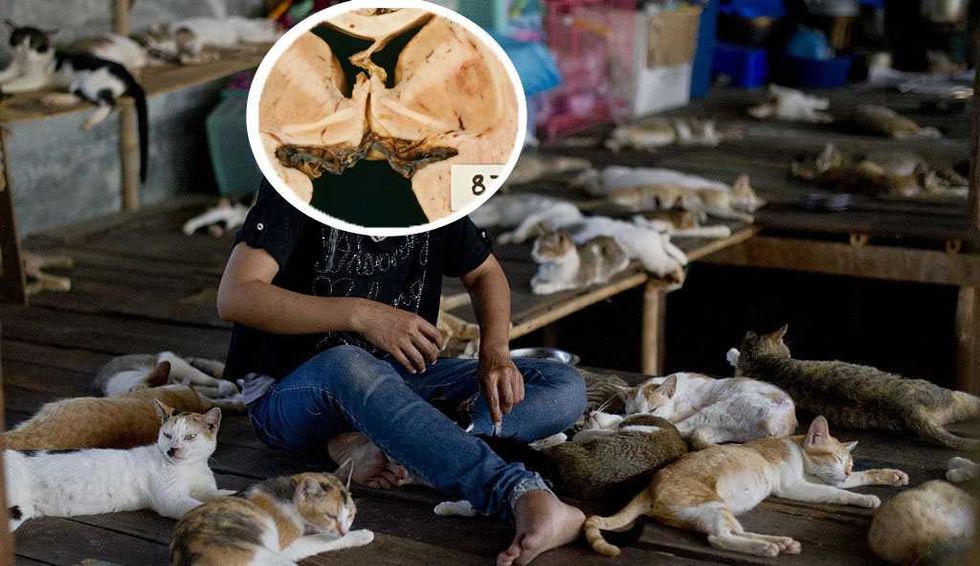
Toxoplasma gondii is a parasite that can infect any nucleated cell in any warm-blooded animal and can cause a wide range of health complications — some fatal, such as miscarriage or inflammation of the brain.
Freedom Is Back
In Style
Premium domains for sale
This singled-celled parasite, which can survive up to a lifetime in a human body, is stereotypically associated with crazy "cat ladies" due to its presence in cat feces — cats are its only known definitive hosts — and its association with schizophrenia, bipolar disorder, obsessive-compulsive disorder, and suicidal behavior.
'Toxoplasmosis is just getting left behind.'
Despite its association with "cat ladies," the parasite is an equal opportunity invader. A study published last year noted, for instance, that the rapidly dividing asexual form of the indiscriminate parasite can "colonize and proliferate" within testes, decapitate sperm, and cause "oxidative stress leading to male infertility."
A study published on Thursday in the journal PLOS Neglected Tropical Diseases warned that toxoplasmosis, the virus caused by the parasite, is not receiving sufficient attention from the scientific powers that be — certainly not the level that might otherwise be warranted by its impact and pervasiveness.
"Toxoplasmosis continues to be one of the most common parasitic infectious diseases affecting humans, and the leading intraocular infection worldwide," said the study.
Toxoplasmosis chronically affects nearly one-third of the human population and is present in every country around the globe. South America is home to the highest rates of infection, with some regions reporting up to 80% of their adult populations afflicted. According to the Centers for Disease Control and Prevention, over 40 million people are infected with the parasite in the United States.
RELATED: Foreign 'Fauci acolyte' and his African crony charged with smuggling monkeypox onto American soil
 Kiran Ridley/Getty Images
"Yet, the condition receives limited attention on health agendas," continued the researchers.
In a comparison of data provided by the U.S. National Institutes of Health, researchers found that "toxoplasmosis research was funded at a level of $177 per disability-adjusted life-year (DALY) for the period 2018–2024, compared with research on trachoma and Chagas disease, at $283/DALY and $337/DALY, respectively."
"Key gaps persist across basic science, diagnostics, therapeutics, prevention, and implementation research," said the study. "No licensed human vaccine exists. Serological testing is widely available, but expensive for low-income scenarios and poorly standardized, complicating surveillance and estimation of the burden of disease. Treatment protocols lack robust comparative evidence, particularly for congenital and ocular toxoplasmosis. Environmental monitoring of oocysts remains technically demanding and absent from national programs."
"What we're seeing is that while there are these improvements occurring in the fight against other neglected tropical diseases, toxoplasmosis is just getting left behind," senior author on the paper Justine Smith, an ophthalmologist at Flinders University, told Gizmodo.
The researchers criticized the prevailing notion that the infection is "a zoonosis that is an unavoidable consequence of everyday human-animal interactions," stating that "accumulated evidence indicates otherwise: toxoplasmosis has well-characterized pathways of transmission and is preventable and controllable."
In hopes of addressing the "research deficit" and challenging the parasite status quo, the researchers proposed that the World Health Organization — which the U.S. officially withdrew from in January — officially designate toxoplasmosis as a "neglected tropical disease."
According to the National Institute of Allergy and Infectious Diseases, NTDs are called "'neglected' because they generally afflict the world's poor and historically have not received as much attention as other diseases. NTDs tend to thrive in developing regions of the world, where water quality, sanitation, and access to health care are substandard. However, some of these diseases also are found in areas of the United States with high rates of poverty."
An official NTD designation would prompt the WHO to mobilize global resources to tackle the parasite and unlock new funding streams for prevention and control measures, research, food safety measures, and environmental surveillance tools. The researchers noted further that an official designation "would facilitate technical guidance for Ministries of Health, helping Member States integrate toxoplasmosis into mother-child health programs, food safety systems, and primary-care protocols."
"That sort of recognition translates through to researchers being funded to work on things like vaccines, diagnostics, and curative drugs," Smith told Gizmodo. "There is no commercially available vaccine against toxoplasmosis. And the drugs we give patients can limit a flare-up of the disease, but there is no drug that cures it at this point."
While bullish on the WHO designating toxoplasmosis as an NTD, the researchers conceded that doing so "could strain resources that are already limited and dilute the efforts underway in existing programs for other NTDs."
Infection with toxoplasma gondii can result from foodborne transmission, animal-to-human transmission, mother-to-child transmission, and blood transfusions.
The CDC says that to reduce risk of infection, Americans should:
- freeze meat for several days before cooking;
- use a food thermometer to cook food to a safe internal temperature high enough to kill the parasite;
- avoid consuming unpasteurized goat milk, raw oysters, mussels, or clams;
- cook or rinse fruits and vegetables under water before eating;
- wear gloves when gardening or touching soil that may be contaminated with cat excrement;
- wash hands with soap any time that they might be contaminated with cat feces; and
- change their cat's litter box daily.
Like Blaze News? Bypass the censors, sign up for our newsletters, and get stories like this direct to your inbox. Sign up here!
More from this network:
Domains for Sale · GOTPeople.org · TheDSAPlatform · The Truth About Socialism
What's Your Reaction?
 Like
0
Like
0
 Dislike
0
Dislike
0
 Love
0
Love
0
 Funny
0
Funny
0
 Wow
0
Wow
0
 Sad
0
Sad
0
 Angry
0
Angry
0

I am just an average American. My teen years were in the late 70s and I participated in all that that decade offered. Started working young, too young. Then I joined the Army before I graduated High School. I spent 25 years in, mostly in Infantry units. Since then I've worked in information technology positions all at small family owned companies. At this rate I'll never be a tech millionaire. When I was young I rode horses as much as I could. I do believe I should have been a cowboy. I'm getting in the saddle again by taking riding lessons and see where it goes.
Premium domains for sale

























Comments (0)