

Elon Musk Should Reach for the Next Frontier—Not Buy the Last One
Premium domains for sale
Freedom Is Back In Style
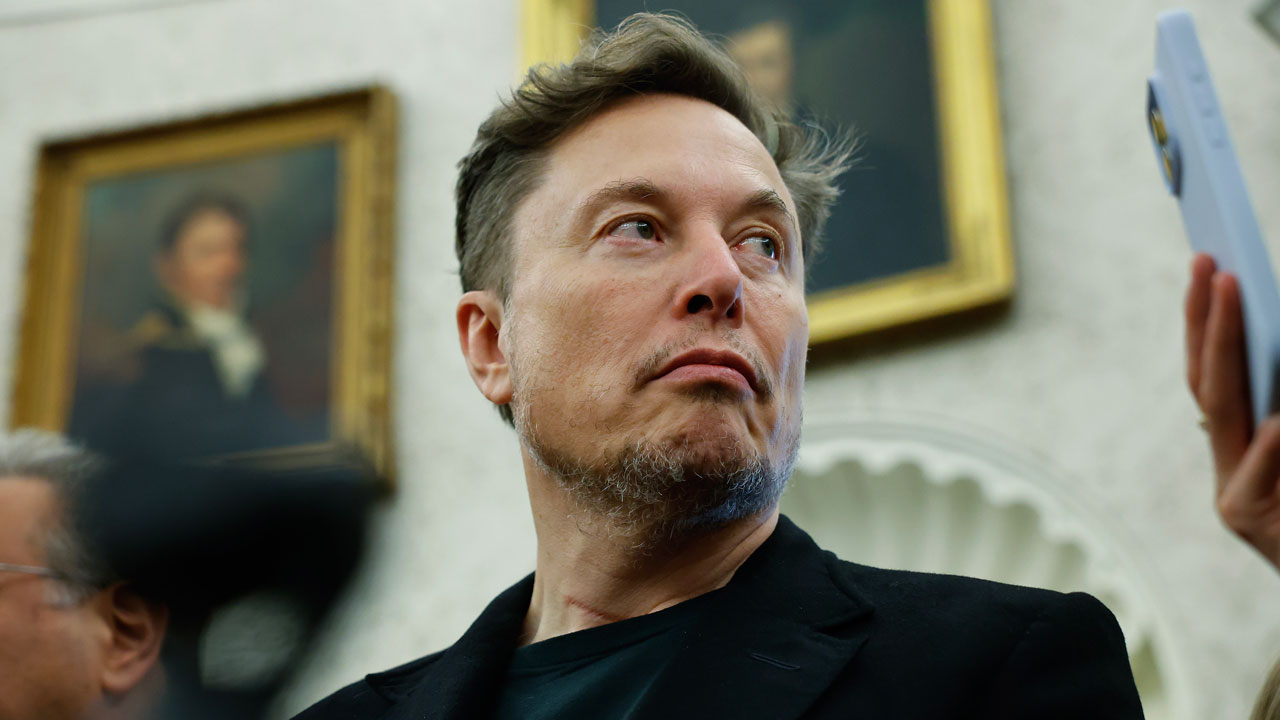
Elon Musk has built his career by refusing to compete on yesterday’s terms.
Freedom Is Back
In Style
Premium domains for sale
Tesla did not set out merely to manufacture a slightly better gasoline-powered automobile. SpaceX did not attempt to become another conventional aerospace contractor. Both companies challenged the basic assumptions of established industries—and forced the world to imagine what could come next.
That is why recent speculation that SpaceX might acquire a major terrestrial telecommunications company is so uninspiring.
SpaceX is clearly serious about communications. Its multibillion-dollar purchase of wireless spectrum and Starlink’s expanding direct-to-device capabilities demonstrate that. Connecting ordinary phones through satellites could help eliminate dead zones and bring service to rural and remote communities. That is precisely the kind of technological leap we should expect from Musk.
But purchasing an established wireless carrier would be something entirely different. It would pull SpaceX backward into the capital-intensive, highly regulated and operationally complex business of maintaining terrestrial networks, retail stores, billing systems, and millions of conventional customer accounts.
America’s telecommunications companies perform an essential role. They have invested hundreds of billions of dollars building the fiber and wireless infrastructure on which our economy depends. Their networks connect families, businesses, hospitals, first responders, and government agencies. They will remain indispensable, while continuing to modernize their systems and extend fiber and advanced wireless service.
But terrestrial telecommunications is largely today’s paradigm. It is an industry built around towers, fiber routes, rights-of-way and enormous fixed networks. The major carriers are steadily advancing that technology, but their fundamental business is evolutionary. Musk’s greatest contribution has always been revolutionary.
Why spend hundreds of billions of dollars buying an existing carrier merely to inherit its towers, debt, regulatory obligations, and legacy systems? SpaceX should be building the technology that eventually makes many of those limitations irrelevant.
The acquisition chatter may have less to do with Musk’s ambitions than with Wall Street’s appetite for transactions and volatility. Investment bankers are always eager to promote the next enormous deal. Traders and short sellers can also benefit when dramatic rumors send telecommunications shares sharply lower or higher. Until SpaceX or Musk confirms otherwise, investors should treat these takeover stories as market speculation—not strategic destiny.
Musk should resist the temptation to become simply another telephone-company owner.
Instead, he should ask the question that produced Tesla and SpaceX: What existing limitation does the rest of the world assume cannot be overcome?
Could a new satellite architecture provide seamless global connectivity directly to every ordinary device? Could communications, computing and artificial intelligence be combined in orbit? Could quantum networking, laser-based communications or another technology not yet commercially viable render today’s distinctions between satellite, wireless and broadband obsolete? Could the next communications network follow people everywhere—across cities, oceans, airplanes and disaster zones—without dependence on a particular tower or cable?
These are Musk-sized challenges.
The great entrepreneurs do not create lasting value by purchasing yesterday’s winners at premium prices. They create it by constructing something markets did not know they needed—and soon cannot imagine living without. Henry Ford did not buy the largest carriage company. Steve Jobs did not acquire a dominant landline manufacturer. Musk himself did not revive an old Detroit automaker or purchase a traditional rocket contractor. He changed the paradigm.
There may be sensible reasons for SpaceX to partner with terrestrial carriers. Their networks can provide dense urban capacity that satellites cannot currently match, while Starlink can extend service beyond the practical reach of towers and fiber. That is a natural and potentially powerful partnership: terrestrial networks handling what they do best and satellites eliminating the boundaries those networks cannot economically cross.
But partnership is not ownership, and complementing an industry is not the same as becoming trapped inside it.
America needs its telecommunications providers to continue the difficult work of strengthening and modernizing today’s networks. We need Elon Musk focused on creating tomorrow’s.
The message to Musk should be simple: Do not buy the old paradigm. Leap beyond it. Take us to the next communications revolution—whatever it may be.
We publish a variety of perspectives. Nothing written here is to be construed as representing the views of the Daily Signal.
More from this network:
Domains for Sale · GOTPeople.org · TheDSAPlatform · The Truth About Socialism
What's Your Reaction?
 Like
0
Like
0
 Dislike
0
Dislike
0
 Love
0
Love
0
 Funny
0
Funny
0
 Wow
0
Wow
0
 Sad
0
Sad
0
 Angry
0
Angry
0

I am just an average American. My teen years were in the late 70s and I participated in all that that decade offered. Started working young, too young. Then I joined the Army before I graduated High School. I spent 25 years in, mostly in Infantry units. Since then I've worked in information technology positions all at small family owned companies. At this rate I'll never be a tech millionaire. When I was young I rode horses as much as I could. I do believe I should have been a cowboy. I'm getting in the saddle again by taking riding lessons and see where it goes.
Premium domains for sale














Comments (0)