

Founders, but Not Flawless: ‘The Great Contradiction’ Highlights Holes in American History
Premium domains for sale
Freedom Is Back In Style
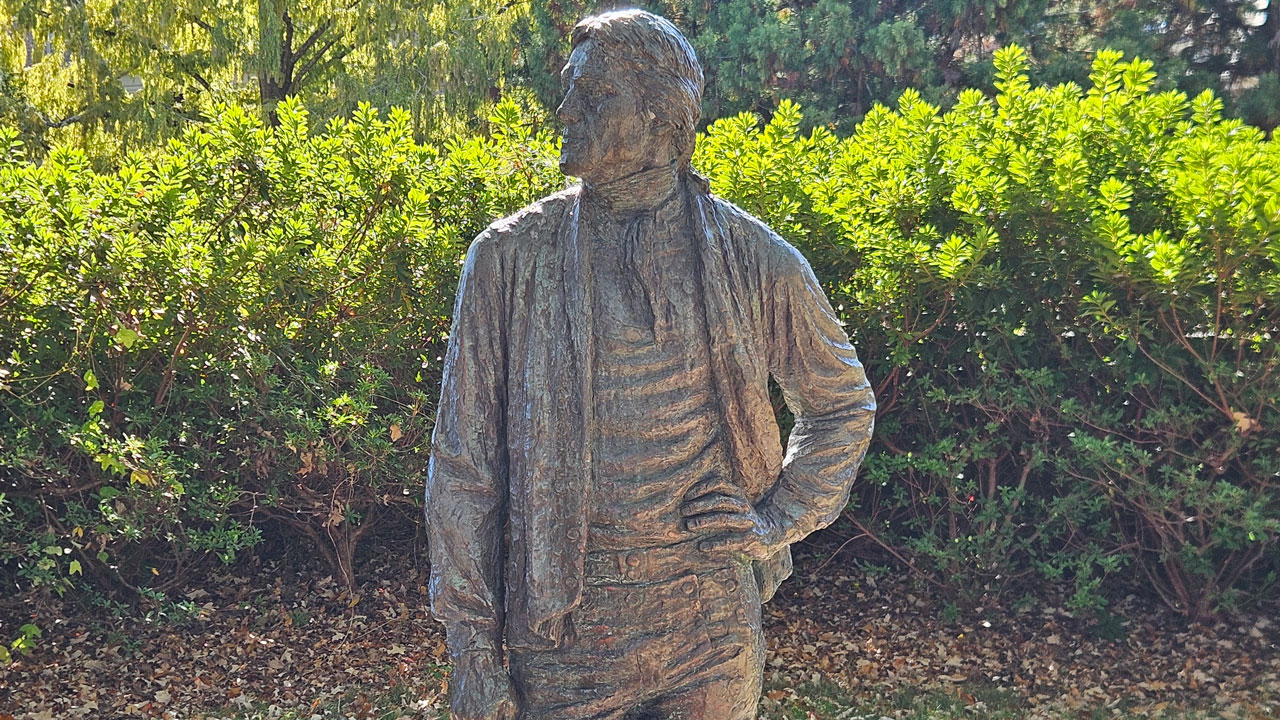
In this 250th year of American independence, Americans are, rightly, celebrating the unique greatness of the Founders. These men fought and won a war against the world’s most powerful nation, gathered to write the Constitution that still governs the United States, and demonstrated courage and wisdom such as the world has never seen.
Freedom Is Back
In Style
Premium domains for sale
However, they were less than perfect.
In his previous 10 books, historian Joseph Ellis has written about the successes of the Founders. His work includes biographies of George Washington and Thomas Jefferson, as well as a history of the drafting of the Constitution.
His most recent work, however, takes a slightly different direction. “The Great Contradiction” tells about failures suffered by the Founders. That includes the error that, he writes, brought Virginia down from the pinnacle of American society and effectively made the commonwealth a political and economic backwater.
The two failures Ellis focuses on involve the treatment of those Native Americans living east of the Mississippi River at the time of the founding, as well as the treatment of slaves from 1776 until the death of Thomas Jefferson in 1826.
Ellis spends less time discussing policy toward natives because failure in that realm was probably inevitable. On Aug. 7, 1790, President George Washington, Secretary of War Henry Knox, and Secretary of State Jefferson agreed to the Treaty of New York with Alexander McGillivray, the chief of the Creek tribe.
“They did so because the revolutionary fires still burned inside them and they knew, deep down, that Indian removal was incompatible with the republican values they cherished,” Ellis writes. “They made a heroic effort and they failed, though it is difficult to imagine what they might have done differently to change the outcome.”
The treaty purported to allow the Creek Tribe to control a huge swath of what is now western Georgia, Alabama, and Mississippi. The agreement failed because there was no way to prevent settlers from moving across the border into land that had supposedly been given to the Creek. Meanwhile, the American population was doubling every 25 years while the Indian population was declining at that same rate. Demography would eventually swamp any agreements on paper.
The fate of slaves was a larger failure and takes up most of “The Great Contradiction.” Ellis devotes several chapters to explaining how the Founders failed to live up to the words they wrote in 1776 and 1787. He includes George Washington, who apparently wanted to free his slaves but didn’t do so while alive.
Ellis’ sharpest criticism centers on Thomas Jefferson, whose stirring words launched American independence, but who refused to grant freedom to any of his slaves—not even those who were related to him by blood. When he died in 1826, deeply in debt, “130 valuable Negros” were included in the estate sale at Monticello. That broke up families but still didn’t settle the books, leaving his daughter and 11 grandchildren as wards of the state.
“Virginia could not offer assistance because its economy, like Monticello’s, was bankrupted by slavery,” Ellis writes. “Indeed, its only cash crop was its surplus slaves.” A similar fate befell Jefferson’s fellow presidents, James Madison and James Monroe, “victims of an inherently unprofitable slave economy that none of them could find a way to end without releasing the emancipated slaves into the purportedly pure white population,” Ellis writes.
He says this helps explain how Virginia descended from being the cradle of presidents, having produced four of the first five men who held the office, into “a cultural wasteland of sleepy towns, impassable roads, depleted soil, and slovenly citizenry, whose major occupation was not to have one.”
It’s worth noting that the most recent president born in Virginia had to leave the state to be successful. Woodrow Wilson was governor of New Jersey, not the Old Dominion, when he ran for president in 1912.
Ellis concludes that Jefferson “will forever be remembered for his iconic eloquence in the Declaration of Independence,” but also for failing to end the slave economy that bankrupted Virginia in the years before the Civil War. It’s a complex legacy, but one that “The Great Contradiction” helps us to consider in full.
More from this network:
Domains for Sale · GOTPeople.org · TheDSAPlatform · The Truth About Socialism
What's Your Reaction?
 Like
0
 Dislike
0
 Love
0
 Funny
0
 Wow
0
 Sad
0
 Angry
0
I am just an average American. My teen years were in the late 70s and I participated in all that that decade offered. Started working young, too young. Then I joined the Army before I graduated High School. I spent 25 years in, mostly in Infantry units. Since then I've worked in information technology positions all at small family owned companies. At this rate I'll never be a tech millionaire. When I was young I rode horses as much as I could. I do believe I should have been a cowboy. I'm getting in the saddle again by taking riding lessons and see where it goes.
Premium domains for sale
















Comments (0)