

Europe’s Regulatory Overreach Is Becoming a US National Security Risk
Premium domains for sale
Freedom Is Back In Style
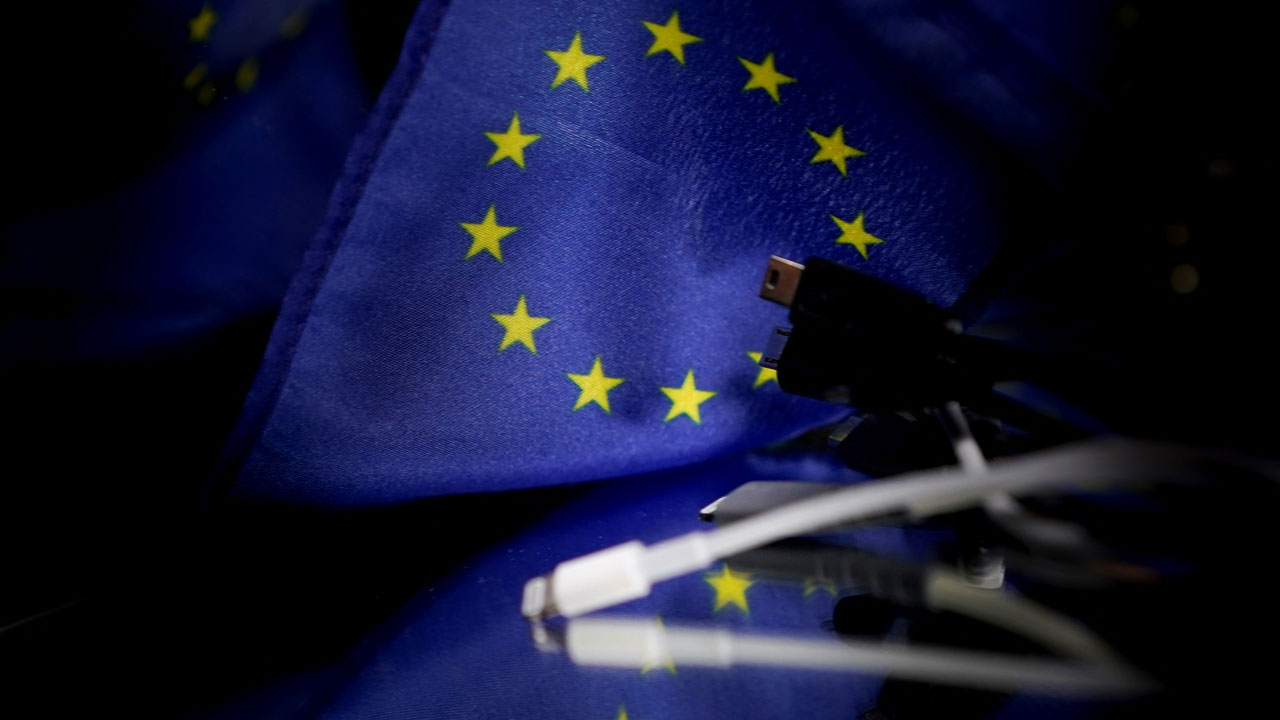
As the Trump administration acts to solidify America’s economic security and lock down critical supply chains, one threat continues to slip past the U.S. radar: discriminatory foreign mandates that quietly push U.S. businesses out of foreign markets. And not even our closest allies can be exempt.
Freedom Is Back
In Style
Premium domains for sale
One chief example is the European Union’s Corporate Sustainability Due Diligence Directive, a rule it presents as a sustainability and human rights initiative.
On paper, the intentions look sound. The reality is something far more dangerous under a veil of perceived goodwill. It is an intrusive demand that most American firms will stand against.
As written, the directive would compel American companies operating in or connected to European markets to conduct extensive investigations throughout their supply chains, document business relationships, and collect vast amounts of operational information that is critical to the integrity and privacy of a business.
European lawmakers see this as necessary oversight. But from a national security perspective, it raises a different concern entirely. The directive is an information grab on the one hand and an incentive to pay up, or leave the European marketplace, on the other. The latter is accomplished through a protectionist dodge.
The suppliers and networks that allow American companies to operate often represent years of investment and competitive development.
For firms operating in sectors tied to manufacturing, energy, technology, transportation, and critical infrastructure, this information can reveal far more than commercial activity. It can provide a road map of vulnerabilities and chokepoints that unfairly favors foreign competitors of America.
The danger is not merely that companies will face additional compliance costs.
Regulations like the Corporate Sustainability Due Diligence Directive will encourage the creation and disclosure of detailed repositories of sensitive information that were never intended for broad sharing. Once collected, that information becomes more difficult to control and more attractive to bad actors seeking insight into Western industrial capabilities.
Among many bad actors, China hasn’t been shy about its ambitions. For years, Beijing has worked systematically to tighten its grip on global supply chains, corner critical minerals markets, and dominate the technologies that will define the next century. American supply networks are not invisible to our competitors.
This is why the directive can’t be viewed solely as a compliance issue. It is an economic security issue and, increasingly, a national security threat.
The inconsistency with which Europe applies these principles should also raise concerns.
Recently, the EU granted an exemption that will allow French energy giant TotalEnergies to continue benefiting from certain Russian LNG-related activities after previously imposing restrictions on those shipments.
EU officials justified the decision in part because the alternative risked market activity shifting to Chinese operators. The result is that a major European company received flexibility when strategic interests were involved.
That decision exposes a broader reality. When European interests are at stake, European policymakers are willing to make accommodations. Yet, through measures like the Corporate Sustainability Due Diligence Directive, American companies are often expected to absorb costly obligations with little regard for their consequences.
When will this hypocrisy be called out? If Europe grants its own companies regulatory flexibility in the name of economic security, American policymakers should do the same to protect U.S. interests.
The broader economic concerns of the directive at home are just as significant.
Researchers recently found that U.S. manufacturers would collectively incur between $211 billion and $267 billion in one-time setup costs under the directive. Those costs will trickle down the supply chain, forcing small American weapons makers doing business with larger partners in the EU to drown in compliance costs they did not ask for and did not vote on.
The United States and Europe share many interests, including reducing dependence on adversarial nations and strengthening resilient supply chains. Those goals deserve support. But strategic cooperation cannot come at the expense of American competitiveness or national security.
Congress should treat this threat with the urgency it deserves.
Members of Congress should support all efforts to protect American businesses from unfair and onerous regulations. The U.S. trade representative should be directed to investigate whether the Corporate Sustainability Due Diligence Directive and similar mandates unfairly burden American commerce and security.
Protecting America’s supply chains means more than rebuilding factories and securing resources. It also means safeguarding the sensitive information that allows those supply chains to function in the first place.
More from this network:
Domains for Sale · GOTPeople.org · TheDSAPlatform · The Truth About Socialism
What's Your Reaction?
 Like
0
Like
0
 Dislike
0
Dislike
0
 Love
0
Love
0
 Funny
0
Funny
0
 Wow
0
Wow
0
 Sad
0
Sad
0
 Angry
0
Angry
0

I am just an average American. My teen years were in the late 70s and I participated in all that that decade offered. Started working young, too young. Then I joined the Army before I graduated High School. I spent 25 years in, mostly in Infantry units. Since then I've worked in information technology positions all at small family owned companies. At this rate I'll never be a tech millionaire. When I was young I rode horses as much as I could. I do believe I should have been a cowboy. I'm getting in the saddle again by taking riding lessons and see where it goes.
Premium domains for sale
















Comments (0)