

Georgia Park No Longer Named After Famous ‘Father of American Music’
Premium domains for sale
Freedom Is Back In Style
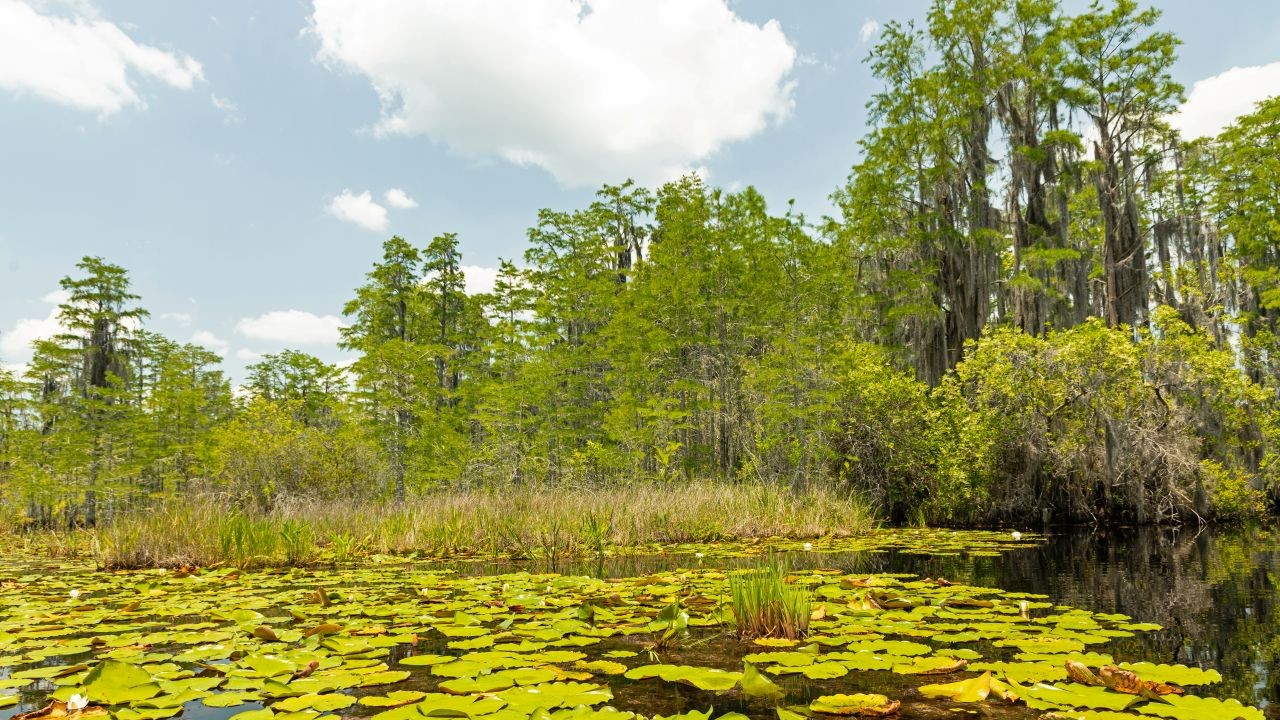
The Georgia Department of Natural Resources has officially changed the name of Stephen C. Foster State Park to Okefenokee State Park.
Freedom Is Back
In Style
Premium domains for sale
Conversations about the change have been occurring for a while given the park’s connection to Okefenokee National Wildlife Refuge, which was designated a UNESCO World Heritage Site this summer.
A 2024 report by The Conservation Fund claimed that tourists to the park could “double from 800,000 to 1.6 million by 2035” if it were, in fact, designated a World Heritage Site.
Stephen Foster, known as the “Father of American Music,” was a prolific composer whose songs—including “Oh! Susanna,” “My Old Kentucky Home,” and “Camptown Races”—have left a lasting impact on American folk and popular music.
Georgia Department of Natural Resources spokesman Austin Suhr said the renaming of the park was unrelated to Foster’s legacy, which in recent years has been attacked as being racially insensitive.
Suhr told the Daily Signal in an email that “conversations about the park’s name have been ongoing for many years.”
He added, “There is no clear historical connection between Stephen C. Foster and the State of Georgia, Georgia’s state parks, or the Okefenokee Swamp.”
However, the park sits on the Suwannee River, which coincides with Foster’s 1951 classic tune titled “Swanee River.”
Despite the lack of any strong historical connection between the composer and the state, Foster wrote many famous tunes that shaped early American music. Foster wrote over 200 songs, many of which were published in the 1850s, before the Civil War. Many of his songs were used in blackface minstrel shows, which were popular at the time.
Historically, minstrel shows featured white actors in blackface makeup to portray African Americans, yet often with racist tropes. However, some historians say Foster helped improve minstrel shows, taking them from a form of art that was related to the lower classes to something more respected and mainstream.
Jennie Lightweis-Goff, co-editor of “Foster at 200,” a podcast that explores Foster’s legacy, commented on Foster, saying, “In many ways, he’s a more moderate figure: a Northern Democrat who seems to have opposed both slavery and the Lincoln presidency.”
The discussion of Foster’s legacy comes at a time with sharp division surrounding historical monuments that some consider offensive. Earlier this year, legislation seeking to protect monuments was shot down after several state GOP House representatives voted against the measure or did not vote.
More from this network:
Domains for Sale · GOTPeople.org · TheDSAPlatform · The Truth About Socialism
What's Your Reaction?
 Like
0
Like
0
 Dislike
0
Dislike
0
 Love
0
Love
0
 Funny
0
Funny
0
 Wow
0
Wow
0
 Sad
0
Sad
0
 Angry
0
Angry
0

I am just an average American. My teen years were in the late 70s and I participated in all that that decade offered. Started working young, too young. Then I joined the Army before I graduated High School. I spent 25 years in, mostly in Infantry units. Since then I've worked in information technology positions all at small family owned companies. At this rate I'll never be a tech millionaire. When I was young I rode horses as much as I could. I do believe I should have been a cowboy. I'm getting in the saddle again by taking riding lessons and see where it goes.
Premium domains for sale

















Comments (0)