

Housing Is Too Expensive. Blame Your Local Tree Ordinance.
Premium domains for sale
Freedom Is Back In Style
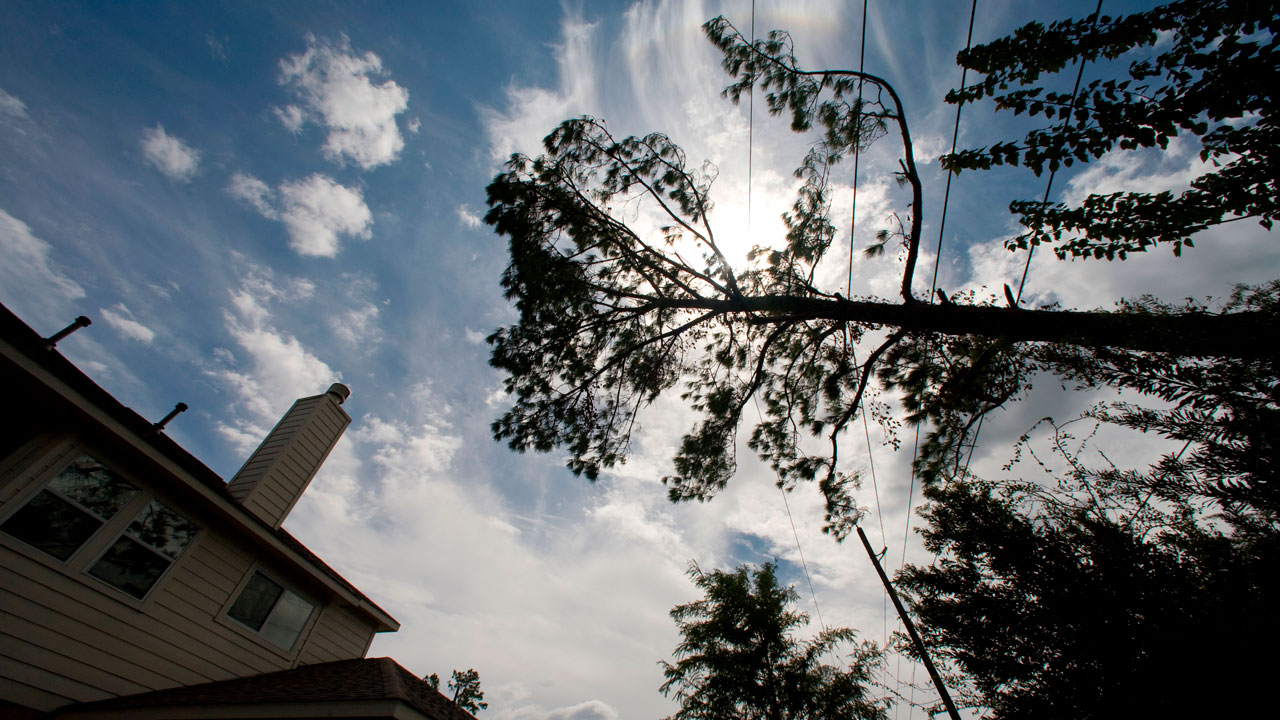
Matthew Bernard wanted to build a home. He bought a small lot in Oakland, California and began clearing several diseased and fallen trees that the local fire department had identified as hazards. The result was a $915,000 “mitigation fee” from the City of Oakland—nearly five times the value of the lot itself.
Freedom Is Back
In Style
Premium domains for sale
Under Oakland’s tree ordinance, property owners who remove trees must pay into a city tree fund before they can obtain building permits. Once a fee is imposed, a lien is placed on the property and development must cease until the fee is paid. Matthew’s dream of homeownership came crashing down.
Oakland is not unique.
Across the country, local governments have adopted tree ordinances that impose massive costs on property owners who want to build homes.
In Michigan, one township demanded more than $400,000 from two brothers who cleared part of their land. In Austin, a homeowner was recently required to pay thousands of dollars in mitigation fees merely for trimming trees on his own property.
It doesn’t take a degree in economics to see the problem. When government policies dramatically increase the cost of building a home, homes become more expensive. That’s just math.
Defenders of these ordinances respond that trees provide valuable public benefits. They’re right. Trees provide shade, wildlife habitat, flood mitigation, and countless aesthetic benefits. The question is not whether trees are valuable. The question is who should pay for preserving them.
Under our constitutional system, public benefits are generally paid for by the public. If voters want more green space, governments can buy parkland, preserve open space through easements, or plant trees on public property. Those costs are spread across the community, and voters can decide whether the benefits justify the expense.
Tree ordinances operate differently.
Instead of asking the public to pay for public benefits, they shift those costs onto the individual property owner who happens to be trying to build a home. Existing homeowners get to enjoy the benefits of undeveloped, tree-covered lots in their neighborhoods. The owner of an undeveloped lot, however, is effectively required either to leave the property undeveloped or to pay thousands–sometimes hundreds of thousands–of dollars into a government fund before he can build. Either way, the cost of providing a public benefit falls on a single private citizen rather than the public that enjoys it.
That arrangement is not merely unfair. It raises serious constitutional problems.
Courts have repeatedly held that land-use permits must be tied to addressing actual harms caused by development. Governments cannot use the permitting process as an opportunity to extract unrelated public benefits that they would otherwise have to fund themselves.
Consider a simple example.
If you want to pave a driveway on a hillside, the government may require you to build drainage improvements so runoff from the driveway does not flood your neighbor’s property. But it may not hold your permit hostage until you pay to rebuild sewer infrastructure for the entire city. The first requirement addresses a specific harm caused by the project. The second simply shifts a public expense onto a private citizen.
Many tree ordinances function more like the second example. They typically charge preset fees based on the number or size of trees removed, regardless of whether the removal causes any actual harm.
The focus is not on preventing erosion, flooding, or some other concrete impact. Instead, the ordinances presume that trees provide benefits and require property owners to compensate the government whenever those benefits are reduced.
That distinction matters.
In a recent case, a property owner was charged roughly $47,000 for removing trees from a ditch on his own land even though the city acknowledged that doing so actually reduced flooding and other nuisance conditions in the area. The fee was imposed simply because trees had been removed. The Sixth Circuit ultimately held the ordinance unconstitutional because it lacked a sufficient connection to any actual harm.
And tree ordinances are hardly the only example.
The City of Arlington recently adopted requirements that force certain new apartment developments to include swimming pools.
The City of Killeen requires new homes to include decorative garage doors, eyebrow windows, and other aesthetic features. No doubt, many people would enjoy those amenities. But enjoying something is not the same as being harmed by its absence.
At bottom, these regulations all rely on the same flawed premise: that government may use the permitting process to extract desirable public benefits from individual property owners. The result is predictable. Every new requirement increases the cost of development, and every increase in development costs eventually shows up in the price of housing.
Housing affordability ultimately comes down to math.
If we make housing more expensive to build, housing will become more expensive to buy or rent. Tree ordinances are just one example of a broader trend of using land-use regulations to pursue public objectives at private expense. If governments want those public benefits, they should pay for them openly and democratically—not hide the cost in the price of a new home.
We publish a variety of perspectives. Nothing written here is to be construed as representing the views of the Daily Signal.
More from this network:
Domains for Sale · GOTPeople.org · TheDSAPlatform · The Truth About Socialism
What's Your Reaction?
 Like
0
Like
0
 Dislike
0
Dislike
0
 Love
0
Love
0
 Funny
0
Funny
0
 Wow
0
Wow
0
 Sad
0
Sad
0
 Angry
0
Angry
0

I am just an average American. My teen years were in the late 70s and I participated in all that that decade offered. Started working young, too young. Then I joined the Army before I graduated High School. I spent 25 years in, mostly in Infantry units. Since then I've worked in information technology positions all at small family owned companies. At this rate I'll never be a tech millionaire. When I was young I rode horses as much as I could. I do believe I should have been a cowboy. I'm getting in the saddle again by taking riding lessons and see where it goes.
Premium domains for sale




















Comments (0)