

How Andy Burnham’s Domestic Politics Is Fracturing The Transatlantic Relationship
Premium domains for sale
Freedom Is Back In Style
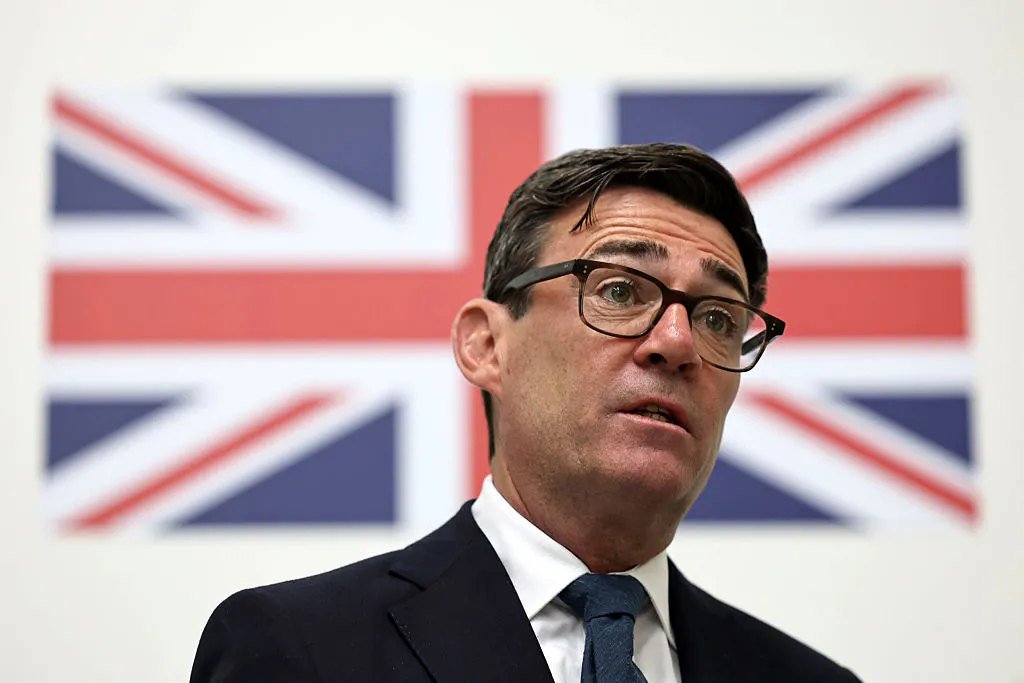
Last week, Britain’s new Prime Minister, Andy Burnham, stood at the dispatch box in the House of Commons to face questions from MPs. He stood in the very spot where Winston Churchill, 85 years before, had promised that Britain:
Freedom Is Back
In Style
Premium domains for sale
Shall not flag or fail. We shall go on to the end, we shall fight in France, we shall fight on the seas and oceans, we shall fight with growing confidence and growing strength in the air, we shall defend our island, whatever the cost may be, we shall fight on the beaches, we shall fight on the landing grounds, we shall fight in the fields and in the streets, we shall fight in the hills; we shall never surrender!
With what kind of Churchillian rhetoric did Burnham use to rally and inspire his nation? Well, Kemi Badenoch, the Conservative leader of the opposition, asked him to take £4 billion out of housing benefits and hand it to the armed forces. He refused, and uttered a line that will become an albatross around his neck for the length of his miserable premiership: “National security cannot come at the expense of social security.”
Defense of the realm, that first and most sacred duty of the state, was disposed of in a subordinate clause by a man two months into the job, and wholly out of his depth.
Britain really does need to spend more on national security. The British Army has around 73,000 regular soldiers, the smallest it has been in more than two centuries. Old Trafford, Manchester United’s soccer stadium, could hold the entirety of it.
To put this into context, the United States has 80,000 troops stationed in Europe alone. Britain has seen more than three times as many bogus asylum seekers cross the English Channel from France in small dinghies than we have regular Army soldiers.
So to say that keeping the runaway unsustainable British welfare state going was more important than defense is a shocking admission of Burnham’s priorities. The welfare bill is, of course, also completely out of control. A mind-boggling example of what happens when socialism grips a welfare state, the rate of increase in supposed disability in Britain since the start of the Ukraine war is higher than in Ukraine itself, with all the victims of conflict and bombing and so on.
Burnham had been having a poor week before this gaffe. Under pressure from the far Left and Islamist elements in Britain, he banned trade with Israeli settlements in the West Bank, calling the suffering in Gaza “a scar on the conscience of the world.” The Israelis responded with their usual swiftness.
Gideon Sa’ar, the Israeli foreign minister, ordered the closure of the British consulate in Jerusalem, threw British staff out of the Gaza aid operation, and barred 11 members of our Parliament, among them former Labour leader Jeremy Corbyn.
Not done with that, he also made it clear that Britain will, under him, attempt to give the strategically vital Chagos Islands (home to the American Diego Garcia base) in the Indian Ocean to Mauritius and, additionally, pay them £50 billion to lease it back. This is under pressure from an international court stacked with Chinese and Russian judges.
This kind of weakness begets further confrontation, rather than delaying it. Smelling blood, Argentina’s president, Javier Milei, is again trying to gain U.S. support for its right to take over the Falkland Islands in the South Atlantic. Argentina invaded in the 1980s, only for Margaret Thatcher to retake them with the support of Ronald Reagan.
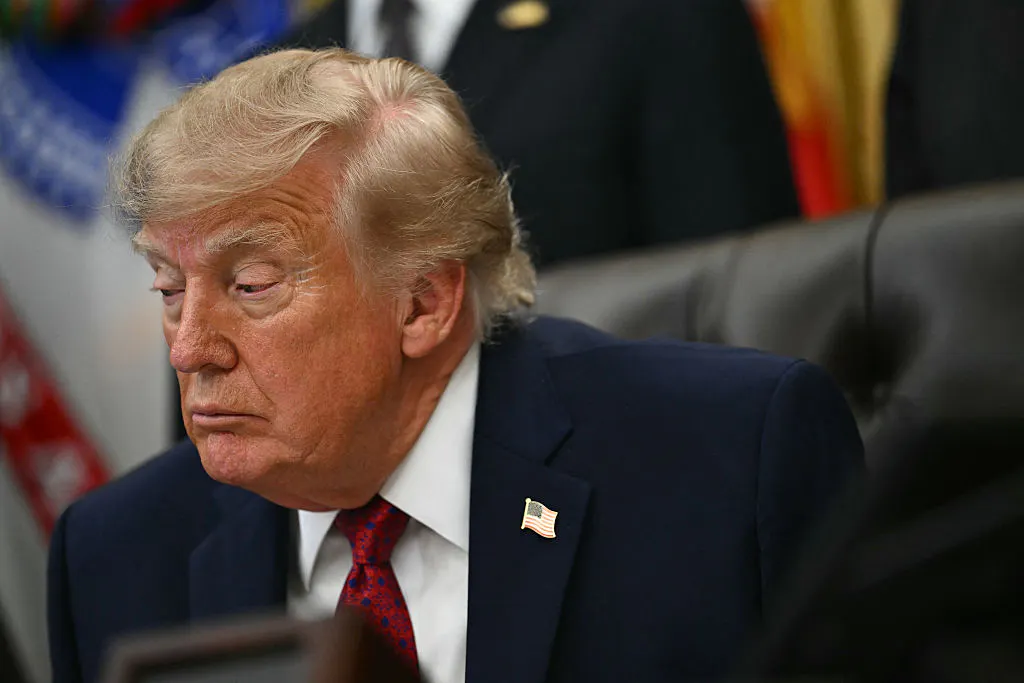
But when asked on September 3 whether America would stand behind Britain if Argentina moved on the islands, Donald Trump said, “I always review every position. That’s just one of many.” On the Iran campaign, he added in a later statement, “Your country’s not doing well. Your country was not there to help me.”
Milei responded on Argentine television the next evening, calling the islands “Argentine, by history and by right, there is no debate about it.” The Falklands have never been Argentine, and in a recent referendum, the Islanders voted to stay British by 99.8% (literally three islanders voted no).
Not content with stirring up trouble there, Trump also mused that he would love to see a united Ireland, a move that his team later admitted was targeted to cause damage to the British government in response to Labour’s weakness on Iran. Ironically, attracting the ire of Trump actually plays well for Burnham domestically, even while some Republican congressmen have, I hope jokingly, called for Wales and Scotland to also break away from England.
Needless to say, this is not how the closest of allies, blood brothers in almost every major conflict for well over a century, should treat each other. It has made supporting America, and even the Republican Party, almost impossible in British politics today.
But Britain is in such an exposed diplomatic position because we have allowed our armed forces to weaken so horrendously over the years, and because we have not pursued our national interests wisely.
I have a romantic view of the Special Relationship (being married to a Hoosier helps) and believe in Churchill’s view of the English-speaking peoples as the greatest expression of civilization ever achieved. I am increasingly isolated in that view in Britain, but apparently too in the U.S. This is not just a tragedy, but a strategic weakness in the Western alliance.
Britain is the closest of the Five Eyes, the intelligence pact that has shared American and British code-breakers since 1946. Britain is one of three vetoes on the UN Security Council Washington can rely on, and the only European nuclear power whose deterrent works with America’s. And Britain has, as anyone who has played Call of Duty knows, some of the finest special forces in the world.
I don’t remember seeing Argentina or the Republic of Ireland standing shoulder to shoulder with the USA during our long wars against tyranny.
Andy Burnham and his sordid little administration will not be in power forever. Neither will President Trump. But it is in both nations’ interests for the Special Relationship to endure.
***
James Price is a former Chief of Staff to the Chancellor of the Exchequer and a senior fellow at the Adam Smith Institute.
More from this network:
Domains for Sale · GOTPeople.org · TheDSAPlatform · The Truth About Socialism
What's Your Reaction?
 Like
0
Like
0
 Dislike
0
Dislike
0
 Love
0
Love
0
 Funny
0
Funny
0
 Wow
0
Wow
0
 Sad
0
Sad
0
 Angry
0
Angry
0

I am just an average American. My teen years were in the late 70s and I participated in all that that decade offered. Started working young, too young. Then I joined the Army before I graduated High School. I spent 25 years in, mostly in Infantry units. Since then I've worked in information technology positions all at small family owned companies. At this rate I'll never be a tech millionaire. When I was young I rode horses as much as I could. I do believe I should have been a cowboy. I'm getting in the saddle again by taking riding lessons and see where it goes.
Premium domains for sale














Comments (0)