

How Grievance Culture Turns Villains Into Heroes
Premium domains for sale
Freedom Is Back In Style
This article is part of Upstream, The Daily Wire’s new home for culture and lifestyle. Real human insight and human stories — from our featured writers to you.
Freedom Is Back
In Style
Premium domains for sale
***
Imagine a society where a man is murdered and the alleged killer receives love letters in prison, is treated like a folk hero, and even becomes the subject of a musical. That’s not fiction.
The valorization of Luigi Mangione, the man allegedly responsible for murdering a healthcare CEO in cold blood, says something disturbing about our culture. Even worse, the praise isn’t just coming from dark corners of the internet. It’s happening in the New York Times.
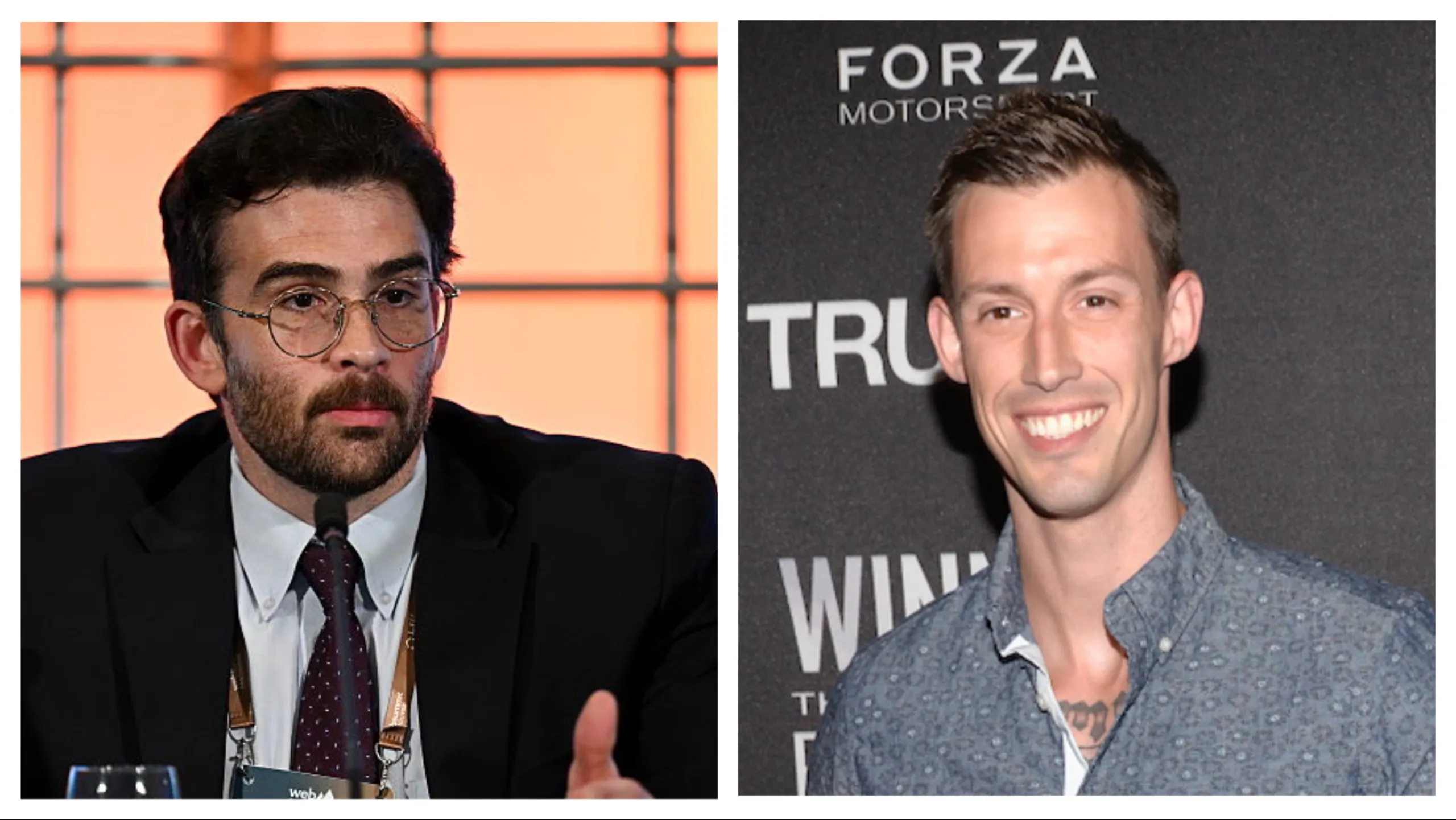
Far-left internet personality Hasan Piker drew deserved backlash for his recent claim that the slain CEO was responsible for “social murder.” But his comments offer an important glimpse into how parts of the Left now think — and how easily they rationalize the indefensible.
The case involving Mangione should be morally straightforward: a man is accused of murder. That used to end the conversation. Now it starts one, where the killing itself almost becomes secondary.
Listen to the logic: The system is broken. Insurance companies kill thousands of people every year. Healthcare is unjust. Fine. Debate all of it. But then comes the turn: If the system is harmful, the people inside it become morally implicated. And once that happens, violence against them starts to look like accountability. The rhetoric shifts from explanation to justification.
I saw this firsthand after a recent Fox interview where I criticized the growing tendency to glorify Mangione. My inbox is filled with angry, often threatening emails. What stood out was hostility and certainty. People repeatedly told me the murder was understandable because “insurance companies kill people.”
Think about that for a second: In the name of opposing harm, they were justifying it. In the name of moral clarity, they were abandoning it.
This, in many ways, is the outcome of grievance culture. For a certain segment of the Left, anger isn’t something to be examined or restrained. As long as it’s directed at the “right” source, it’s something to be nurtured or even celebrated, as we’re seeing with Mangione. They want villains. The rich, CEOs, corporations, politicians: If one target loses its emotional charge, another quickly replaces it.
I’ve written before about how Americans are increasingly drawn to the villain — not despite what he does, but because of the grievance he represents. That dynamic has hardened into something more extreme. People don’t just criticize systems anymore. They reduce them to individuals. They want to target a single face they can blame. And once that happens, that person stops being a person and becomes a symbol. And symbols are easier to hate.
The phrase “social murder” helps make all this sound serious.
“Friedrich Engels wrote about the concept of social murder,” Piker told the New York Times this week. “And Brian Thompson, as the UnitedHealthcare CEO, was engaging in a tremendous amount of social murder. The systematized forms of violence, the structural violence of poverty, the for-profit, paywalled system of health care in this country — and the consequences of that are tremendous amounts of pain, tremendous amounts of violence, tremendous amounts of deaths.”
This framing gives grievance an intellectual gloss. But in practice, it does something much simpler and much more dangerous. It shifts blame from systems to individuals and then suggests that those individuals deserve what happens to them.
From where I sit as a therapist, this isn’t really about policy. It’s about how people are being conditioned to deal with frustration and disappointment. Increasingly, they’re not being pushed to look inward or take responsibility for their own lives. Instead, they’re being encouraged to look outward, to find someone to blame. To them, the shift is comforting. It explains failure, justifies anger, and removes the burden of self-examination. But it also produces terrible thinking.
Step back for a second. What actually changed in the healthcare system after the killing? Nothing. Costs didn’t drop. Access didn’t improve. Care didn’t get better. The only noticeable change is that executives now have more security around them. That’s it. The only thing that’s been added is violence — and then a set of arguments to explain why it was somehow justified. That’s a very bad way of solving problems.
If your reaction to every problem is to find someone to blame, your solutions will reflect that. And if your solution to perceived harm is to inflict harm, you haven’t solved anything. You’ve simply mirrored the behavior you claim to oppose.
A culture built on validation without challenge creates people who feel perpetually wronged and increasingly entitled to act on that feeling. Over time, the line between understanding behavior and excusing it disappears entirely.
A functioning society depends on a basic distinction: Systems can be flawed, even deeply flawed, and individuals are still responsible for their actions. Lose that distinction, and everything becomes negotiable. The question is no longer, “Is this right?” but, “Who deserves it?”
And that’s a dangerous question.
***
Jonathan Alpert is a psychotherapist in New York City and Washington, D.C., and author of the forthcoming book “Therapy Nation.” Find him on X @JonathanAlpert.
More from this network:
Domains for Sale · GOTPeople.org · TheDSAPlatform · The Truth About Socialism
What's Your Reaction?
 Like
0
Like
0
 Dislike
0
Dislike
0
 Love
0
Love
0
 Funny
0
Funny
0
 Wow
0
Wow
0
 Sad
0
Sad
0
 Angry
0
Angry
0

I am just an average American. My teen years were in the late 70s and I participated in all that that decade offered. Started working young, too young. Then I joined the Army before I graduated High School. I spent 25 years in, mostly in Infantry units. Since then I've worked in information technology positions all at small family owned companies. At this rate I'll never be a tech millionaire. When I was young I rode horses as much as I could. I do believe I should have been a cowboy. I'm getting in the saddle again by taking riding lessons and see where it goes.
Premium domains for sale




















Comments (0)