

How Trump’s Negotiators Realized Iran Was Lying To Stall For Time
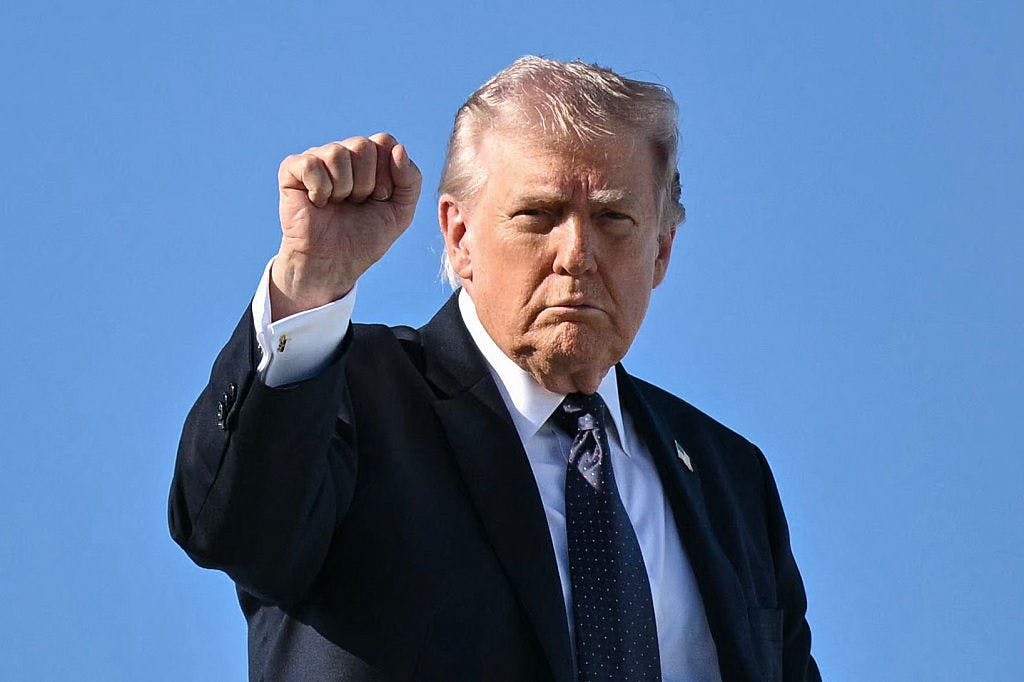
WASHINGTON—Iran was using negotiations with the United States to stall for time as it stockpiled materials needed to reach weapons-grade enrichment level, senior administration officials revealed this week. Once President Donald Trump was made aware of the deception, he decided Iran was directly threatening the United States and launched Operation Epic Fury.
Live Your Best Retirement
Fun • Funds • Fitness • Freedom
The president shared Tuesday that the negotiations made him believe Iran was going to attack first. “I felt strongly about that,” he emphasized. Asked whether Israel forced the hand of the United States, he responded, “No, I might have forced their hand. We were having negotiations with these lunatics, and it was my opinion that they were going to attack first.”
The president’s decision stemmed at least in part from Steve Witkoff and Jared Kushner’s time at the table with Iranian negotiators, senior administration officials said on a call with reporters on Tuesday afternoon. Iranian negotiators, during several rounds of meetings, came to the Trump team with an agreement that allegedly addressed the needs of the Iranian people over the next decade.
Because the agreement was needs-based, they asked only for enrichment they might need over the next decade, tying the agreement to a program they have to build out more nuclear facilities. Trump’s negotiators asked if they could take the agreement back to the United States so they could have other nuclear experts from the CIA, War Department, and State Department weigh in. They were refused.
That was a tell, one senior administration official shared — one of many throughout the exchange.
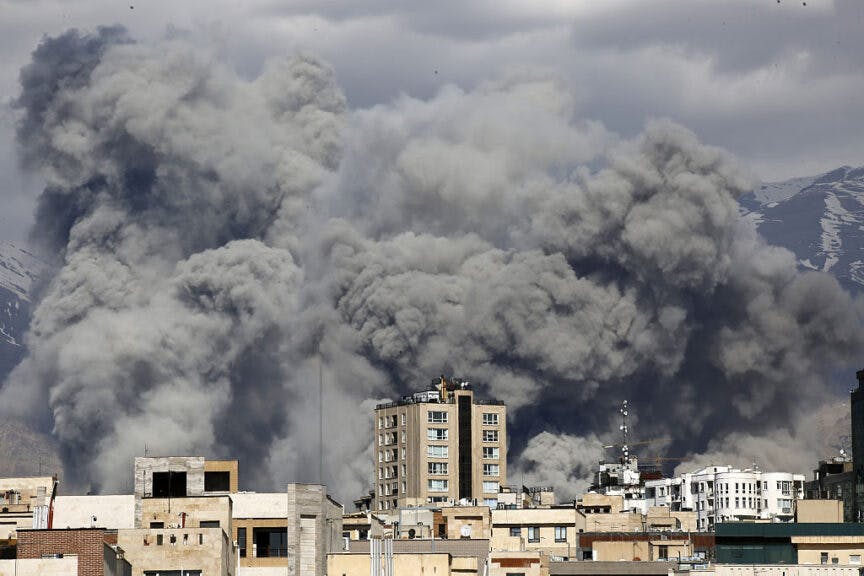
Smoke rises from the area after it was targeted in attacks as a series of explosions are heard in Tehran, Iran on March 01, 2026. (Photo by Fatemeh Bahrami/Anadolu via Getty Images)
After reading through the agreement, Witkoff and Kushner were dismayed that the Iranians asked to enrich five times more uranium than was allowed under the Iran nuclear deal. They also discovered a chart at the end of the agreement, on the back of the seventh page, that attested to the amount of enrichment they would need for each new project that they were planning.
Importantly, it centered on the Tehran Research Reactor.
As its name suggests, this reactor was purportedly meant for civilian research, unlike the industrial nuclear reactors destroyed in Operation Midnight Hammer.
“Everybody all along out there has been under the impression that that’s what it’s been doing,” one senior administration official shared.
Since Operation Midnight Hammer, the International Atomic Energy Agency (IAEA) has not been able to make inspections in Iran, which senior administration officials said was yet another tell that the Iranians were being deceptive.
Witkoff and Kushner were in conversations with the IAEA about the Iranians’ agreement, and, unfortunately for Iran, the IAEA knew how much existing fuel Iran had at the Tehran Research Reactor. That number was “roughly seven to eight years of what they need to burn on an annual basis,” a senior administration official shared.
Witkoff and Kushner did some fast math. They realized that the research reactor had not been making any radioisotopes, and that the seven to eight year supply of fuel that Iran had been retaining there was “being stockpiled along with all the other stockpiling that had been done at Natanz, Fordow, and Isfahan.”
“So the claim that they were using a research reactor to do good for the Iranian people was a complete and false pretense,” a senior administration official shared.
The Trump negotiators recognized that the Iranians are incredibly clever, doing everything internally in Iran to bring that enrichment process to fruition. If the United States had allowed them to continue their work for a year, the administration officials said, Iran could have gone from having 460 kg of weapons-grade material to 1,500 kg of it.
About 42 kg of 90% enriched uranium is required to make one nuclear warhead, according to the IAEA, and Iran had material enough for 11 bombs at the beginning of these negotiations.
Within a short period of time, the senior administration official said, they could have had 1,500 kg of weapons-grade material, meaning Iran would have had not just 11 bombs, but up to 50 bombs.
“That is literally the place that we were sailing into,” the official said.
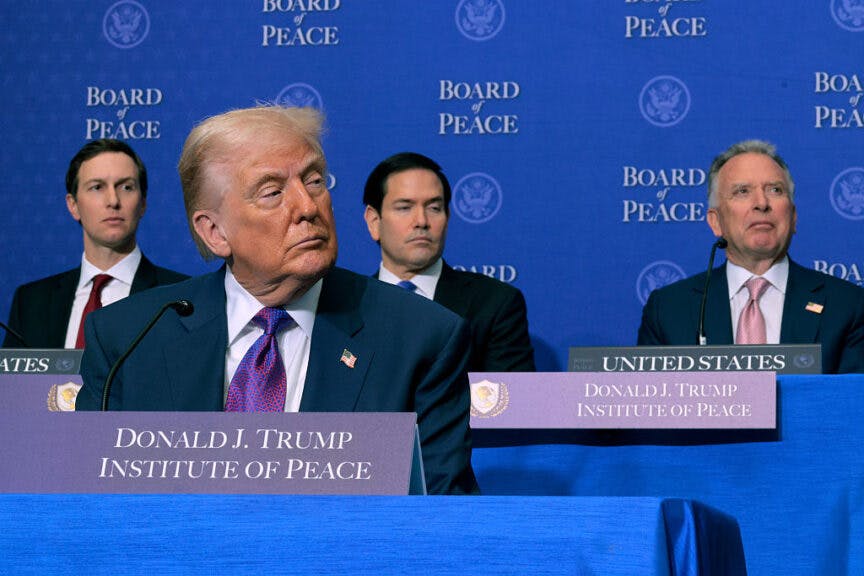
(Photo by Chip Somodevilla/Getty Images)
The Iranians were claiming they need research reactors that start at a 20% enrichment rate, saving them roughly two months before they get to weapons grade at 90%, the officials shared, calling this a “complete lie.” Witkoff and Kushner figured this all out at the table, and the IAEA “supported and attested” to their findings that Iran was never enriching at TRR for civil purposes.
“They had never made isotopes there,” explained one administration official. “They had done a couple of medical tests to sort of disguise what they were really doing, and in reality, what they were doing was they were stockpiling.”
There were many other things that made Kushner and Witkoff realize the Iranians were being deceptive, but when they discovered what Iran was really doing at the Tehran Research Reactor, above everything else, it was “very, very clear” what was really going on. Iran was telling the world they were developing isotopes for medicinal purposes and “all the while not using any of it for medicinal purposes, in fact, stockpiling for some other use.”
“The only other use it could be would be to bring it towards a weapons-grade enrichment level,” said an administration official.
Witkoff and Kushner went into the meetings determined to assess for the president whether they could make a deal on his primary objectives, and if they could, to find out how long it would take to get that deal done, whether Iran would comply with the deal, and whether it was enforceable.
But clearly, all along, they were trying to hide their nuclear enrichment program underground, one senior administration official said, as well as building another one that doesn’t have air shafts attached to it — since Operation Midnight Hammer’s bunker-busting bombs went through the air shafts in order to destroy the nuclear facilities.
Witkoff and Kushner had studied the Iranians and their previous efforts to negotiate with the United States, and they knew ahead of time that the Iranians were adept at making short-term deals to buy time. In this case, the senior administration officials said, it appears that the Iranians were hoping to stall until Trump was no longer president, and the United States might be less observant about how Iran was stockpiling or what deals Iran was able to swing.
Given that the United States was amassing such a powerful force outside Iran, officials were surprised that Iranian officials would not cooperate.
“We really thought that they would show real movement towards creating a real deal,” one administration official said. “All we got were games and tricks and denials.”
In one telling anecdote, Trump’s negotiators reminded Iran that their facilities needed to be above ground.
“Well then it could be bombed!” the Iranian negotiators reportedly said, to which team Trump told them: “If there’s nothing nefarious being done there, then you shouldn’t be worried about a bomb.”
“I think now we’re seeing with their attacks all over the region, the dangers that they pose and the capabilities that they’ve created over time,” a senior administration official shared. “And that really is what we concluded from the negotiations.”
What's Your Reaction?
 Like
0
Like
0
 Dislike
0
Dislike
0
 Love
0
Love
0
 Funny
0
Funny
0
 Wow
0
Wow
0
 Sad
0
Sad
0
 Angry
0
Angry
0

I am just an average American. My teen years were in the late 70s and I participated in all that that decade offered. Started working young, too young. Then I joined the Army before I graduated High School. I spent 25 years in, mostly in Infantry units. Since then I've worked in information technology positions all at small family owned companies. At this rate I'll never be a tech millionaire. When I was young I rode horses as much as I could. I do believe I should have been a cowboy. I'm getting in the saddle again by taking riding lessons and see where it goes.










Comments (0)