

Iran Thought It Was Untouchable … Then Trump Changed the Rules
Premium domains for sale
Freedom Is Back In Style
Editor’s note: This is a lightly edited transcript of today’s video from Daily Signal Senior Contributor Victor Davis Hanson. Subscribe to our YouTube channel to see more of his videos.
Freedom Is Back
In Style
Premium domains for sale
Hello, this is Victor Davis Hanson for The Daily Signal.
We’re now beginning the seventh week of military operations against Iran. There’s a lull now during a negotiation, but the war continues.
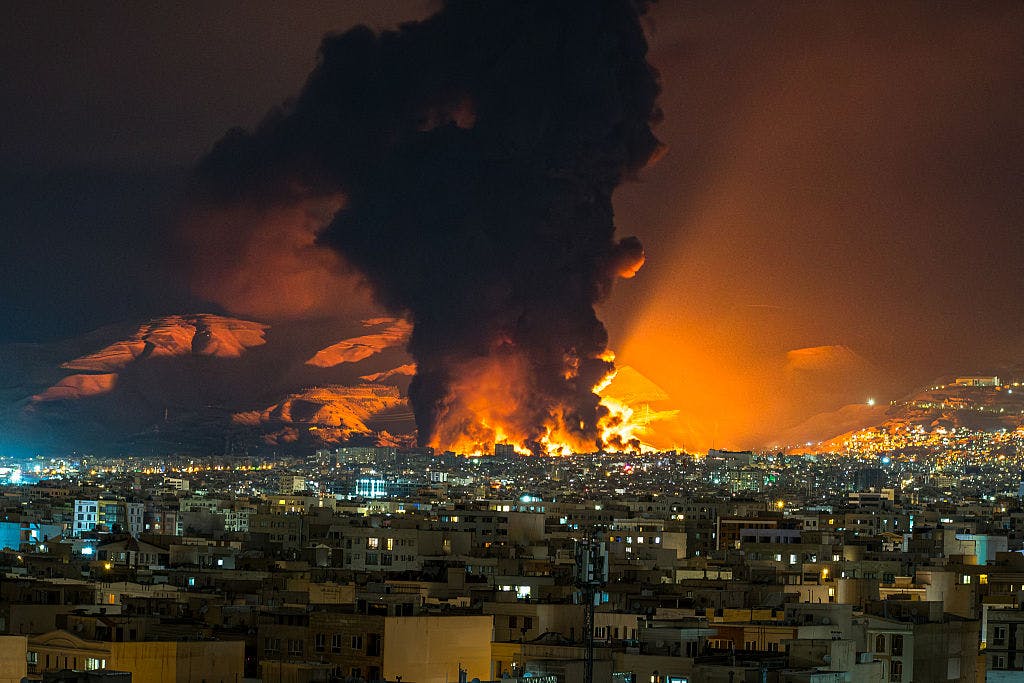
If you look at Iran, it’s a very strange situation because its command and control have been decapitated. Its military has been, I guess you’d call it, inert. There is no air force. There are only PT boats left of its navy. Its army is of no use, since this is an air war. Its nuclear, military, industrial complex has been bombed to smithereens. It’s probably lost half a trillion dollars in a half-century-long investment in military hardware and military industries, at the expense of a very restive population.
So, what was it thinking? How did it get itself in this place? What happened to it? Well, it had an expansive view of itself—an inflated view. Why?
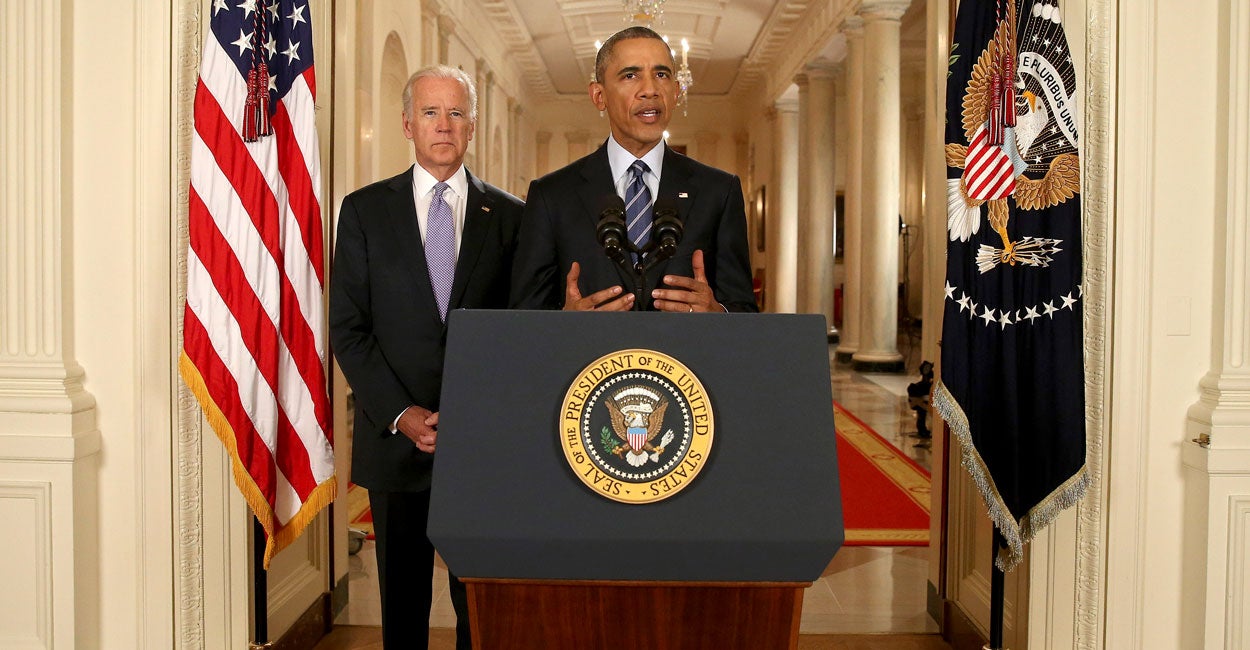
During the Obama administration, the Obama State Department and President Barack Obama himself sent messages to Iran that maybe a Shiite crescent—Tehran, Damascus, Beirut, Gaza, people in Yemen—might balance the Sunni Arabs of the Gulf with their money and the military power of the Jewish state of Israel. And Obama might step in from time to time to adjudicate this—I guess they called it creative tension.
In other words, we said there was no moral difference between the Iranian bloc and its opponents, when there was, of course.
Well, that gave the impression to Iran that we were afraid of them, or that we would always be willing to make concessions. When Joe Biden came in, the first thing he did was beg them to get back into the Iran deal. That inflated their egos even further. Then he lifted sanctions and gave them $100 billion of new revenue.
Meanwhile, the Iranians were looking at Russia going into Ukraine, and the United States had done nothing other than say our reaction would hinge on whether it was a minor or major invasion. Then came Oct. 7. The Iranians had subsidized Hezbollah, Hamas, and the Houthis, and their proxies and clients in Syria and Iraq, with the idea that they had created a ring of fire around the Jewish state.
After the Oct. 7 massacres—which they denied having knowledge of, but which they obviously strategically planned with their clients—they thought the United States wouldn’t do anything. And they were pretty much right about that during the Biden administration, if not worse.
We kind of distanced ourselves from Israel, and Iran knew that. They felt that after Oct. 7 it would be such a traumatic experience for the Israeli government that it wouldn’t do much. A lot of this was hinged on the pseudo-reputation they had of being militarily invincible, but there was never any proof that was true.
They ran the Iraq War of 1980, and they didn’t do very well. Khomeini had to sue for peace, even though they had almost one and a half times the population of Iraq. But they were the terror of the Middle East. People said, “Whatever you do—go into Afghanistan, go into Iraq, bomb—don’t get near Iran.”
They’re crazy people. They have 93 million people. They’re the second-largest country in the Middle East by population. They’re the second-largest by area. They’re dangerous people.
They’re fanatic Shiites, and they’re willing to die for their cause. But if you actually looked at what they had done, they had achieved that reputation through surrogate use of terrorism—blowing up embassies, blowing up Marine barracks, assassinating individuals, sending weaponry to kill Americans in Afghanistan and Iraq—but they’d never really shown any impressive performance on the battlefield, either at sea, on the ground, or in the air.
And so, they thought they could get away with Oct. 7. That gave them an even greater inflated sense of self, because they kept telling us that between all of their proxies and their own arsenals they might have 300,000 short- and long-range missiles, rockets, and drones, and they would collapse Israel under a sea of explosives.
They thought that even after Oct. 7, Israel wouldn’t dare do anything to them because they had sophisticated Chinese and Russian air defenses. What they didn’t count on were two things.
Oct. 7 changed the entire mentality of Israel. It was the greatest loss of Jewish life since the Holocaust. Israelis said you cannot live like this. You cannot sustain a country like this. You can’t have a sword of Damocles descending on you periodically.
So we’re going to have to go to the head of the snake. Hezbollah we’ll deal with. Yes, Hamas we’re going to deal with. The Houthis we will deal with. The people in Syria we’ll deal with. But in one way or another, they get money and weapons from Tehran.
And we don’t believe they’re indomitable—not now, not after Oct. 7. In that 12-day war last year, they destroyed the entire air-defense system of Iran, and then they began taking out its military capability and its nuclear industry and infrastructure.
They called us in and asked us, and we were more than ready to comply because it was in our national interest. In about 25 to 30 hours, we blew up their nuclear facilities. We thought that might be the end. We thought they got the message—but, of course, they didn’t.
Their proxies began to shoot missiles again. They began, according to our intelligence, to resume work on their nuclear facilities and nuclear proliferation trajectory. And so, the United States entered negotiations with them again. Like all negotiations with the Iranians, they were drawn out. They were meant to delay while they rearm, enrich more uranium, or sic their terrorist proxies on Israel or individuals in the West through terrorist attacks.
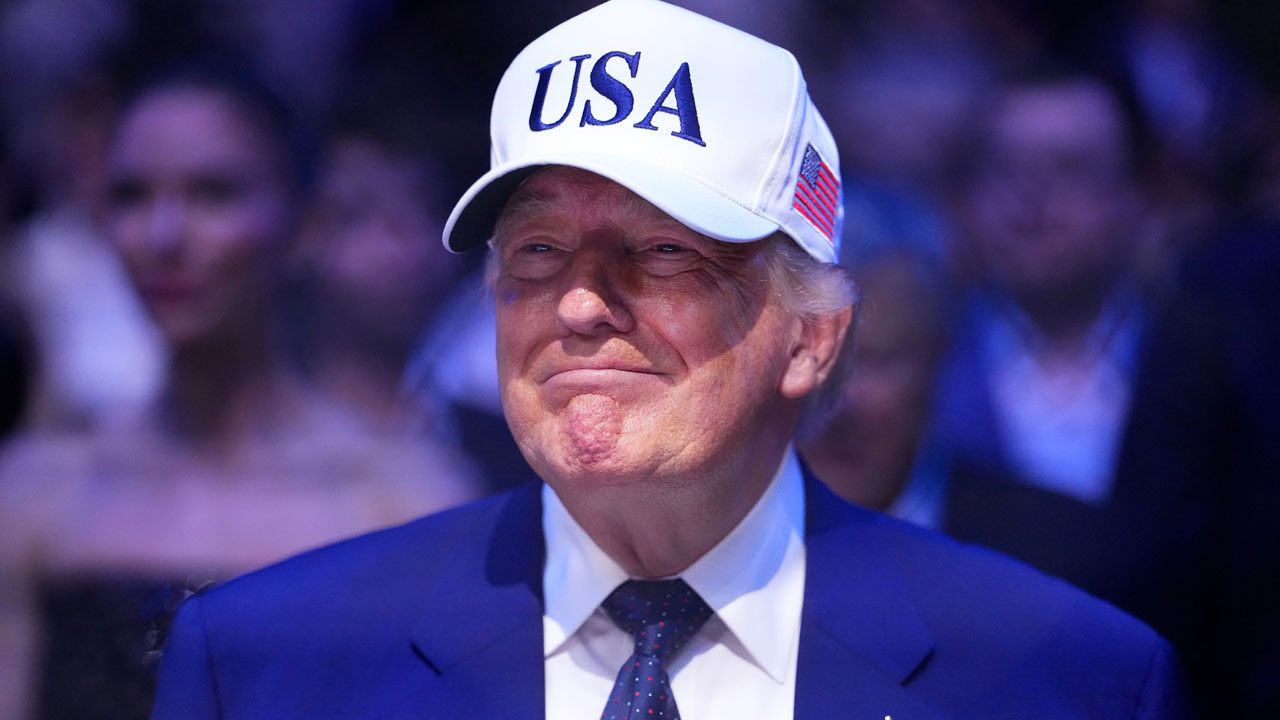
But again, they didn’t count on two things: Donald Trump doesn’t care, and Benjamin Netanyahu doesn’t care. So, they resumed the war. Now, as we go into the seventh week, all of Iran’s assets are destroyed. It’s losing more than $400 million a day in lost revenue because of the U.S. blockade. It has no cards to play.
All it can hope is that someone will call off the United States. And we will talk about that in a later video—who those something-or-somebodies are that might save Iran at the 11th hour. Because it will not be able to save itself if the United States decides to take out its bridges, take out its electrical generation capability, and force it back to the negotiating table—not to negotiate, but to submit to terms.
We publish a variety of perspectives. Nothing written here is to be construed as representing the views of The Daily Signal.
The post Iran Thought It Was Untouchable … Then Trump Changed the Rules appeared first on The Daily Signal.
More from this network:
Domains for Sale · GOTPeople.org · TheDSAPlatform · The Truth About Socialism
What's Your Reaction?
 Like
0
Like
0
 Dislike
0
Dislike
0
 Love
0
Love
0
 Funny
0
Funny
0
 Wow
0
Wow
0
 Sad
0
Sad
0
 Angry
0
Angry
0

I am just an average American. My teen years were in the late 70s and I participated in all that that decade offered. Started working young, too young. Then I joined the Army before I graduated High School. I spent 25 years in, mostly in Infantry units. Since then I've worked in information technology positions all at small family owned companies. At this rate I'll never be a tech millionaire. When I was young I rode horses as much as I could. I do believe I should have been a cowboy. I'm getting in the saddle again by taking riding lessons and see where it goes.
Premium domains for sale



Comments (0)