

I’m a gamer and a parent. The KIDS Act makes my kids less safe.

Premium domains for sale
Freedom Is Back In Style
I was lucky to grow up during the adolescence of the tech age. Sleepovers meant Super Smash Bros. with friends. The 2000s meant building free personal websites and poking around whatever new technology had just appeared. A lot of my formative experiences came from discovering what these tools could do.
Freedom Is Back
In Style
Premium domains for sale
Now I’m a young father, and I want my kids to have the same chance to enjoy technology’s creativity and connectivity.
The KIDS Act risks placing more sensitive information in more places while flattening the very different ways children use technology.
Of course, security was always part of the bargain. As technology has evolved, so have the vulnerabilities. But the KIDS Act approaches those risks with a sledgehammer — and may make children less safe in the process.
A basic cybersecurity principle is that services should collect as little data as possible — certainly no more than they can reasonably protect. The KIDS Act pushes in the opposite direction.
If gaming services and social media platforms must make legally consequential decisions based on a user’s age, more of them will need some way to verify it. That means more companies asking children and parents for sensitive information — and more databases that can be breached.
The risk is not merely that more data could leak. The data itself could become more sensitive. Liability concerns may be enough to incentivize some services to demand government-issued IDs, biometric information, or similarly intrusive identifiers.
We have already seen the danger of age-verification systems creating new troves of information. In the United Kingdom, a similar law helped drive broader age-checking requirements, and a later Discord data breach exposed identity documents held by a third-party verification provider. The point is not that every age check will produce a breach. It is that collecting information that was never needed before creates something new to steal.
The KIDS Act also sweeps very different online experiences into a one-size-fits-all framework. App-based games, console games, PC games, and social platforms do not expose children to the same kinds of interactions or risks.
Parents should be vigilant about how their children use all of them. But parents are better positioned than Congress to decide which spaces are appropriate for a particular child. When we hand that judgment to a clumsy legal framework, kids may either lose access to genuine social interaction or start bypassing the safeguards altogether — often ending up in less safe corners of the internet.
That matters because online connection is not fake connection.
RELATED: British Invasion: Inside the UK’s Orwellian plan to control YouTube
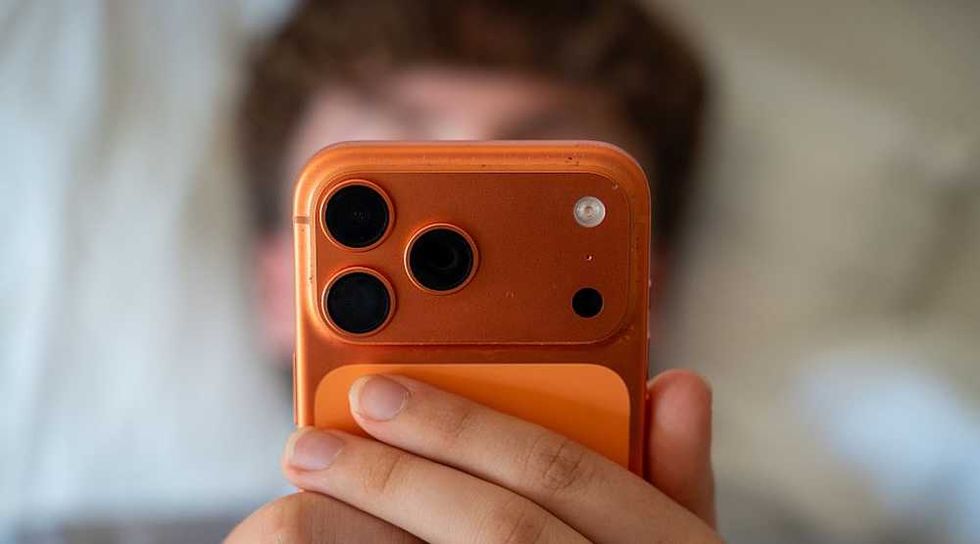 Anna Barclay/Getty Images
The lockdowns made this obvious. When governments shut down schools, workplaces, churches, and ordinary social life in 2020, millions of people turned to the internet because they had nowhere else to go. Friends used Zoom to play Dungeons and Dragons. Families bonded over Animal Crossing. For many, online spaces were not a replacement for real life so much as the only part of real life still available.
The lockdowns are over, but the lesson remains. Online communities can be frivolous, toxic, educational, creative, supportive, or all of those things at once — just like offline communities.
The harms of youth overexposure to social media are real. So are the benefits lawmakers risk sweeping away. People have used online communities to find life-changing information about rare medical conditions and to build what amounts to one of the largest educational ecosystems in the world.
The problem with the KIDS Act is not that Congress wants to protect children. Parents want that too. The problem is that the law treats more data collection and centralized rules as if they were synonymous with safety.
They are not.
As a parent who grew up online, I want my kids to have access to creativity, connection, and fun without turning their identities over to every service they use. My wife and I do not even post photos of our children online. Privacy is not an abstraction in our house.
Parents already have tools. Nintendo offers parental controls, and services such as Bark and Aura can help families manage devices and online activity without requiring the government to redesign the internet around age verification.
The KIDS Act pushes in the wrong direction. It risks placing more sensitive information in more places while flattening the very different ways children use technology.
Those of us fortunate enough to grow up with the opportunities the internet created should be careful about raising the digital ladder behind us — especially when the safety measure at the top may make the fall worse.
More from this network:
Domains for Sale · GOTPeople.org · TheDSAPlatform · The Truth About Socialism
What's Your Reaction?
 Like
0
Like
0
 Dislike
0
Dislike
0
 Love
0
Love
0
 Funny
0
Funny
0
 Wow
0
Wow
0
 Sad
0
Sad
0
 Angry
0
Angry
0

I am just an average American. My teen years were in the late 70s and I participated in all that that decade offered. Started working young, too young. Then I joined the Army before I graduated High School. I spent 25 years in, mostly in Infantry units. Since then I've worked in information technology positions all at small family owned companies. At this rate I'll never be a tech millionaire. When I was young I rode horses as much as I could. I do believe I should have been a cowboy. I'm getting in the saddle again by taking riding lessons and see where it goes.
Premium domains for sale





















Comments (0)