

King Charles Faces New Reckoning Over Britain’s Slave Trade
Premium domains for sale
Freedom Is Back In Style
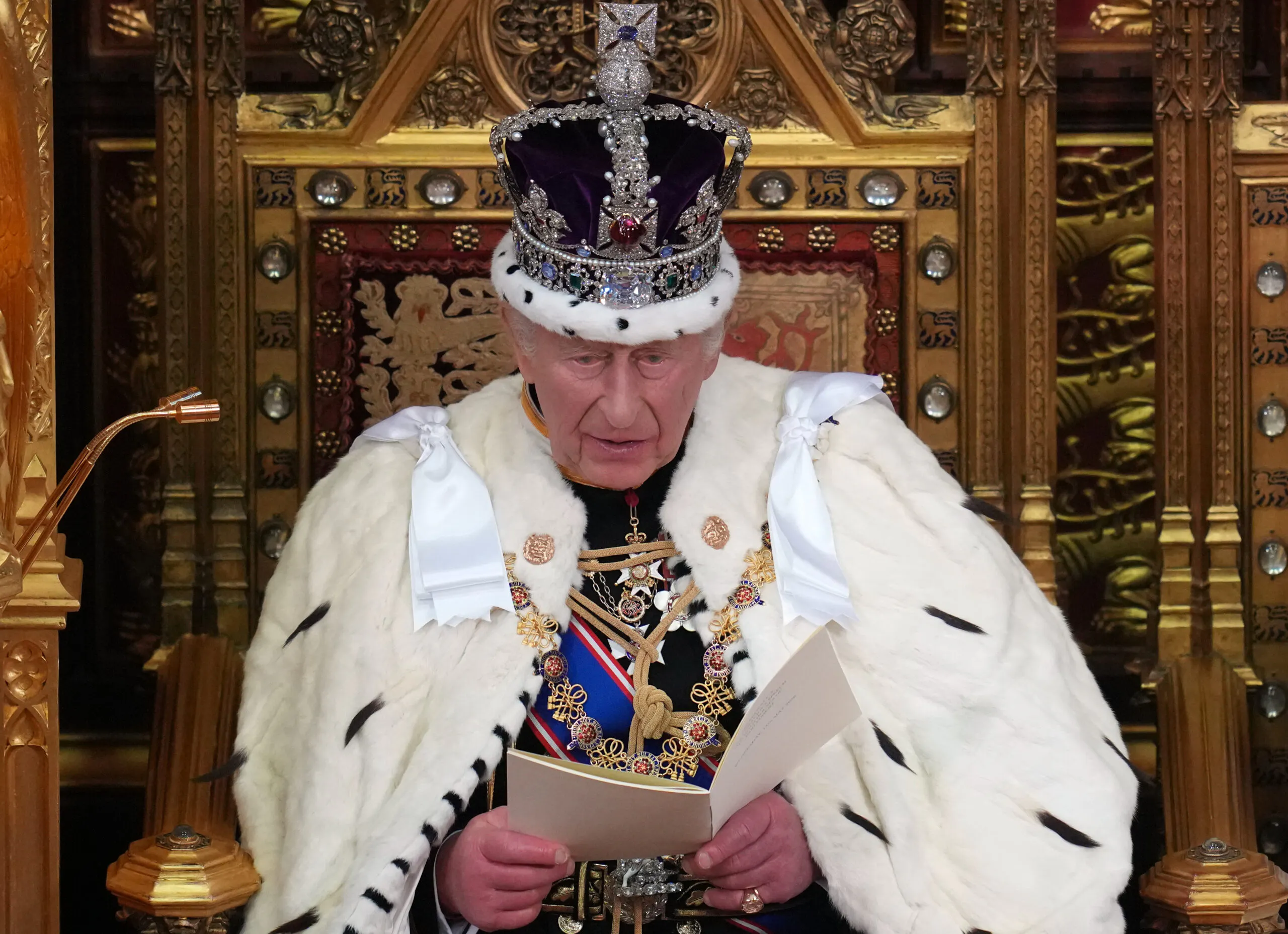
Jamaica formally petitioned King Charles III on Monday, asking him to refer three legal questions on Britain’s historical role in the transatlantic slave trade to the Judicial Committee of the Privy Council — the first time a Commonwealth nation has attempted this route in pursuit of reparations.
Freedom Is Back
In Style
Premium domains for sale
The petition, led by Jamaican Minister of Culture, Gender, Entertainment and Sport Olivia Grange, invokes the Judicial Committee Act of 1833, which permits the monarch to send matters of constitutional weight to the Privy Council for an advisory opinion. It asks whether the forced transport and enslavement of Africans in Jamaica violated English common law, whether it amounted to a breach of international law, and whether Britain bears a legal obligation to provide a remedy.
The filing was timed to the anniversary of the 1781 departure of the Zong, a Liverpool-registered slave ship whose crew threw more than 130 captives overboard — an atrocity that later galvanized Britain’s abolitionist movement.
Buckingham Palace acknowledged the king’s constitutional role in receiving the petition but stressed he holds no personal authority over its substance; any referral would follow government advice. Grange declined to characterize the filing as a direct demand for payment, saying only that “we want answers” before determining next steps. A prior parliamentary motion in Jamaica estimated Britain’s historical liability at roughly £7.6 billion, according to CBC.
The petition arrives despite Britain’s own historical role in ending the trade it is now asked to answer for. Parliament outlawed the slave trade across the empire in 1807, and the Royal Navy subsequently maintained a West Africa Squadron that intercepted slaving ships — including those of other nations, particularly Portugal — for decades afterward, at a cost of thousands of British sailors’ lives. Full emancipation followed in 1834, though Britain compensated slaveholders rather than the enslaved, a point reparations advocates cite as evidence the ledger was never actually settled.
Britain has consistently declined to apologize or commit to reparations. When the United Nations General Assembly passed a resolution in March endorsing reparations as a “concrete step” toward redress, the United Kingdom abstained, arguing that conduct must be judged under the law as it existed at the time it occurred.
Constitutional law scholar Craig Prescott of Royal Holloway, University of London, told ABC News Jamaica’s move was “quite clever,” noting it revives a petitioning right traceable to the Norman Conquest of 1066. He cautioned, however, that the Judicial Committee typically resists such petitions because they bypass ordinary legal channels — and that a rejection could still hand Jamaica a political win, sharpening the case for severing ties with the monarchy entirely, a step Prime Minister Andrew Holness has already signaled he intends to pursue.
The petition carries the backing of the 23-member Caribbean Community, positioning Jamaica as the lead test case for a broader regional reparations campaign.
More from this network:
Domains for Sale · GOTPeople.org · TheDSAPlatform · The Truth About Socialism
What's Your Reaction?
 Like
0
Like
0
 Dislike
0
Dislike
0
 Love
0
Love
0
 Funny
0
Funny
0
 Wow
0
Wow
0
 Sad
0
Sad
0
 Angry
0
Angry
0

I am just an average American. My teen years were in the late 70s and I participated in all that that decade offered. Started working young, too young. Then I joined the Army before I graduated High School. I spent 25 years in, mostly in Infantry units. Since then I've worked in information technology positions all at small family owned companies. At this rate I'll never be a tech millionaire. When I was young I rode horses as much as I could. I do believe I should have been a cowboy. I'm getting in the saddle again by taking riding lessons and see where it goes.
Premium domains for sale











Comments (0)