

Military Cyberwarfare Exercise Linked To Plane Crash That Killed Everyone On Board
Premium domains for sale
Freedom Is Back In Style
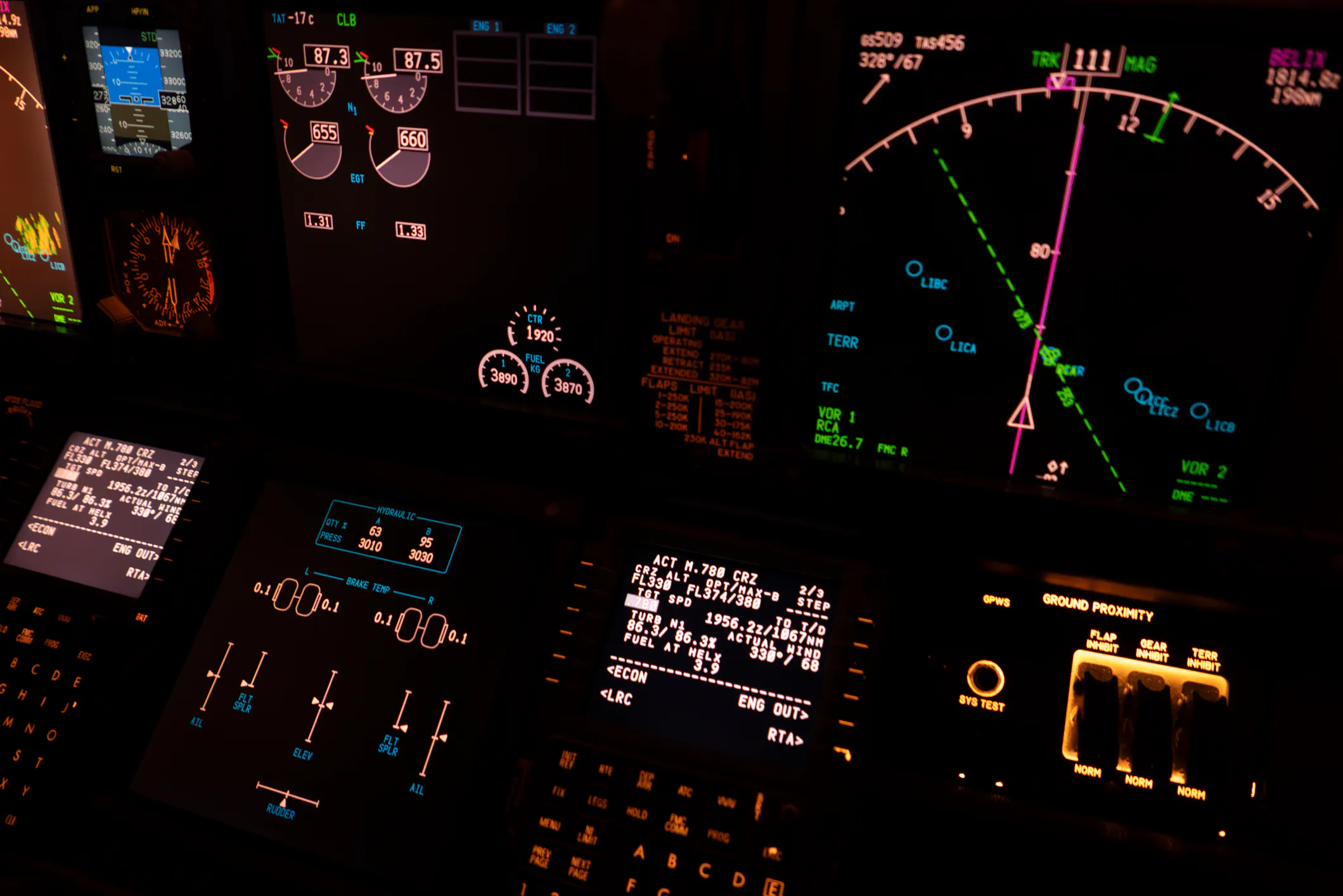
Signal-jamming devices have been a real game-changer in gaining control of the skies for tactical purposes, but the impact they can have on civilian GPS can be deadly.
Freedom Is Back
In Style
Premium domains for sale
That is exactly what happened to a civilian medevac plane that took off from Roswell, New Mexico, this past May — and flew directly into a military training operation that disabled its navigation capabilities. While they were able to eventually get their GPS back online, it was too late — and the plane crashed into the Capitan Mountains. All four on board — two medevac pilots and two nurses — were killed instantly.
The flight should have been an easy one — 60 miles from Roswell to Ruidoso to pick up a patient — and the pilots, though relatively new, were well-qualified. Captain Keelan Clark, aged 30, had gotten his commercial pilot’s license a year and a half earlier, and first officer Ali Kawsara, 23, had previously worked cargo flights.
But medevac flights are often inherently riskier than most civilian flight operations, largely because they are often planned at a moment’s notice — and because, since lives are at stake, pilots often fly in weather that might be ill-advised under other circumstances.
The weather was not a factor on May 14, but the flight was arranged at the last minute — and it was only once they were airborne that they realized visibility was a problem. There was no moon, and almost no visible light on the ground as they traveled over rural areas, so they contacted Albuquerque Air Route Traffic Control Center and asked for permission to fly into Ruidoso “instruments only,” meaning they would not have to rely on visual cues from outside. Their request was granted.
About 100 miles west of their location, however, a training exercise known as NAVFEST was in progress at White Sands Missile Range, conducted by the U.S. Air Force’s 746th Test Squadron of the 704th Test Group. Before that weeklong exercise, the FAA had put out a warning stating that navigation systems as far as 400 miles away could be impacted by the GPS-disrupting technology being tested between May 12 and May 18.
Clark and Kawsara quickly realized that their GPS was disabled and asked the air traffic controller for a magnetic heading instead. They were told to fly west, and then north a minute later. Air Traffic Control in Albuquerque promised to give them vectors to assist with landing, but additional calls from other planes that had also lost their navigation capabilities kept ATC tied up for several minutes — at which point the medevac flight had already overshot the mark.
By then, the pilots were close enough to Ruidoso to see the lights at the airport — so they called in a request to “go visual” and approach the runway by sight. The request was granted, and they turned toward the airport — but they could not see the Capitan Mountains directly in their path.
The crash sparked a wildfire that burned for several weeks in the Capitan Mountains and destroyed more than 30,000 acres.
Rep. Gabe Vasquez (D-NM) spoke with National Transportation Safety Board officials about the crash, pushing for a full investigation: “This week, I communicated with NTSB officials that a thorough investigation must be concluded to fully understand the cause of this tragic and fatal crash, and prevent future accidents.”
GPS-disrupting devices have already changed the face of battle, as missile systems and unmanned drones often rely on GPS to reach their intended targets — but the tradeoff has always been the risk that friendly communication and navigation systems could also be disrupted at the same time.
In an effort to mitigate that risk, the United States Army recently tested a GPS-disrupting system known colloquially as the “Hammer of the Gods” — which can disable the navigation systems of enemy missiles and drones while allowing open communications between friendly operators.
More from this network:
Domains for Sale · GOTPeople.org · TheDSAPlatform · The Truth About Socialism
What's Your Reaction?
 Like
0
Like
0
 Dislike
0
Dislike
0
 Love
0
Love
0
 Funny
0
Funny
0
 Wow
0
Wow
0
 Sad
0
Sad
0
 Angry
0
Angry
0

I am just an average American. My teen years were in the late 70s and I participated in all that that decade offered. Started working young, too young. Then I joined the Army before I graduated High School. I spent 25 years in, mostly in Infantry units. Since then I've worked in information technology positions all at small family owned companies. At this rate I'll never be a tech millionaire. When I was young I rode horses as much as I could. I do believe I should have been a cowboy. I'm getting in the saddle again by taking riding lessons and see where it goes.
Premium domains for sale





















Comments (0)